
You should already be aware that the military is in possession of some of the most technologically advanced pieces of equipment the world has ever witnessed. Thousands of dollars are spent annually by the government on these machines, which are funded by our taxes. Are you prepared to be blown away by these monstrous creatures? When it comes to power and ingenuity, there has never been anything like it. Trust us when we say that you will be shocked by some of the creations that they have created. We are well aware that at least a number of these bad boys appear to be set pieces for a science fiction film, but they are in fact genuine weapons.
BAE Systems Adaptiv Technology
Activated camouflage systems, such as this one, are known to be effective in preventing detection by infrared night division equipment. What a fantastic opportunity! Adaptiv conceals images by cooling and heating hexagonal Peltier plates, which are formed by cooling and heating hexagonal Peltier plates. A non-target object or a natural background can be used as a background. When BAE Systems first announced it in 2011, they compared it to a “thermal television screen.”
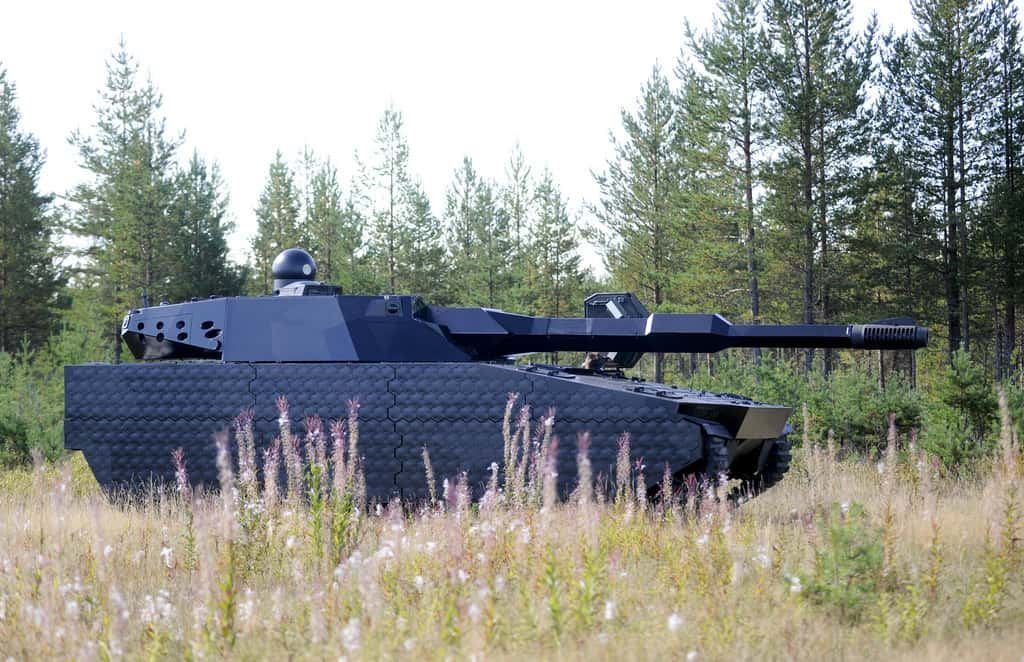
BAE Systems Adaptiv Technology
WildCat Robot
If you happen to come face to face with a WildCat Robot on the field, it is best to be afraid. This Boston Robotics product has the ability to run on whatever surface it comes into contact with. In order to act as both a freight carrying unit and an intelligence carrying unit, the robot was built. If something like this were to come after us, we would flee far and wide.
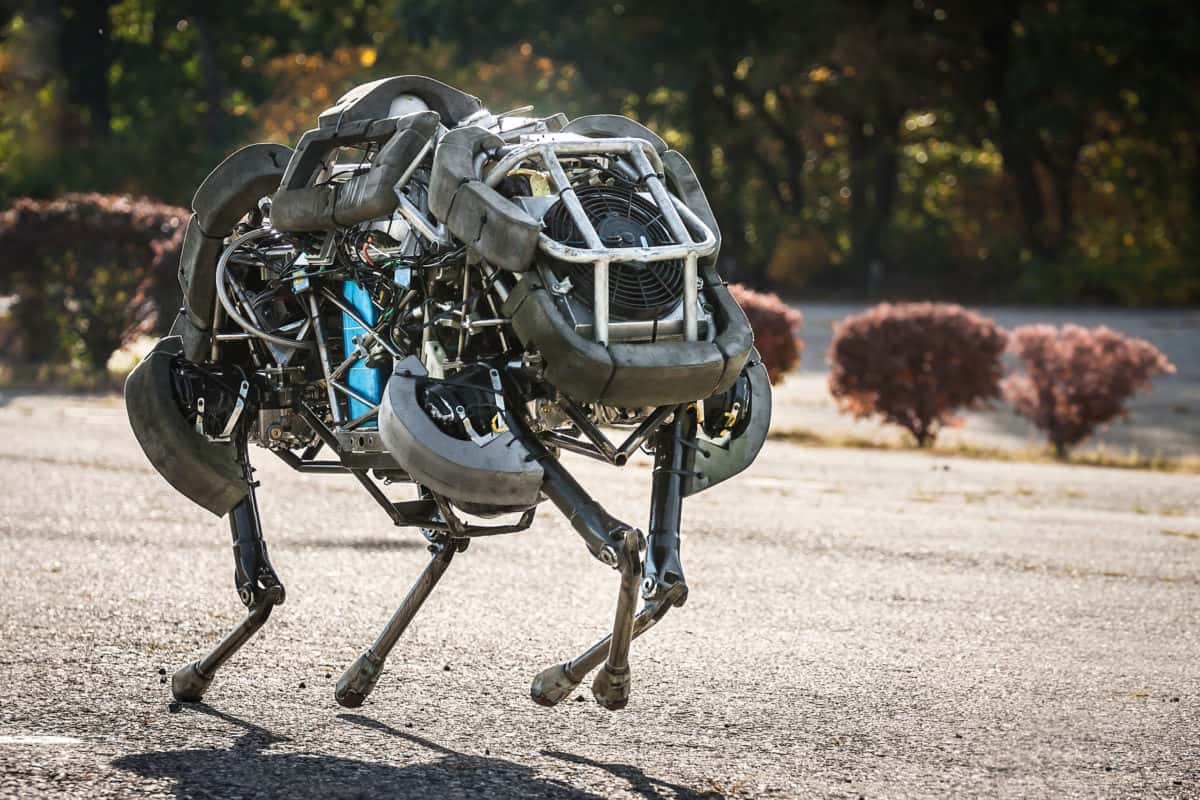
WildCat Robot
Arquus Scarabee Armored Vehicle
The Scarabee was first displayed at the Paris Air Show by this company. This business, which is owned by Volvo, worked on the development of this light armored vehicle, which will enter active duty in the near future. It is powered by a hybrid engine that combines internal combustion and electric motors, allowing it to run quietly. In this regard, it is an excellent vehicle for reconnaissance and covert missions.
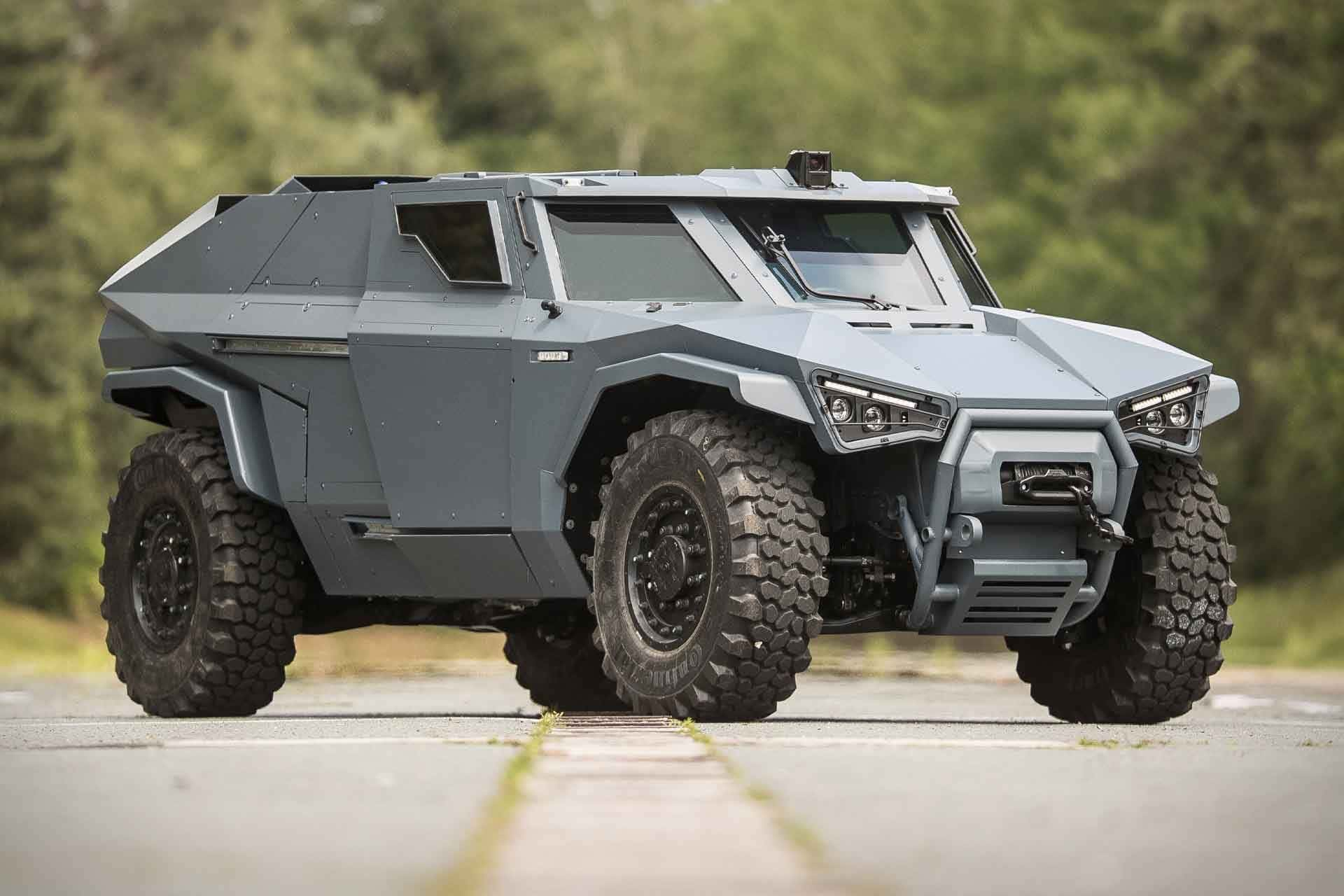
Arquus Scarabee Armored Vehicle
Owl-Eye Drone
What do you think? Doesn’t this appear to be the coolest thing you’ve ever seen? This was done by Russian military, who have conducted a lot of experiments on a variety of radar drones in the past. This machine was created with the purpose of creating an object that could not be detected as a robot by the naked eye. Certainly, the owl is an intriguing choice of form in our collection of books.
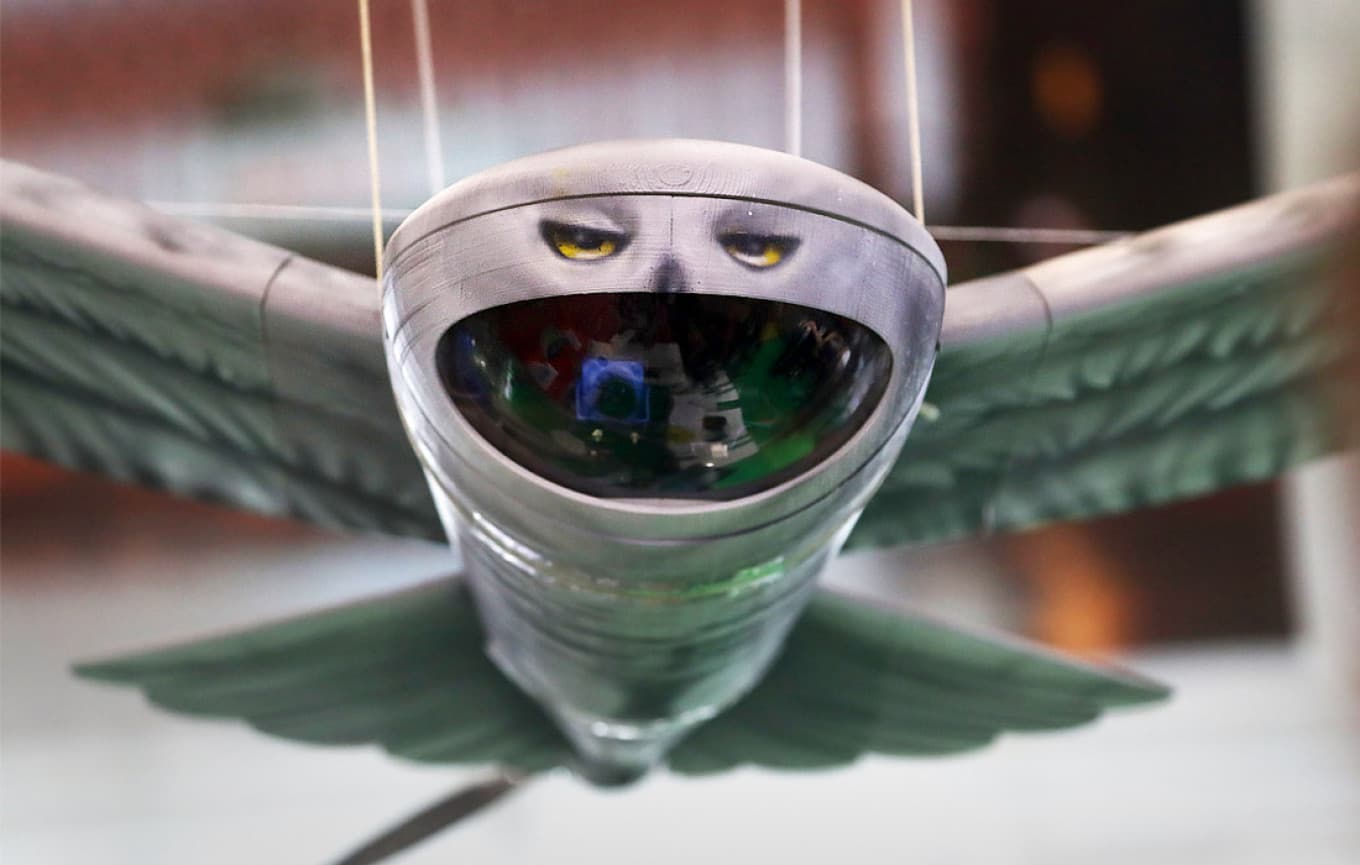
Owl Eye Drone
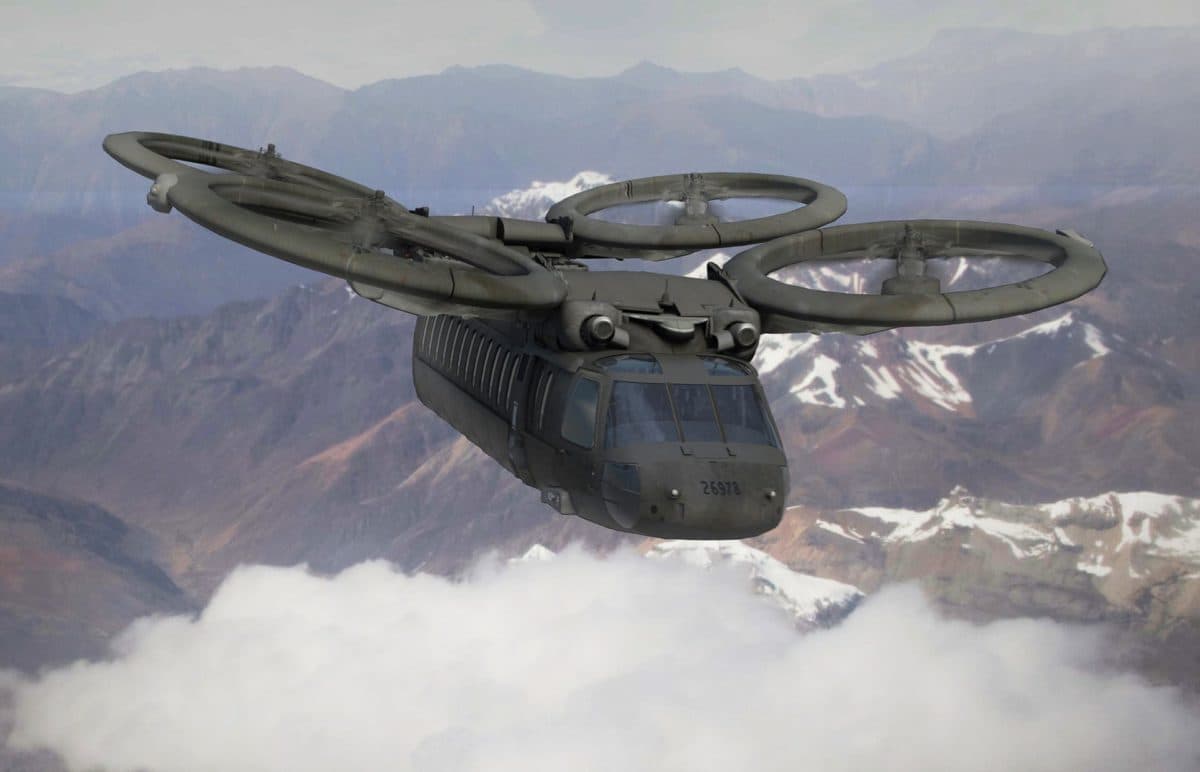
Army Rotorcraft Technology
As of right now, the Army is focusing on a number of various aspects of rotorcraft. One of the goals is to enhance the ability to tolerate fight violence, amongst other objectives. “The purpose of this program,” noted the director of the ARL-SLAD aviation analysis team, “is to generate some limited ballistic data that could reduce risk and/or encourage Future Vertical Lift designers to consider CTEF technology.”
Army Rotorcraft Technology
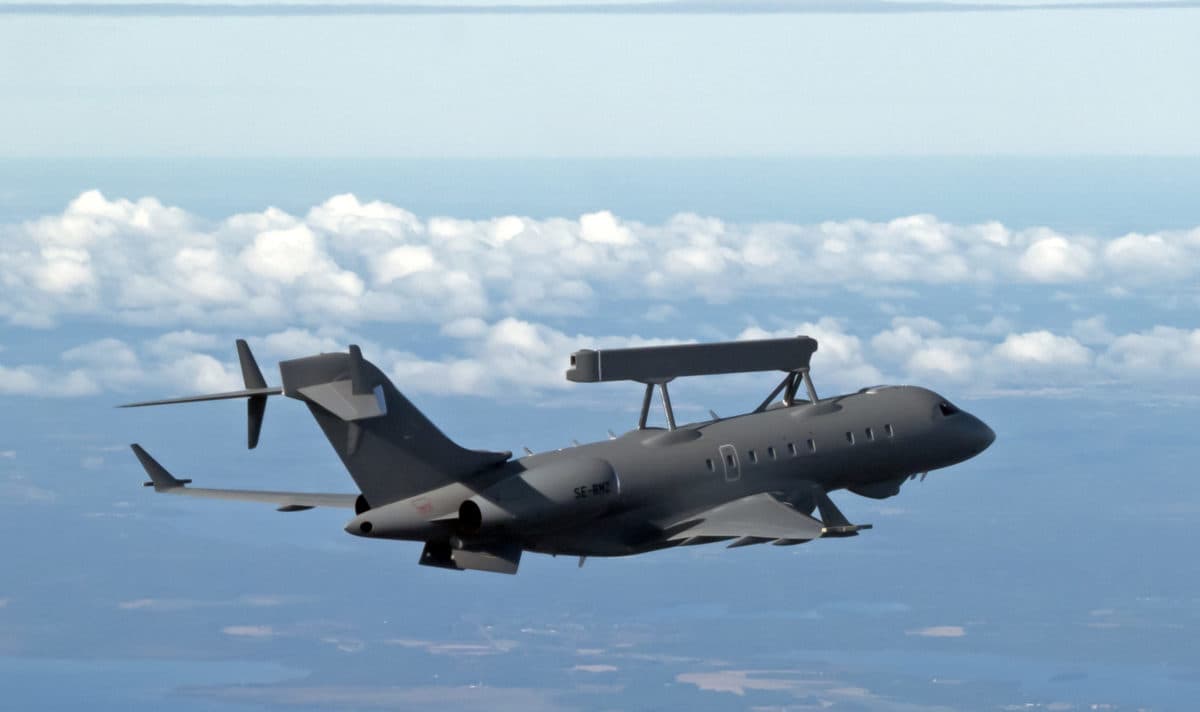
Saab Globaleye
GlobalEye is a cutting-edge early warning and control platform that you are currently viewing. It was developed by Saab’s defense and security branch to fulfill a variety of functions. It is a valuable asset, thanks to its array of sensors, mission system, and Erieye ER radar, among other features. In addition, the Bombardier Global 6,000 long-range business aircraft now has this feature. What you need to know is that this is a very good radar that can function at altitudes of up to 30,000 feet, which is really high.
Saab Globaleye
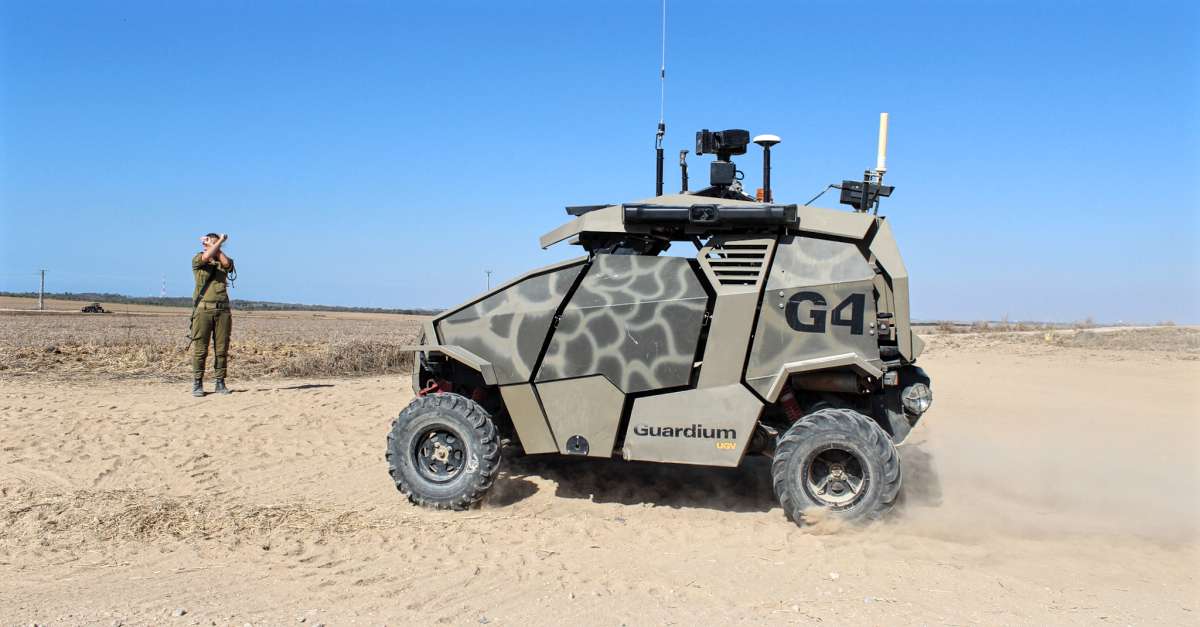
Guardium Unmanned Ground Military Vehicles
Guardium Unmanned Ground Military Vehicle, a small patrol vehicle with a military feel, is shown here. Despite its relatively small carrying capacity of 1.2 tons, it has proven to be an invaluable tool for the Israeli Defense Forces. Its battery pack lasts for 24 hours in battle and 48 hours in cruising mode, making it the most durable ground drone on the market.
Guardium Unmanned Ground Military Vehicles
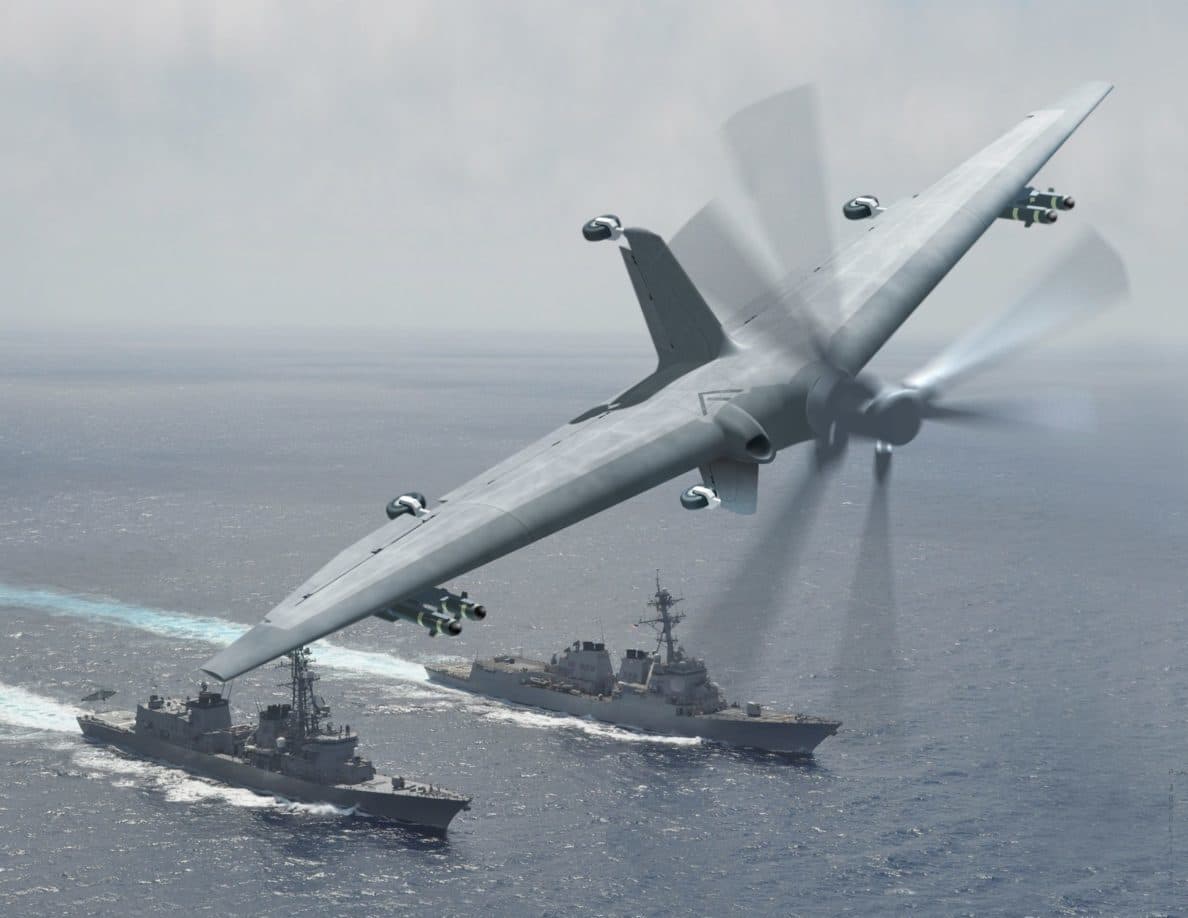
TERN Program
It is true that there are a plethora of small unmanned aerial military vehicles (UAVs) for sale on the market. There aren’t many that are appropriate for small decks and choppy seas, however. That is the hole that the TERN Program seeks to fill with its research. The term “Tactically Exploited Reconnaissance Node” is an abbreviation for “Tactically Exploited Reconnaissance Node.” Isn’t it amazing that it has a similar appearance to a seabird?
TERN Program
Artillery Gun Module (AGM) Self-Propelled Automated Howitzer
This equipment is not only totally automated, but it is also lightweight enough to be transported and airdropped by medium-sized transport planes, which makes it ideal for humanitarian missions. Additionally, the main gun and control function is modular, which means that it may be attached to a variety of various truck and track frame configurations. It is possible that the military may adopt this German concept to transform unused supply trucks into accurate artillery machines. It can be operated by anyone with a computer.
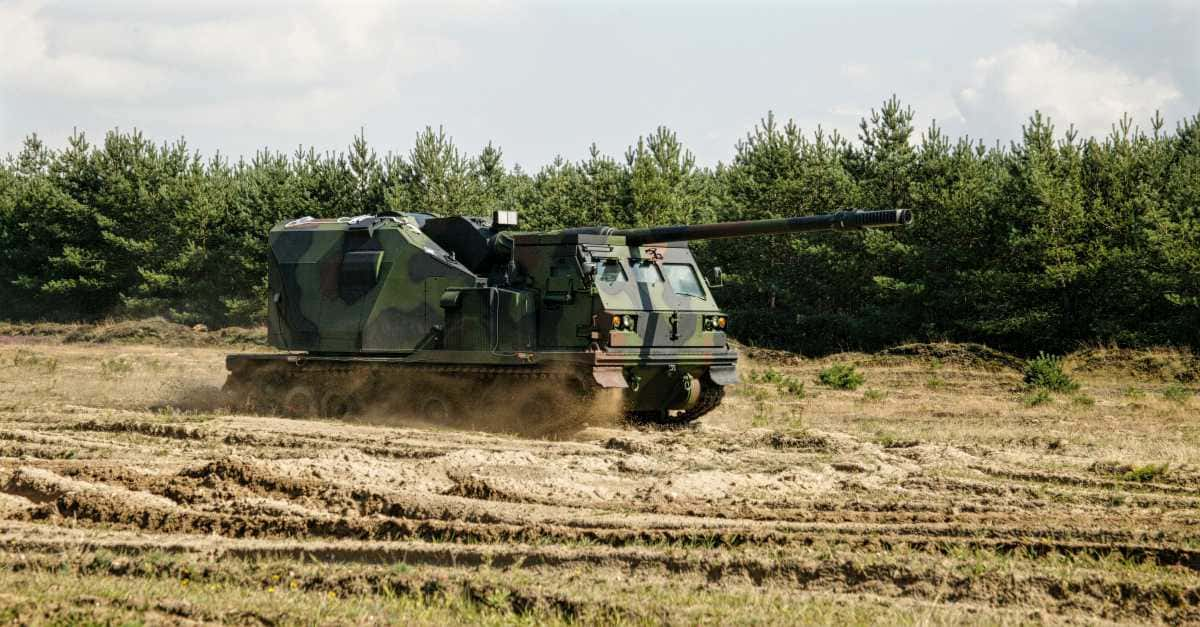
Artillery Gun Module (AGM) Self Propelled Automated Howitzer
Ghost Fleet Overlord
The Naval Sea Systems Command (commonly known as NAVSEA for short) is a branch of the United States Navy. It is a project of the United States Navy. Recently, the military stated that one of the Ghost Fleet Overlord’s test vessels has already accomplished two autonomous transits, each lasting four days. During its unmanned activities, it has traveled more over 3,200 nautical miles and recorded more than 181 hours.
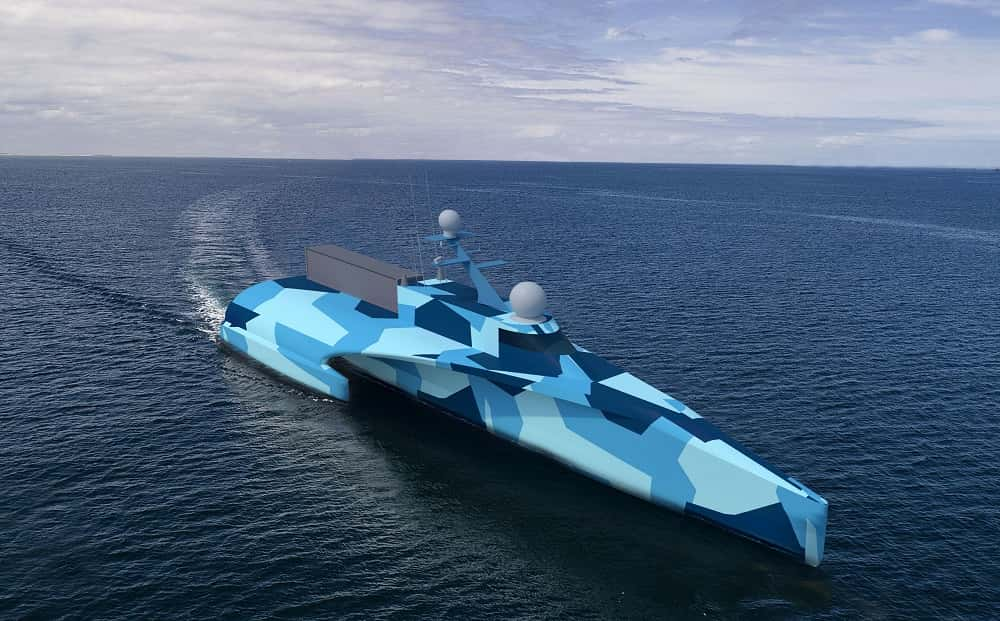
Ghost Fleet Overlord
Sea Hunter
When you learn that Sea Hunter’s official name is the Anti-Submarine Warfare Continuous Trail Unmanned Vessel, you’ll be able to learn even more about the vessel and its capabilities. It is not difficult to understand why it is referred to as ACTUV. Submarines that are stealthy and can lurk close to land were envisioned as a result of this research. The initiative was a resounding success.
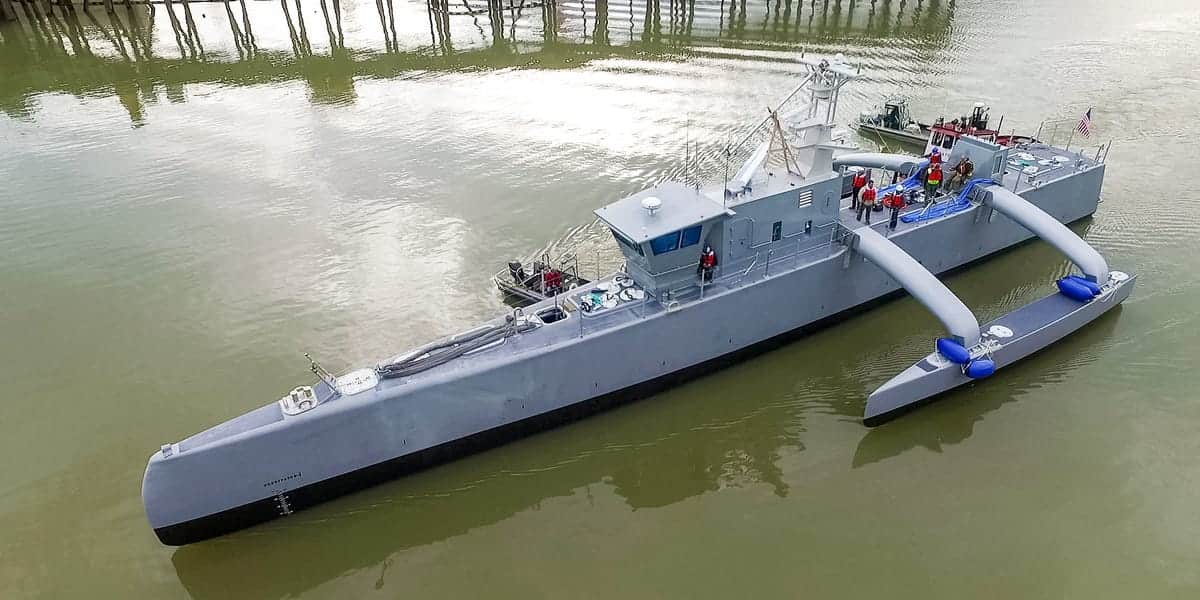
Sea Hunter
The Gladiator UGCV
Take a look at this modified bomb disposal equipment that was created specifically for the Marine Corps. The Gladiator, as it is known, is a new generation of tank that outperforms all previous models in terms of speed, range, and maneuverability. It is protected against small arms fire, allowing it to be used as a combat drone as well. Additionally, it is equipped with a multi-mission remote combat station that is capable of employing anti-vehicle and anti-personnel armament. It is also useful for reconnaissance purposes.
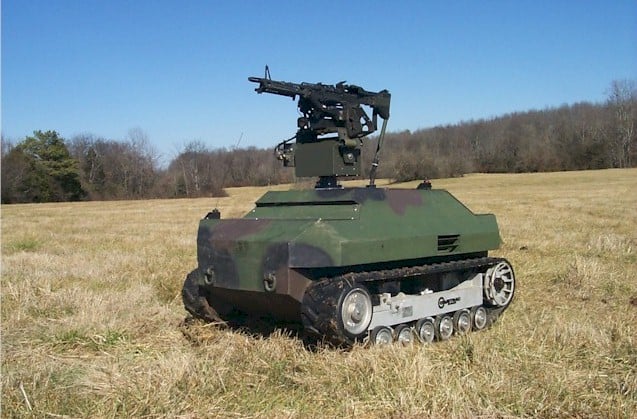
The Gladiator UGCV
B-21 Raider
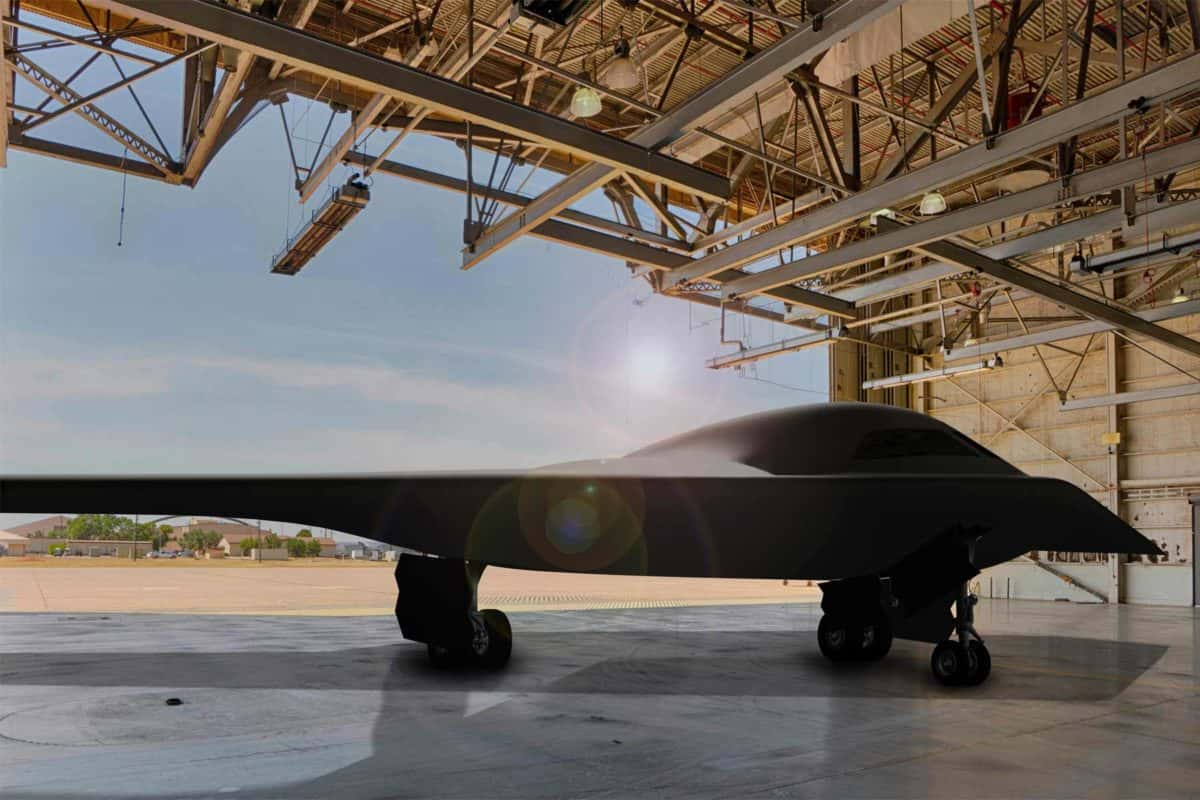
If we had not included the B-21 Raider, this list would have been incomplete. The Air Force was interested in a modernized version of the Long-Range Strike Bomber, thus Northrup Grumman developed the B-21 Raider in response to their request. Despite the fact that it will be a manned aircraft, its attraction lies in the fact that it can also function as a high-altitude stealth drone bomber. Due to the fact that it will be deploying nuclear payloads, it will still require a pilot to man the controls.
B-21 Raider
BigDog Military Robot
Boston Dynamics, the company that developed the BigDog military robot, is now a subsidiary of Google. This was constructed as a force multiplier. It will be able to traverse all terrains without collapsing or losing its balance. This is perfect for use in arid environments such as deserts, sand, snow, and forests. It can be used to carry supplies to soldiers in areas where helicopters are unable to reach.

BigDog Military Robot
“RoBattle” Unmanned Ground Vehicle
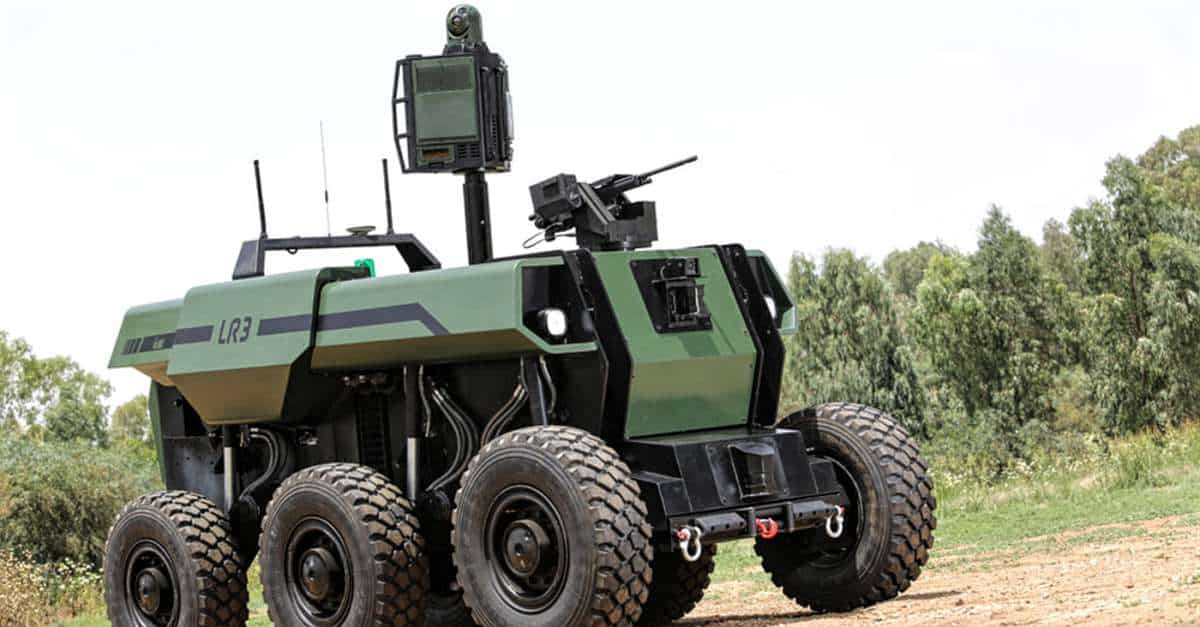
Keep in mind that this is more than just a practical item. RoBattle was designed to both lead combat formations and engage in direct combat with opponents. There are six separate wheels that may be swapped out for tracks on this vehicle. The vehicle has the capability of mounting weaponry such as TOW missiles and Bushmaster guns. The fact that it is automated makes it much more appealing. Despite this, it will necessitate the use of a human operator due to ethical considerations.
“RoBattle” Unmanned Ground Vehicle
UH-19XRW Hoverwing
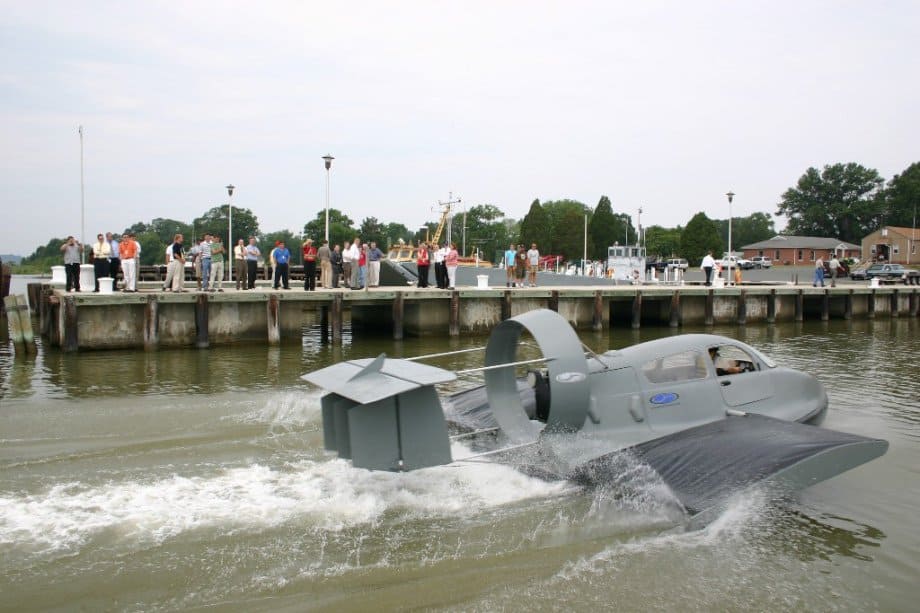
The object in front of you looks like it could be both a flying boat and a hovercraft. The Hoverweing sporting craft is considered to be a pioneer in its field. This amphibious vessel has a carrying capacity of up to 1,200 pounds of cargo and a range of 140 nautical miles. It also has a top speed of 75 mph and a cruising altitude of over six feet, which is impressive for a little plane.
UH-19XRW Hoverwing
KRATOS BQM-167 Aerial Target Drone
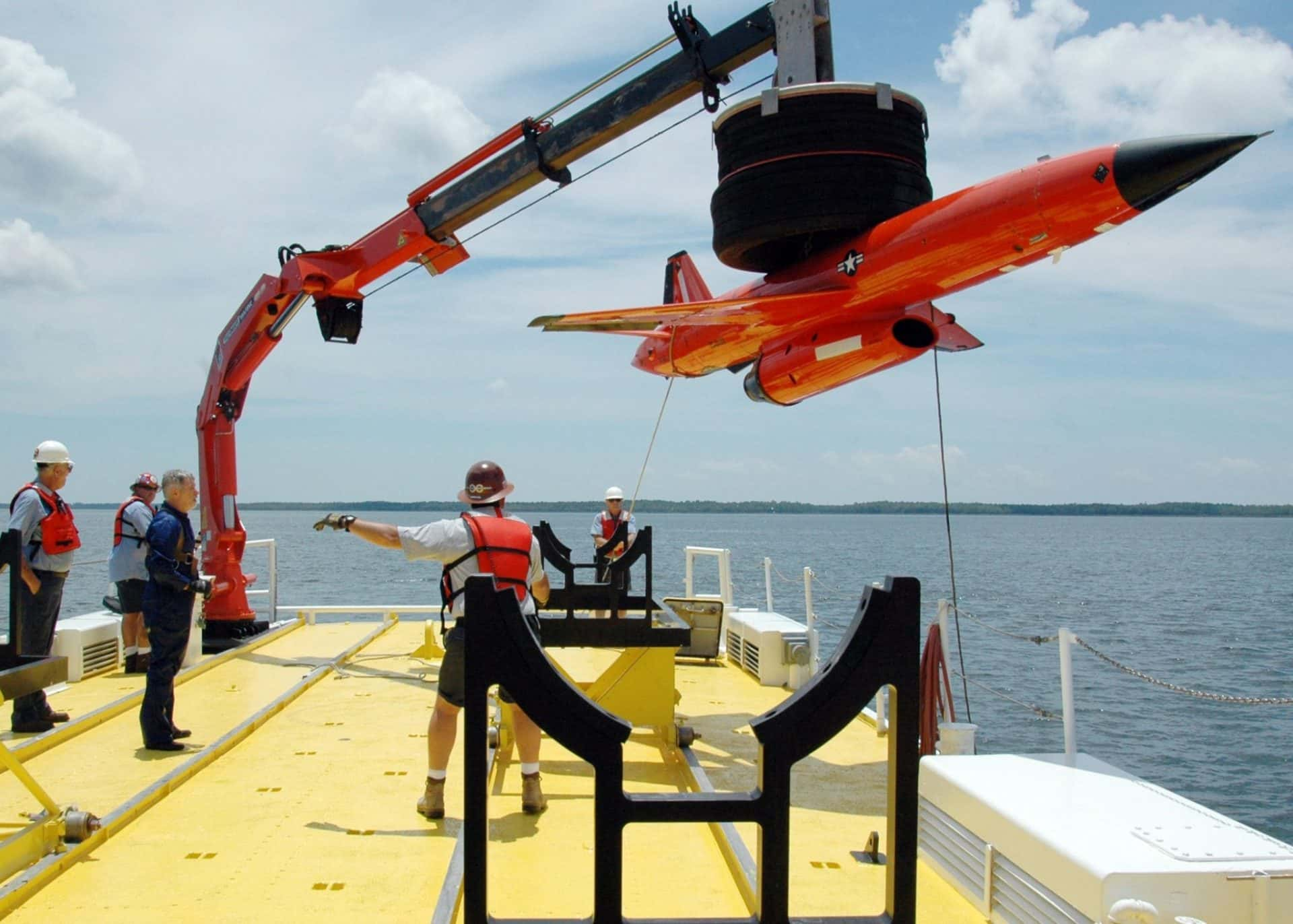
The KRATOS BQM-167 Aerial Target Drone is an interesting piece of technology. The Air Force Subscale Aerial Target, sometimes known as the Skeeter, is a type of aerial target used by the Air Force. The machine has fighter-like capabilities and features, which makes it an excellent choice for combat. The reason why it has been compared to 4th Generation Fighter mounts is easy to understand. This is great for weapons release training that is done in real time.
KRATOS BQM 167 Aerial Target Drone
Artificial Intelligence Aid
Because of its importance in intelligence, reconnaissance, command and control, and other areas, we have included it on our list. Because, in case you weren’t aware, artificial intelligence was responsible for the beginning of the Fourth Industrial Revolution! A large number of defense agencies have taken this into mind as they design new weapons systems and equipment.

Artificial Intelligence Aid
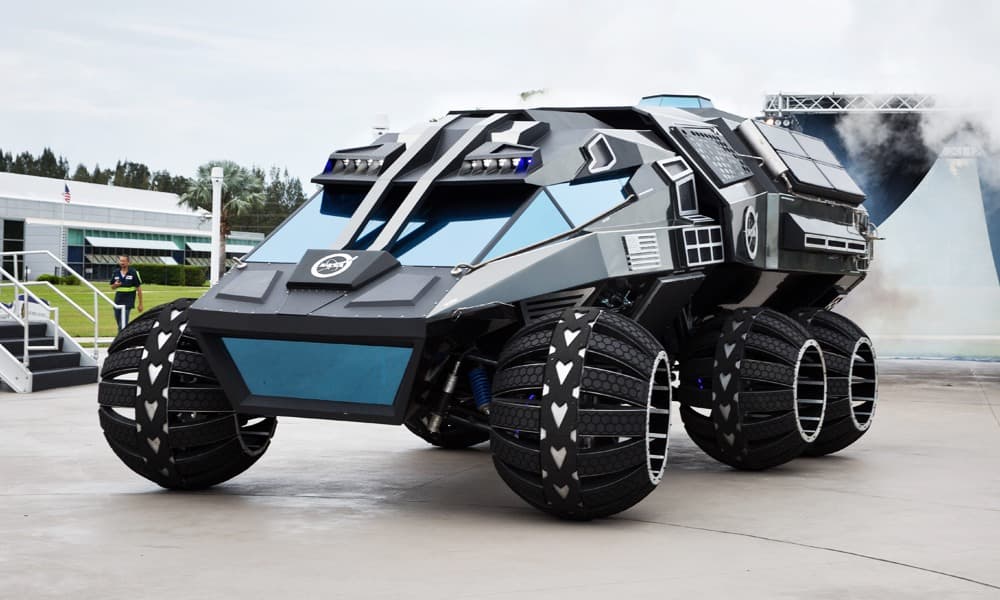
NASA Mars Rover – 2020 Prototype
What a thing of beauty. It appears like you are looking at a model of the NASA Mars Exploration Rover. It was unveiled to the public for the first time at the Kennedy Space Center in 2017. This device is not the same as the one that will travel to the next planet, despite the fact that it is of the same model and manufacturer. This appears to be a prop from a science fiction film, don’t you think?
NASA Mars Rover – 2020 Prototype
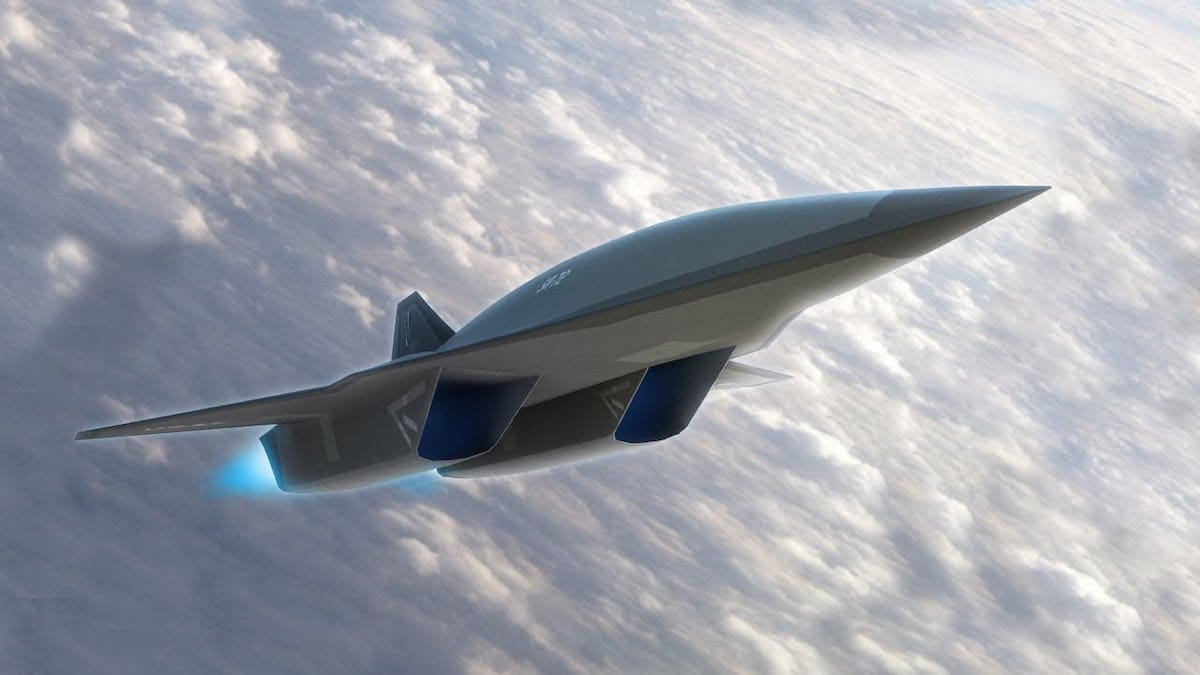
Lockheed Martin SR-72
The Lockheed Martin SR-72 asserts that it is capable of performing a stunning feat. According to the people who built it, this device can go to any location on the planet in about an hour. We are confident that you are scratching your head in bemusement at this. The answer is that this autonomous vehicle should be capable of reaching speeds of up to 14,500 mph and possibly higher.
Lockheed Martin SR-72
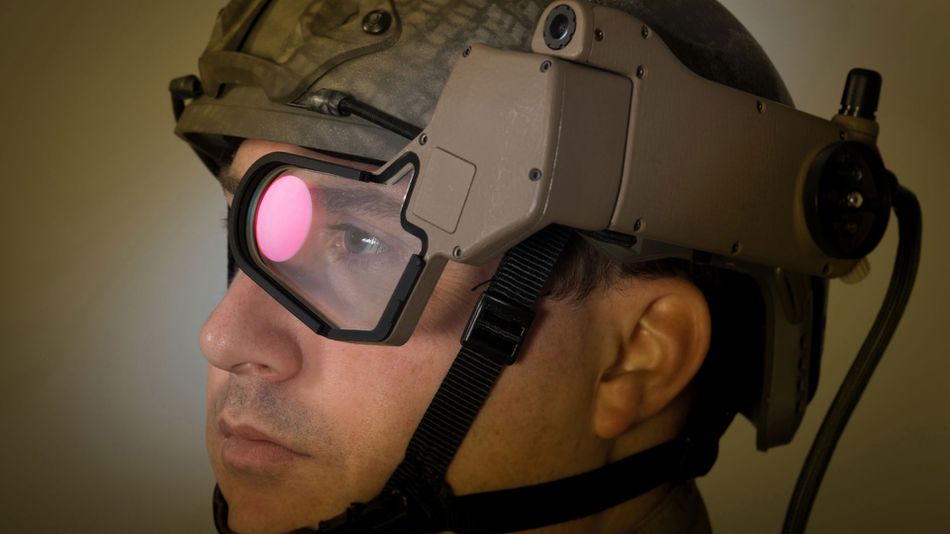
Google Glasses
To be sure, Google Glass is not intended to be used as a military vehicle. Nonetheless, this was produced by the military and has shown to be an incredible advancement in the realm of technology. Soldiers on the ground will learn more about the mission as a result of this. It is capable of a variety of tasks, including measuring long distances, transmitting drone footage, and rendering 3D building blueprints. We can’t believe that such a small item can accomplish so much, let alone more than that.
Google Glasses
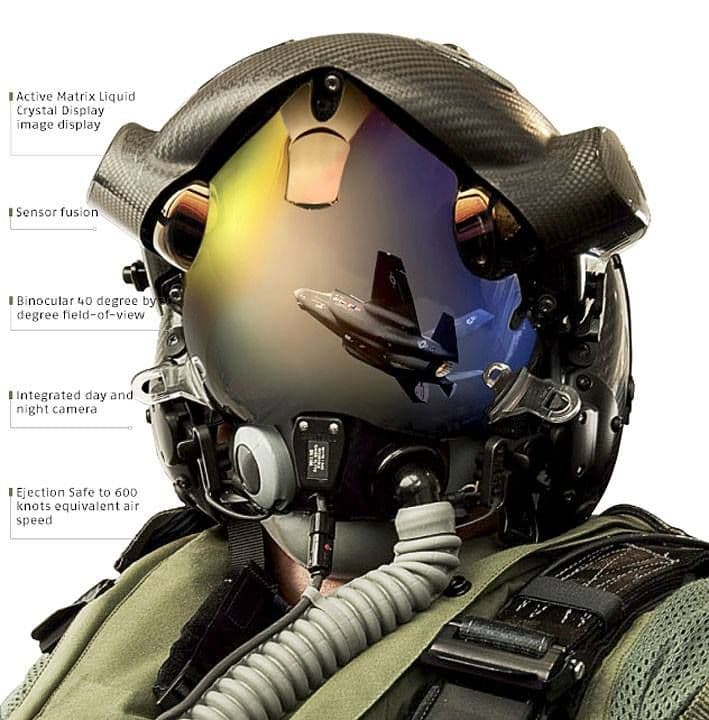
The Distributed Aperture System (DAS)
The Distributed Aperture System (DAS) is abbreviated as DAS. People will be able to broadcast photos from six infrared cameras on the airplane through their helmets thanks to this technology. Pilots will be able to “see through” the cockpit and airframe as a result of this technology. Aside from that, the operator will be able to take advantage of the system’s night vision function.
The Distributed Aperture System (DAS)
Festo Camera Ants
We’ll all agree that this one doesn’t sound like it should be true. We, on the other hand, are not here to play games with you. Consider how remarkable it is that researchers are now working on constructing camera ants that can collect intelligence. This can either be controlled or uncontrolled. Essentially, they will be able to transmit footage to a specific access point. Cool!

Festo Camera Ants
Drone Strike-Downs
UAV offensives have long been associated with counter-terrorist operations. It would be difficult to reach this goal without the assistance of these machines. Despite this, there are now fresh counter-options that will make it possible to go about it in a different way going forward. Within a reasonable amount of time, military vehicles should be capable of countering drone attacks.
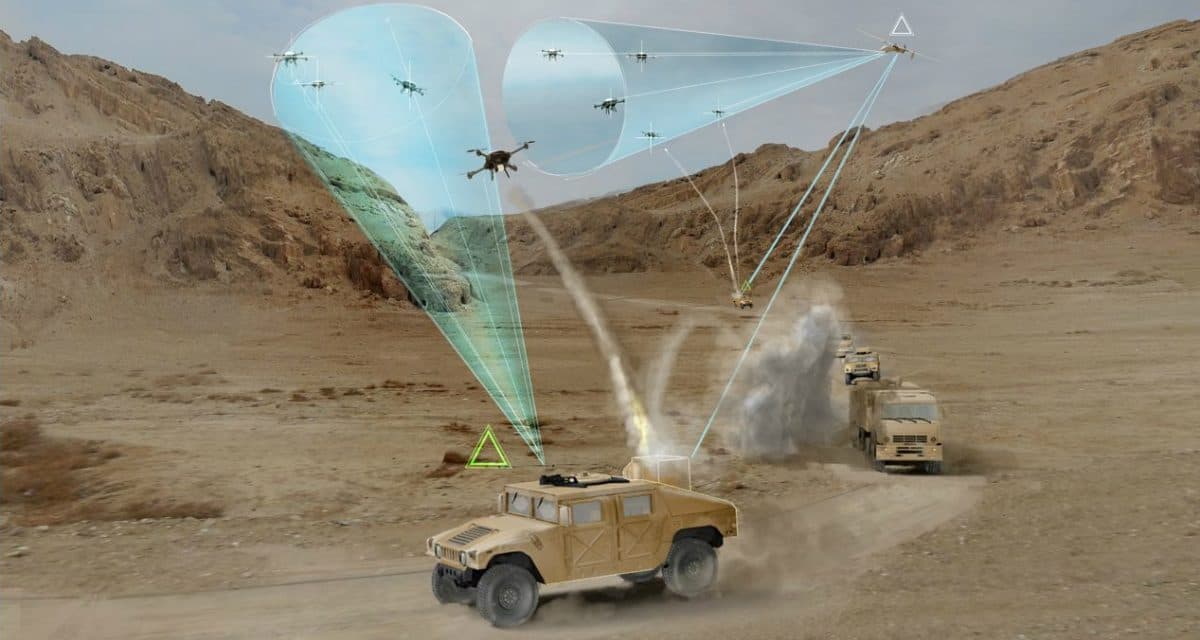
Drone Strike-Downs
RIPSAW MS-1
This unmanned vehicle is a light tank that can travel at speeds of up to 95 miles per hour. As a result, the RIPSAW MS-1 is the world’s fastest military vehicle on tracks, according to the United Nations. Originally, it was intended to serve as a base chassis for support vehicles, armored personnel carriers, and drone tanks, among others. The core form of the vehicle is one of the world’s fastest and most maneuverable armored vehicles. A unit is significantly less expensive than a million dollars, which is a plus.
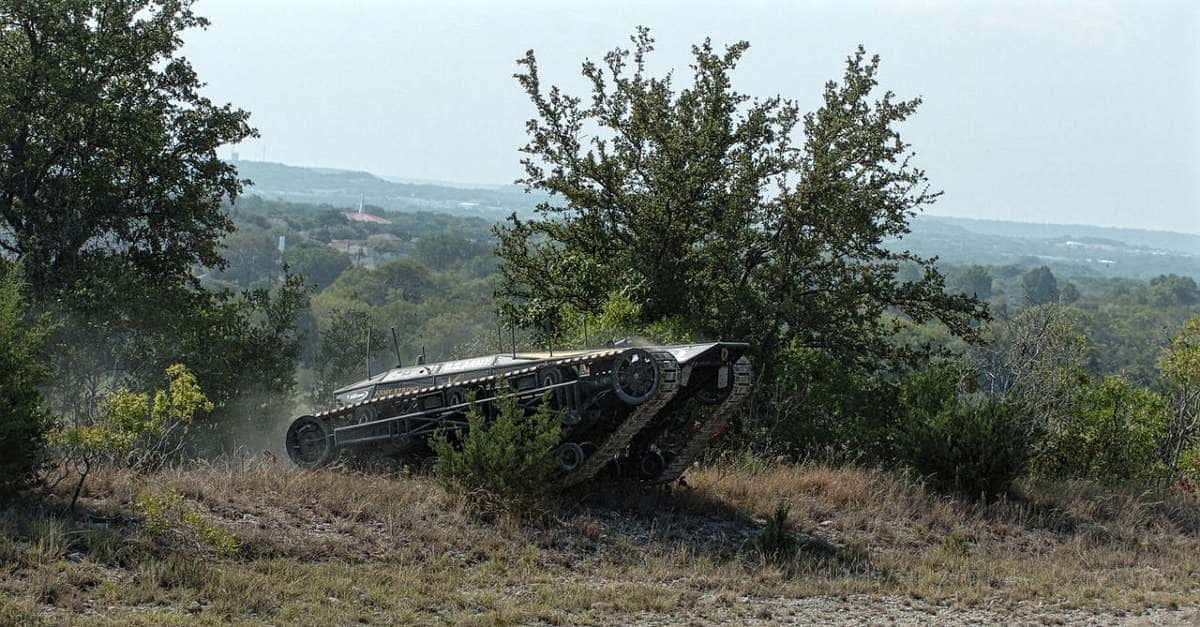
RIPSAW MS-1
Army Futures Command All-Terrain Vehicles
For what reason is this referred to as “The Vehicle That Shall Not Be Named” by some people? As it turned out, the Army Futures Command All-Terrain Vehicle had just completed a series of testing at Texas A&M University when I arrived. When it came to aspects like portability, radar functioning, and consistency, this piece of equipment performed admirably. We are delighted to receive this information.
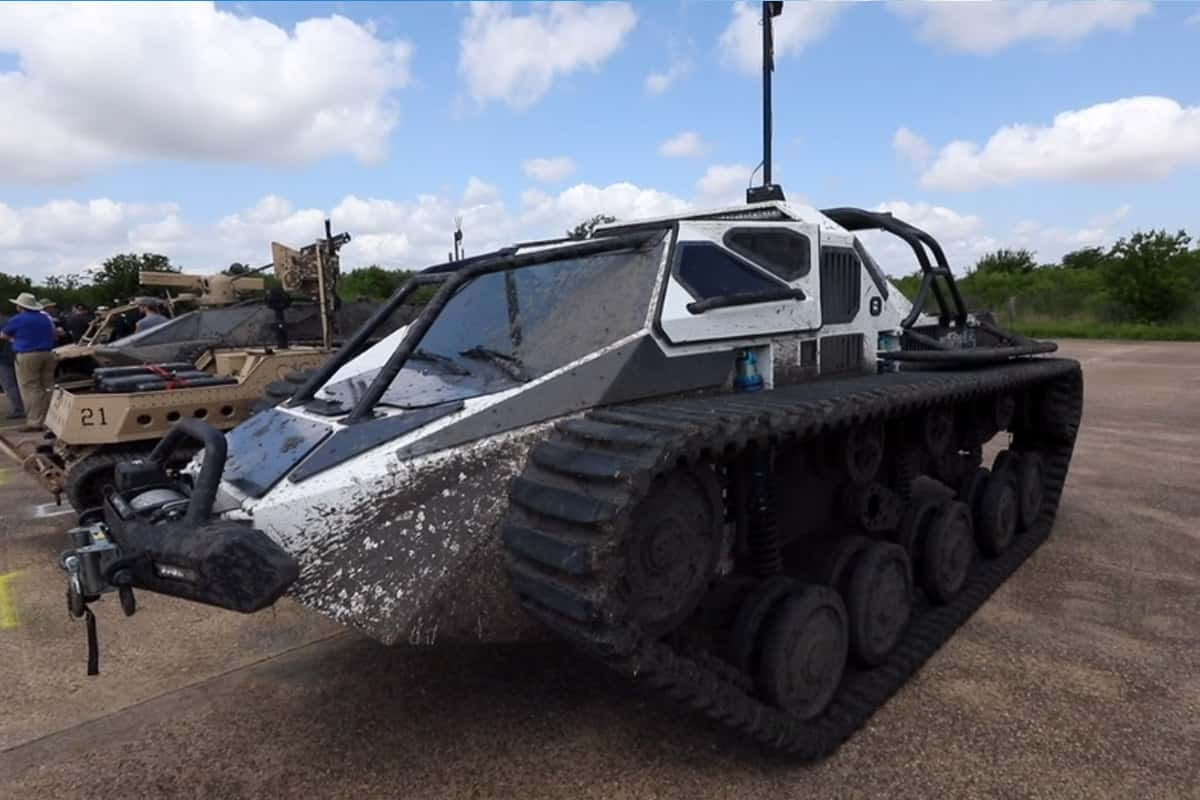
Army Futures Command All-Terrain Vehicles
RT01 Transport Vehicle
The Rover is an RT Series Group Transport vehicle that was developed by Weyland Corp. It is also known as the Rover. This armored personnel carrier (APC) is one of the most popular products that the corporation has to offer, according to its customers. It’s fitted with a shape-memory alloy wheel system that has treads made of nanofiber-reinforced strong composite material, which allows it to withstand severe temperatures.
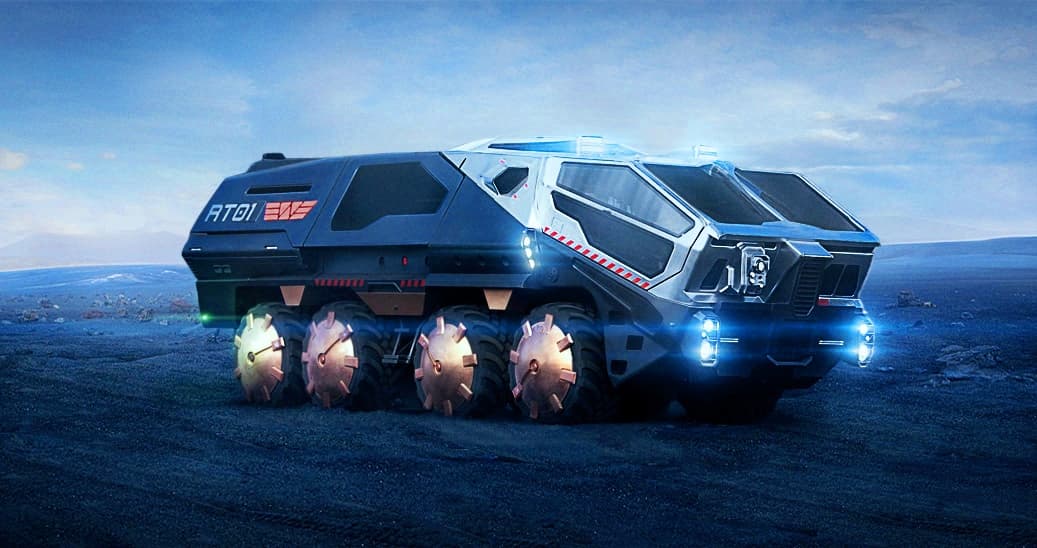
RT01 Transport Vehicle
Non-Pneumatic Tires
To be sure, airless tires are nothing new in the Army’s arsenal. It is true that this technique has been employed in the military for quite some time now. We are simply delighted to inform you that they will be made available to civilians as well. Due to the fact that the tires are not prone to flatting, you will not have to replace them on a regular basis. The most advantageous aspect of these items is that they allow you to save a significant amount of money.

Non-Pneumatic Tires
Oshkosh M-ATV
Despite the fact that the Oshkosh M-ATV is small, it is quite powerful. The patrol car has even gone on to take the place of the HUMVEE in some areas. Did you know that it can also be used in conflict situations? It’s superior to everything else available since it’s faster and more maneuverable than anything else on the market. It also provides excellent protection against IEDs and rockets. Aside from that, the CROW remote weapon platform and IED jammers are both terrific additions.
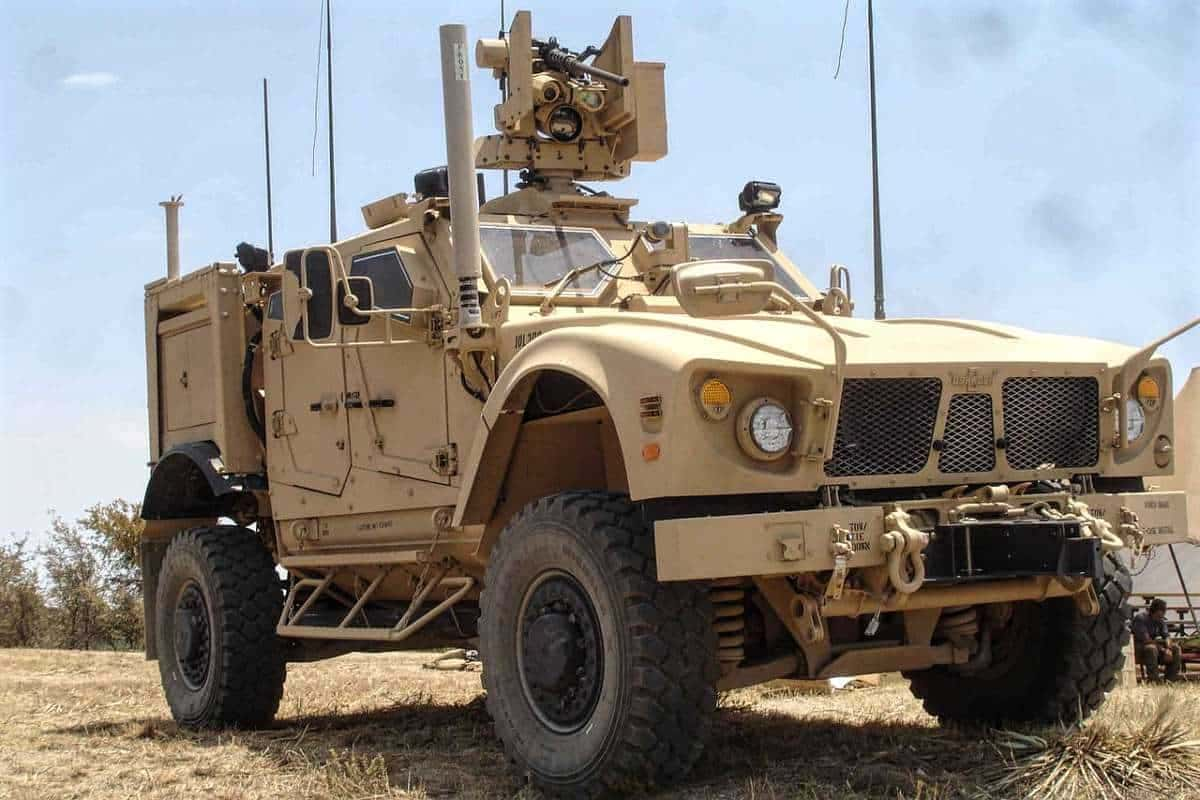
Oshkosh M-ATV
DOK-ING MV-4 Mine Clearance Drone
The DOK-ING MV-4 Mine Clearance Drone is manufactured in Croatia and has the capability of navigating through minefields and clearing obstacles in a matter of seconds. Can you believe that this can be accomplished despite the fact that the crew is thousands of miles away? The drone is unique in that it features an all-electric power train that is extremely silent, which is beneficial in a tracked vehicle. This lineup used to include a number of specialized variations that were capable of executing a variety of tasks.
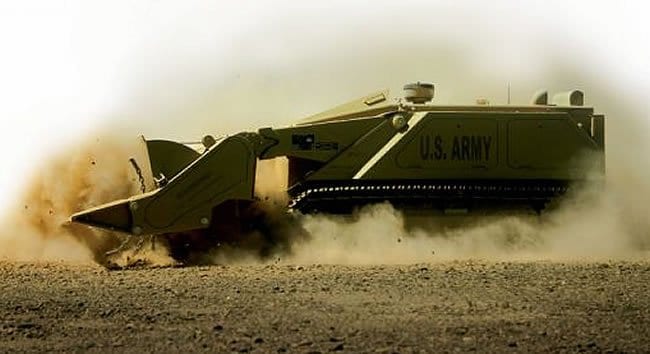
DOK-ING MV-4 Mine Clearance Drone
Gibbs Quadski
This is the world’s first ever amphibious assault bicycle, and it’s a beauty! The Gibbs QUadski is equipped with a 140-horsepower engine that allows it to go at speeds of up to 45 mph on water or land. This model is available in a number of different variations on the market. A snowmobile with amphibious capabilities is one of the options. Despite the fact that it was designed as a recreational sports boat, it has proven to be popular among special forces operators as well as the general population.
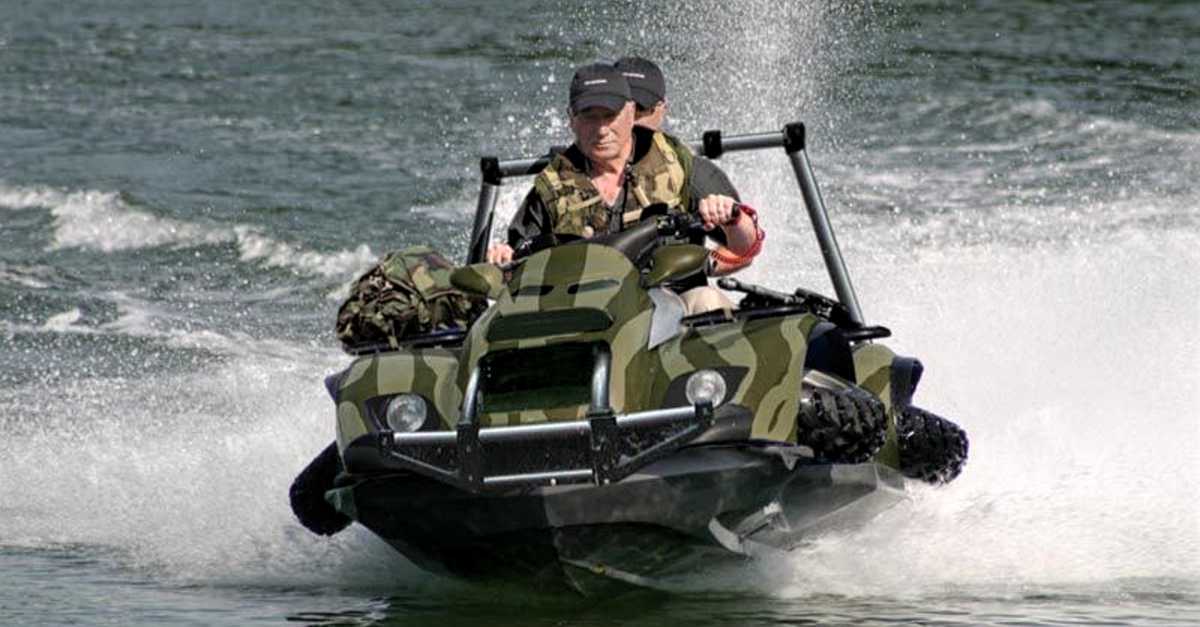
Gibbs Quadski
XM25 COUNTER DEFILADE TARGET ENGAGEMENT (CDTE) SYSTEM
Since the introduction of the XM25 Counter Defilade Target Engagement System, things have changed significantly. This is an airburst grenade launcher that is capable of delivering grenades at incredible speeds and with pinpoint accuracy. As an added bonus, the laser rangefinder allows users to detect hostile targets from a long distance. The XM25 CTDE System performs admirably!
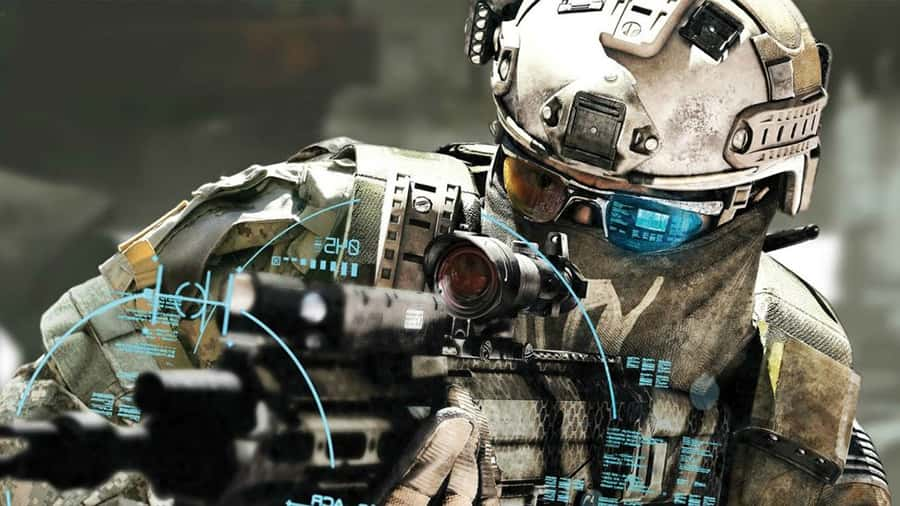
XM25 COUNTER DEFILADE TARGET ENGAGEMENT (CDTE) SYSTEM
The Wheel Track
It is quite impressive to hear that the Wheel Track can morph in less than two seconds, given how fast it can go. This can even occur while the vehicle is in motion as it transitions from circular wheels to triangular wheels. Development of the project was funded by the Defense Advanced Research Projects Agency and carried out by the National Robotics Engineering Center at Carnegie Mellon University. In 2018, it was named the winner of the Best of What’s New category at the Popular Science Awards in the United Kingdom.
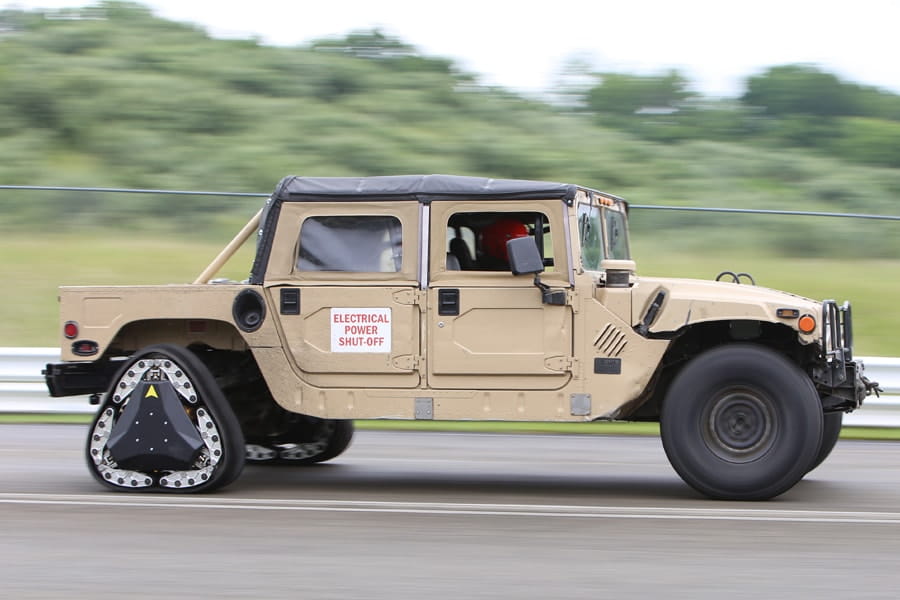
The Wheel Track
Corner Shot
Did you and your buddies ever engage in a game of cops and robbers when you were younger? If this is the case, you will understand what we are talking about. The corner shot is a method in which you bend a weapon at the corner of a structure in order to keep yourself safe while dishing out assaults to your opponents. In actuality, military have utilized this approach for a very long time.
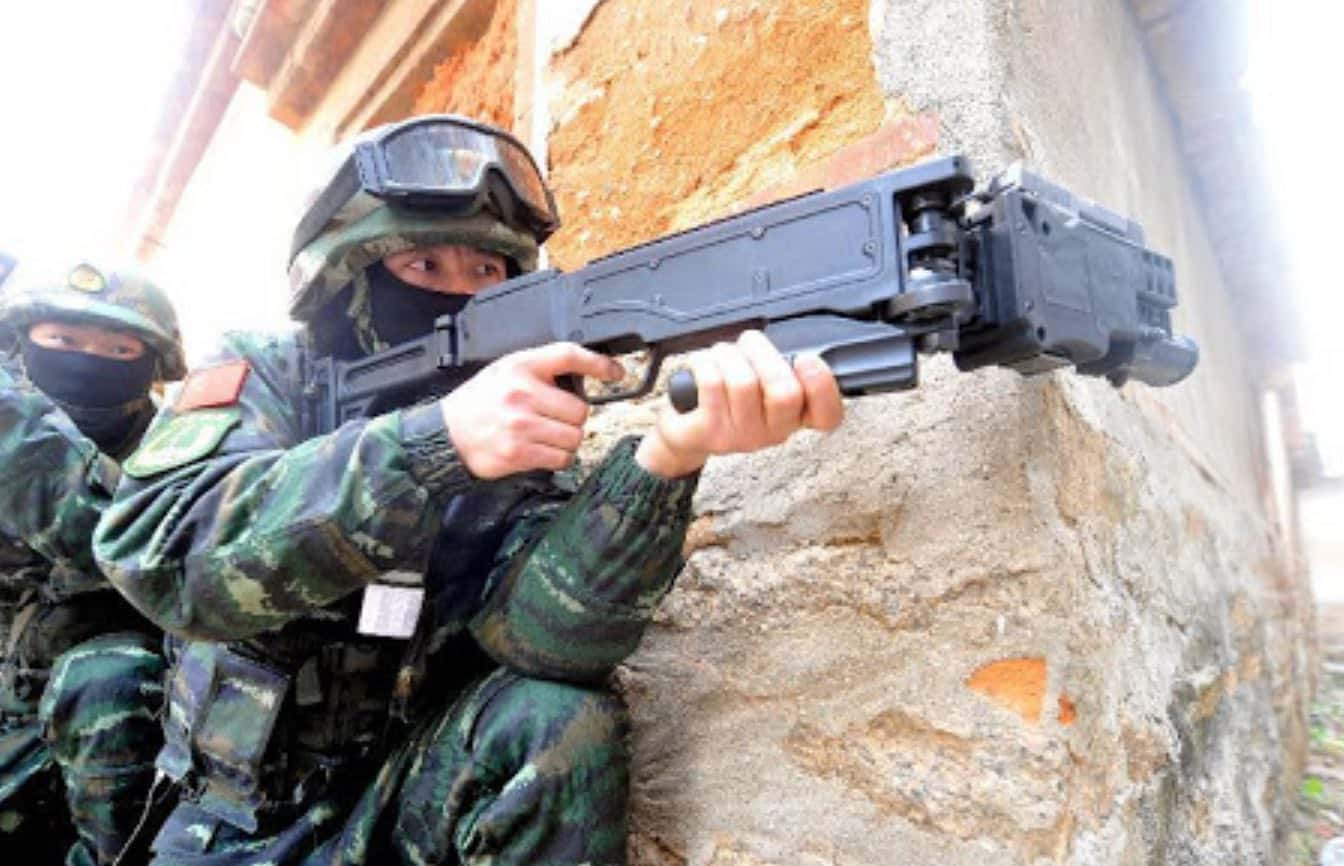
Corner Shot
Crusher UGCV
The Crusher unmanned ground combat vehicle (UGCV) is one of the most technologically advanced unmanned ground combat vehicles yet created. In addition to its aluminum and titanium body, the vehicle is powered by a hybrid electric/turbo-diesel engine. Aside from that, it has an independent suspension. It can basically fill in for just about any combat or support job you can think of, thanks to its powerful AI package and outstanding sensor capabilities. It is also capable of withstanding all weather conditions.
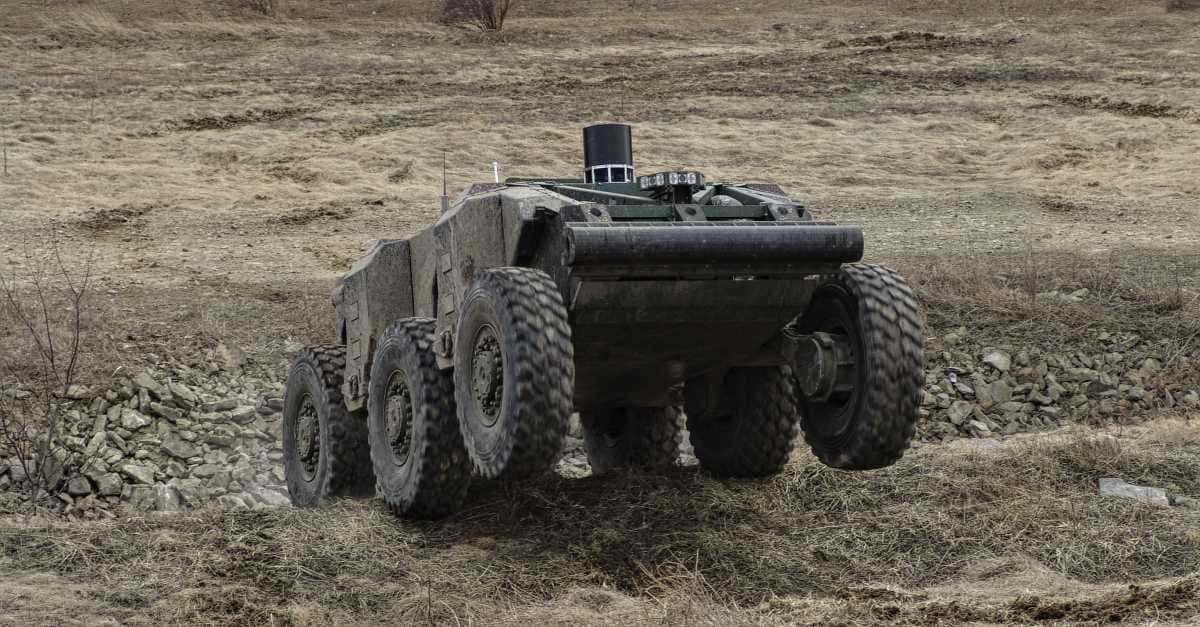
Crusher UGCV
Urban Aeronautics AirMule
The Israeli Defense Forces were responsible for the development of this flying automobile. When it comes to urban operations, the Urban Aeronautics AirMule has proven to be a game-changer. It has the capability of transporting over a thousand pounds of persons or equipment for up to an hour. This is able to maneuver into narrow locations, which distinguishes it from most other choppers. The AirMule is an excellent choice if you need to rescue people from a burning building or transport supplies to remote locations.
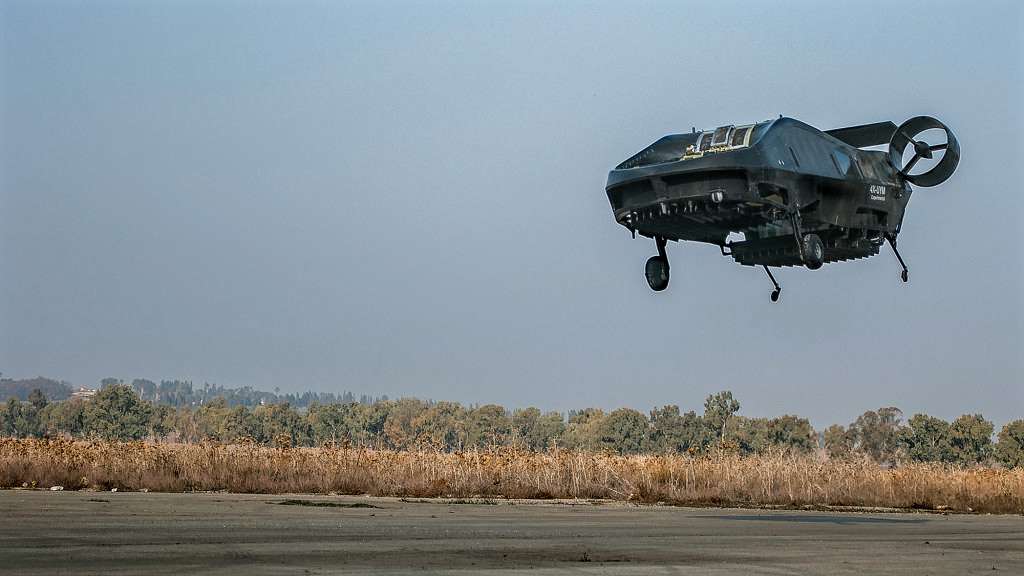
Urban Aeronautics AirMule
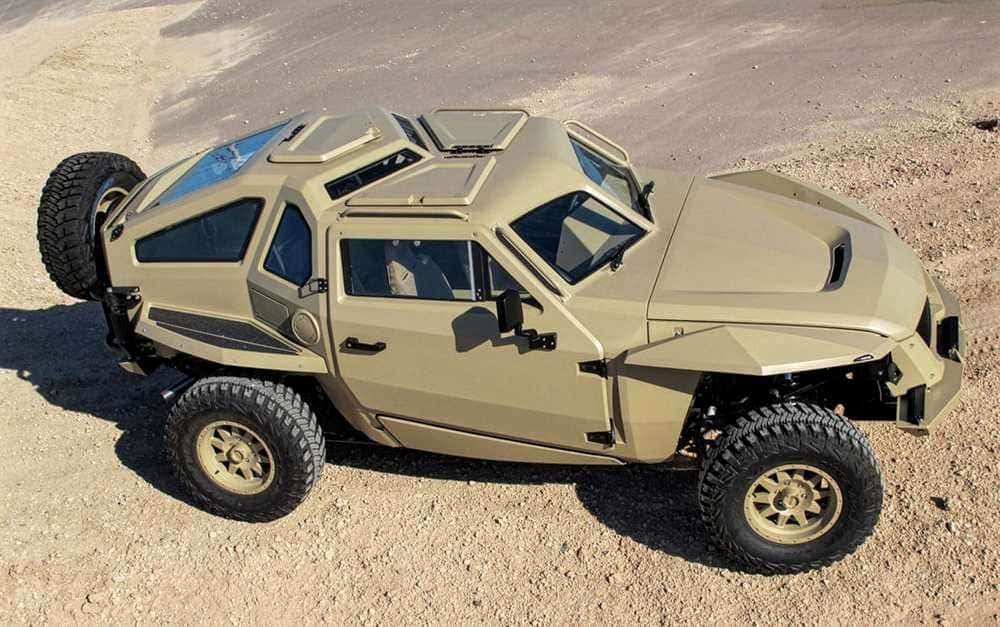
FLYPmode Patrol Vehicle
The FLYPmode Patrol Vehicle is now undergoing operational testing, despite the fact that it is expected to be beneficial when it comes to rapid deployment. The automobile provides protection that is comparable to that provided by a light MRAP. The vehicle’s visibility, speed, and maneuverability have all improved dramatically as a result of this. The technology developed by DARPA will be inexpensive, versatile, and modular in design. We anticipate that it will be put into operation in two years.
FLYPmode Patrol Vehicle
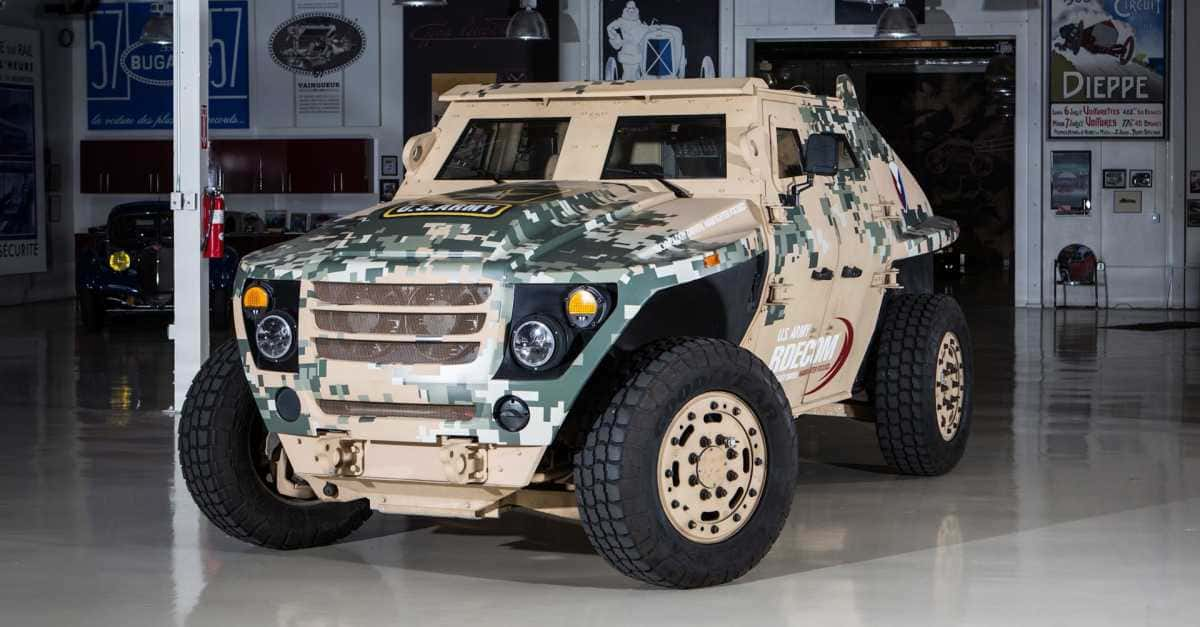
Fed Alpha Armored Car
When it became necessary to replace the HUMVEE, this was one of the first candidates to vie for the throne. Currently, the Fed Alpha Armored Car is being utilized to demonstrate various combat designs. This armored vehicle was equipped with a hybrid engine and became known as a fuel-efficient armored vehicle since it consumes only 70 percent the amount of gas that a Humvee does while maintaining the same speed, load capacity, and protection. A built-in solar panel makes this device one of a kind and is excellent for when you need to recharge your device on the road.
Fed Alpha Armored Car
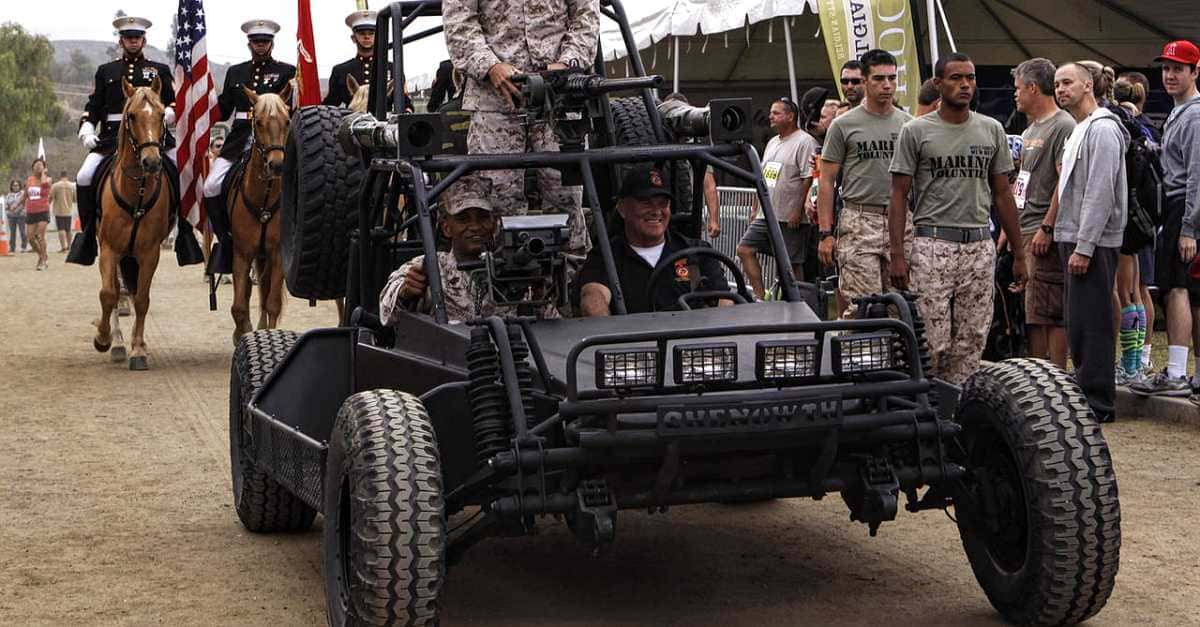
Chenowth Advanced Light Strike Military Vehicles
With the Chenowth Advanced, we have the most up-to-date version of the Light Strike Vehicle, which was made famous during Operation Desert Storm. In comparison to the model that came before it, it is more fuel-efficient, faster, and more mobile. Furthermore, it is capable of navigating side slopes of 50% and gradients of 75% at high speeds. Furthermore, the 160 horsepower diesel engine is capable of driving strap-on armor! With battery hookups, Warlock electronic jammers, and modern surveillance sensors, the tiny scout is a fast vehicle with plenty of features.
Chenowth Advanced Light Strike Military Vehicles
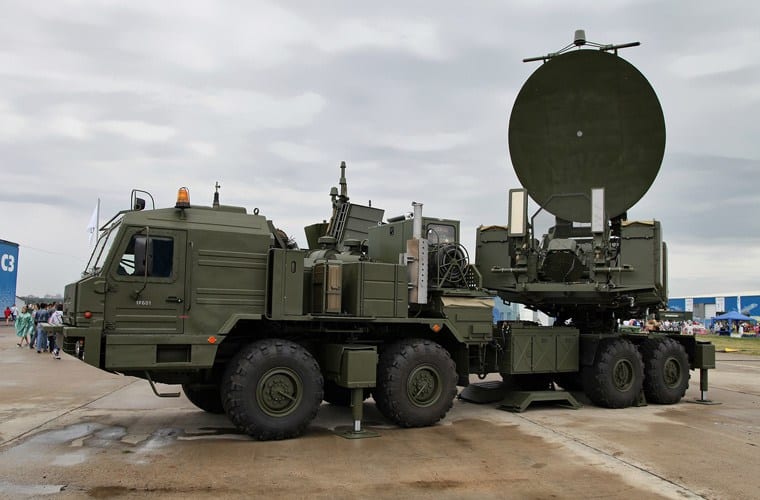
KRASUKHA-2/4 Electronic Warfare System
Take a look at the Krasukha-2, which is a mobile electronic countermeasure/jammer with a lot of punch. It has the ability to interfere with UAV controllers and AWACS radars, among other things. Additionally, it has the capability of causing the same damage to fire control sensors and cruise missile guidance systems, among other things. This is a substantial piece of equipment, with a range of 250 kilometers between charges. In fact, it has the potential to degrade the performance of low-Earth-orbit reconnaissance satellites as well!
KRASUKHA-2/4 Electronic Warfare System
Storm Search and Rescue Tactical Vehicle
What is it about dune buggies that we find so appealing? It is not easy to design a vehicle that will allow rescue crews to go through challenging terrain while transporting up to three litters of patients. That it is still small and lightweight enough to be airdropped from transport helicopters is beyond belief to us at this point. It is also capable of doing U-turns on steep hills and high-speed J-turns above rough terrain. This vehicle also offers exceptional cross-country maneuverability that has not yet been surpassed by any other wheeled military vehicle on the market.
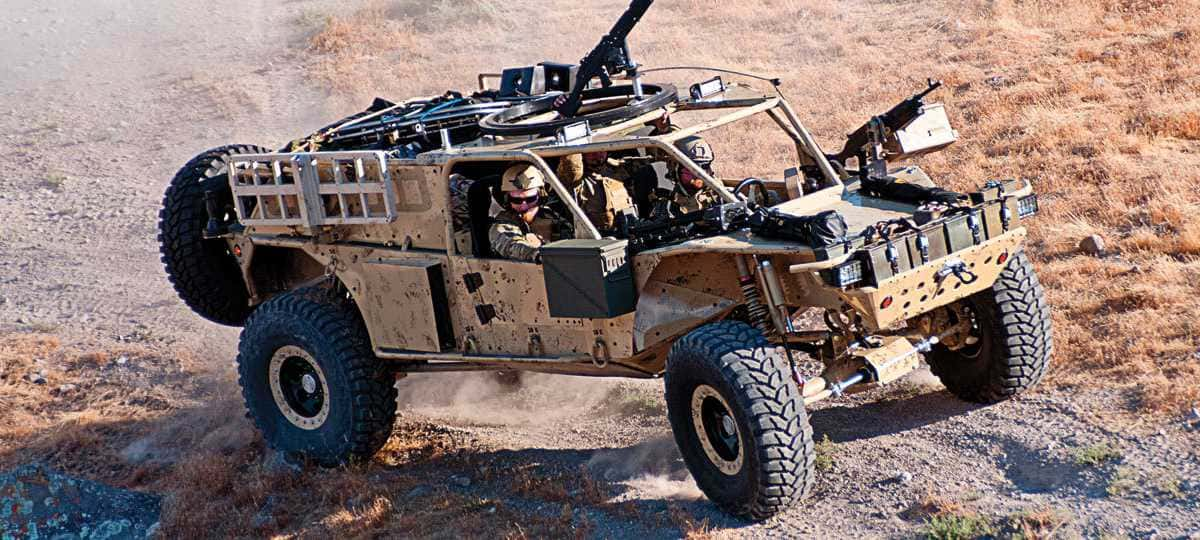
Storm Search And Rescue Tactical Vehicle
TOS-1 Buratino Heavy Flamethrower System
When it comes to maneuverability of military vehicles, the TOS-1 Buratino Heavy Flamethrower System does not rank among the best available. Despite this, it is difficult for us to ignore that it has one of the most appealing visual appearances on the market. The chassis for this is based on the normal Russian T-72 MBT, but the turret has been replaced with rocket contraptions to transform it into a short-range artillery machine. Just so you’re aware, this bad boy has the capability of launching 24 to 32 incendiary or thermobaric rockets in a matter of seconds.
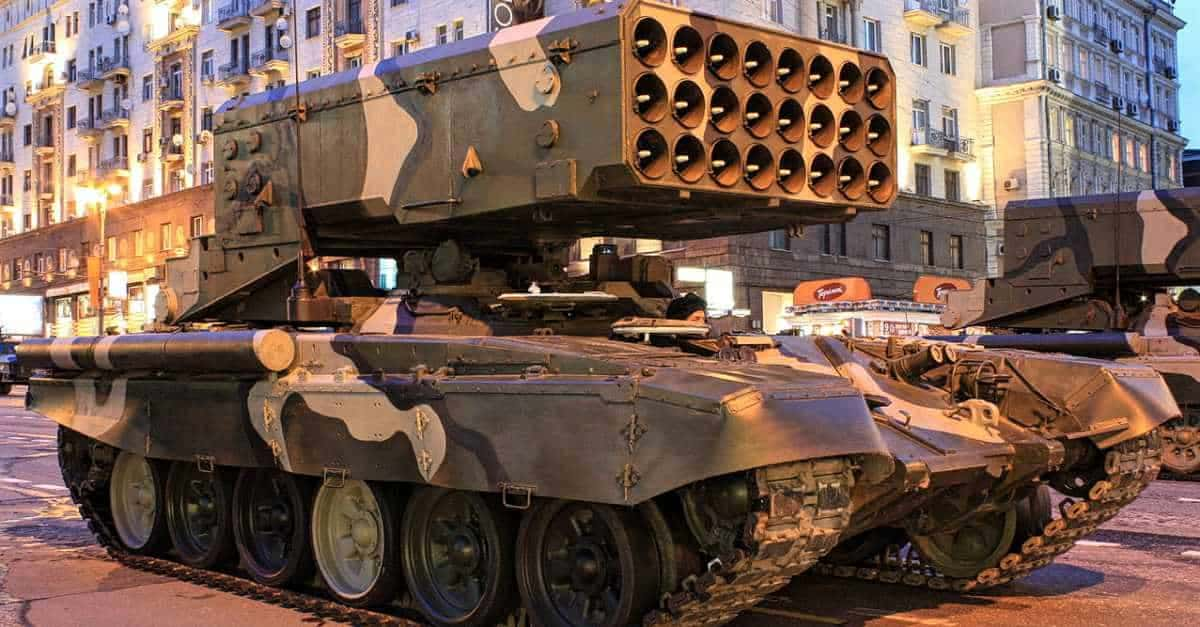
TOS-1 Buratino Heavy Flamethrower System
Ultra Heavy-Lift Amphibious Connector
This is a half-scale model of the Ultra Heavy-Lift Amphibious Connector, the Marine Corps’ newest tracked amphibious landing craft and the newest member of the tracked amphibious landing craft series. It is sometimes referred to as the “combat paddleboat” since it has three times the cargo capacity and two times the range of the largest hovercraft ever built on the planet. In a single journey, a single UHAC is capable of transporting two M1 Abrams to “hot landing zones.”
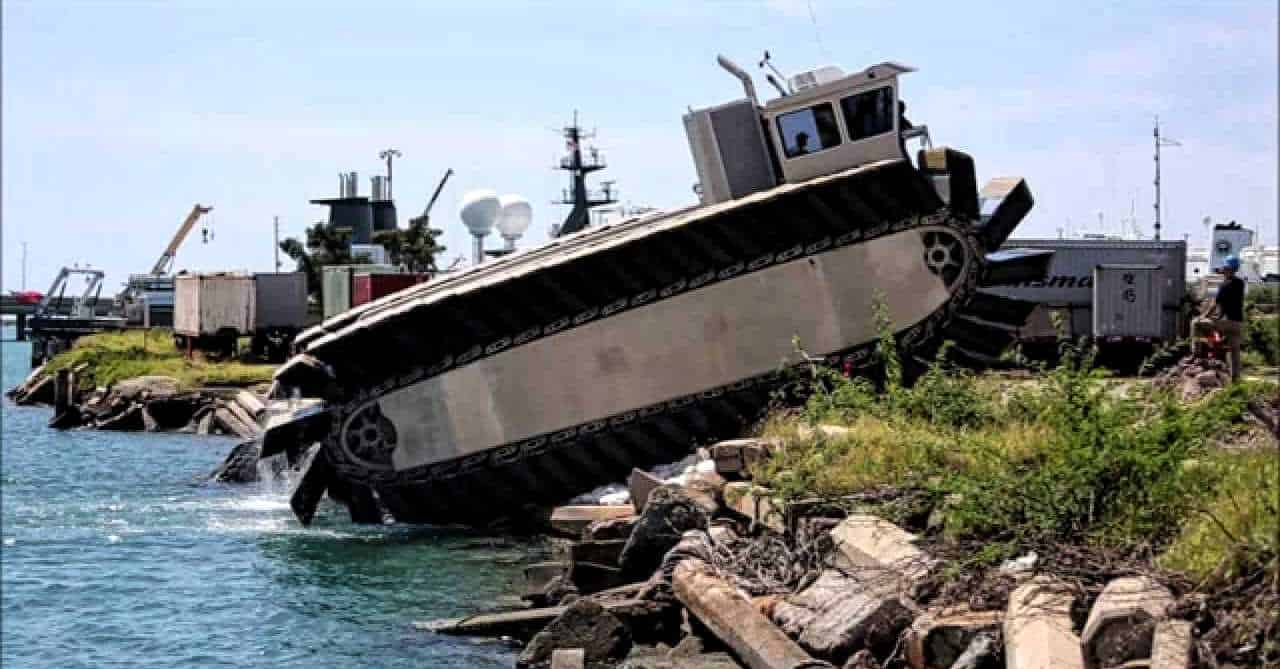
Ultra Heavy-Lift Amphibious Connector
Merkava IV Windbreaker MBT
Isn’t this photo of the Merkava IV Windbreaker MBT really fantastic? This armored vehicle is one of the greatest tankers available because it is equipped with a large number of remote-controlled machine guns as well as a 120 mm howitzer. This model also includes a 60 mm mortar that is built in. The thanks are accompanied by a cargo bay large enough to accommodate a four-man infantry fire crew. It will also be protected from missiles thanks to the Trophy active protection system.
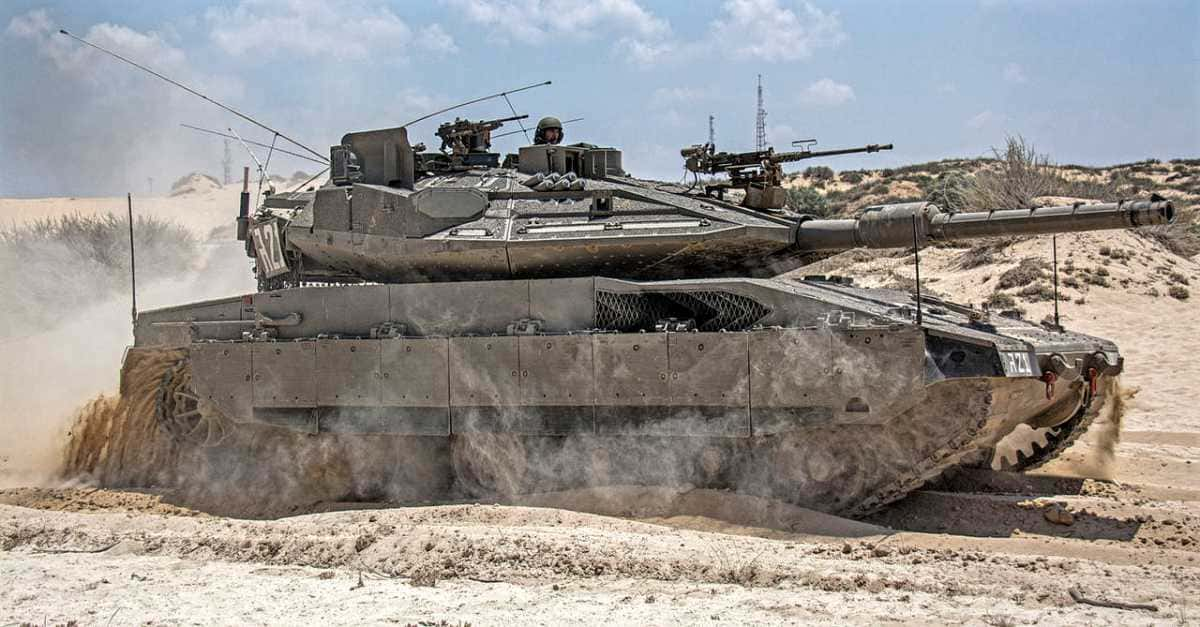
Merkava IV Windbreaker MBT
Saab Skelder
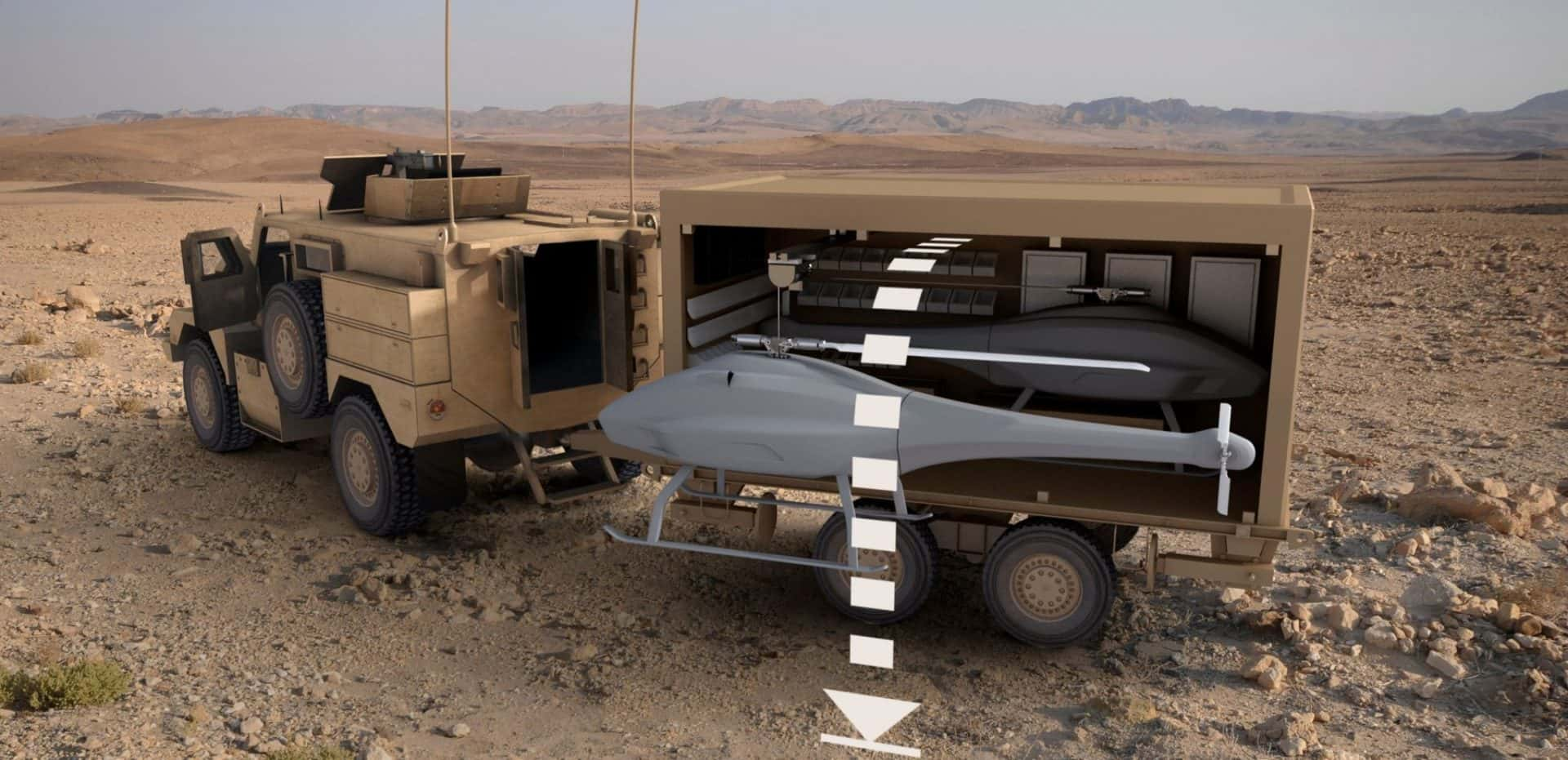
Another entry from Saab has been added to our list. It was the Swedish business that was responsible for the development of the Skelder, a medium-range Vertical Take-Off and Landing vehicle that is suitable for intelligence collection, light cargo transport, surveillance, and other missions. During a Paris show in 2006, it was unveiled to the public.
Saab Skelder
The Light Marine Air Defense Integrated System
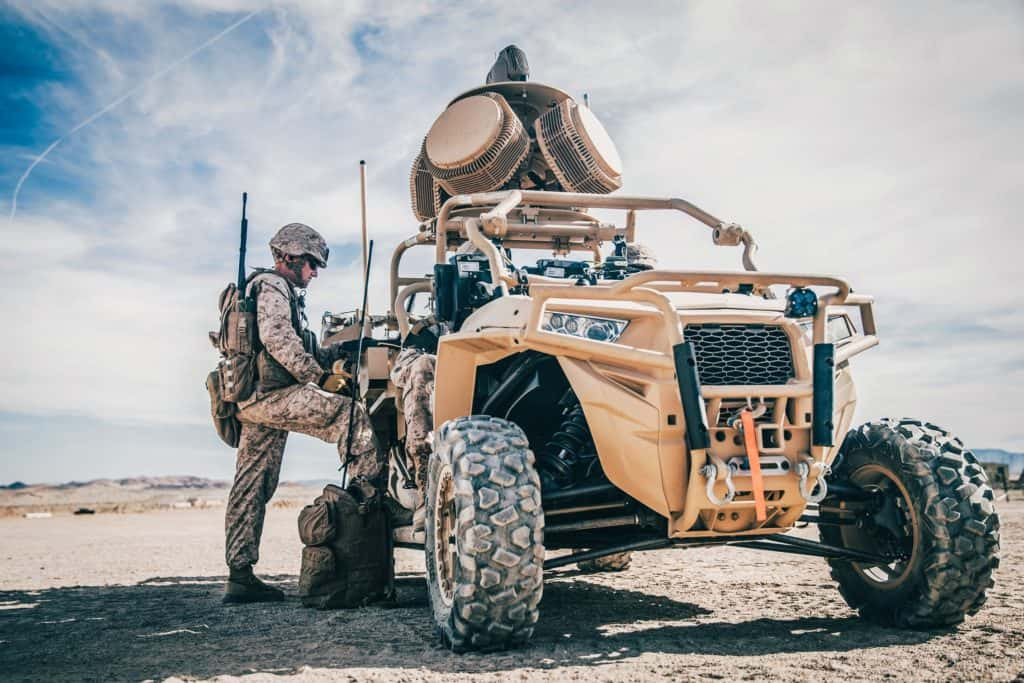
This energy weapon does not use artillery or blast lasers, but rather radio waves to deliver its bursts. What a fantastic opportunity! The Light Marine Air Defense Integrated System, often known as LMADIS, is comprised of two Polaris MRZRS all-terrain vehicles that are used for maritime air defense. The first is a command unit, and the second is a jamming and sensor unit, both of which are linked together.
The Light Marine Air Defense Integrated System
Black Knight UGCV
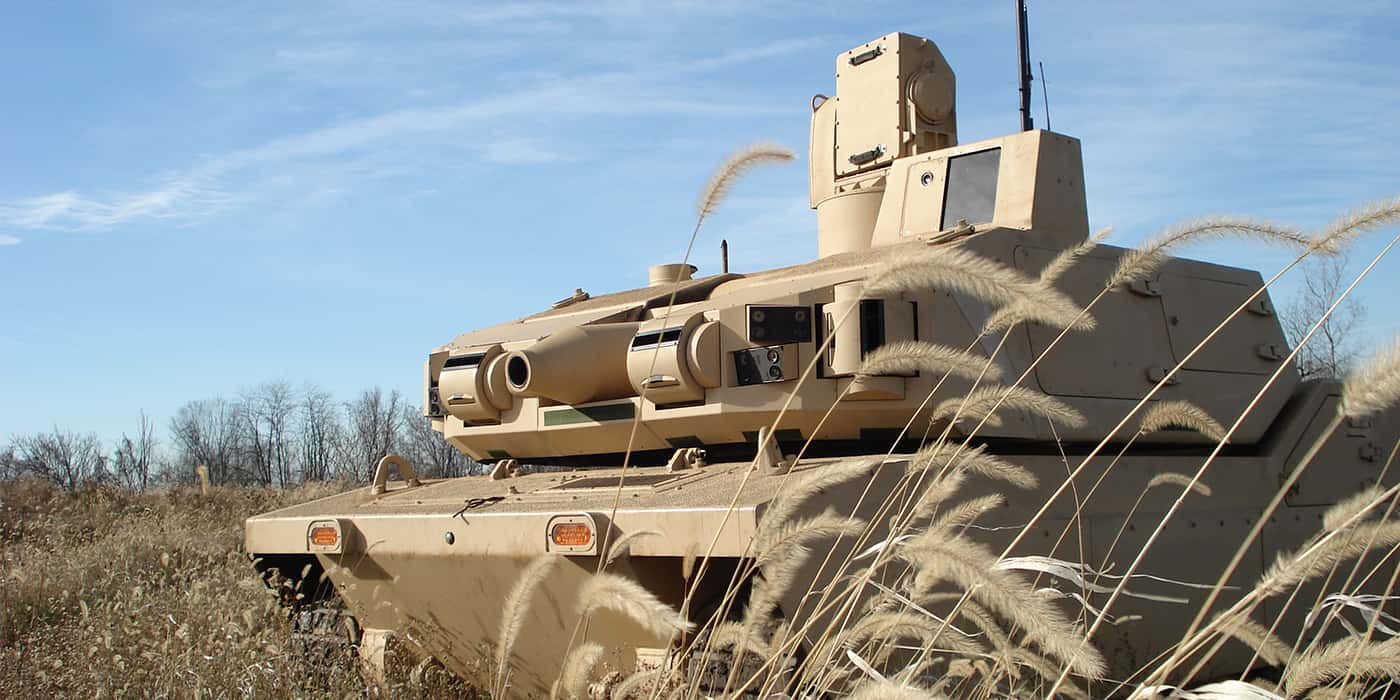
Despite the fact that the Black Knight UGCV has not yet advanced beyond the prototype level, this semi-autonomous infantry fighting vehicle has great promise. This vehicle, with its 30 mm autocannon and remote machine gun attachments, will undoubtedly transform the face of ground battle. In terms of strength and size, this is one of the most powerful and largest combat drones in the world. It will be used as a wingman for the infantry, according to the proposal.
Black Knight UGCV
The Mega M1 Riot Control Vehicle
The Mega M1 Riot Control Vehicle is a fully-loaded, fully-electronic, and fully-automatic behemoth that is capable of controlling large crowds. It weighs more than 17,500 pounds and is capable of controlling riots and limited battle zones. Climate control, weapons, a water hose, CCTVs, and reinforced cargo room are all included in the price of the vehicle. As you can see, it was designed specifically with the goal of limiting riots in mind.

The Mega M1 Riot Control Vehicle
Aggressive Hydraulics
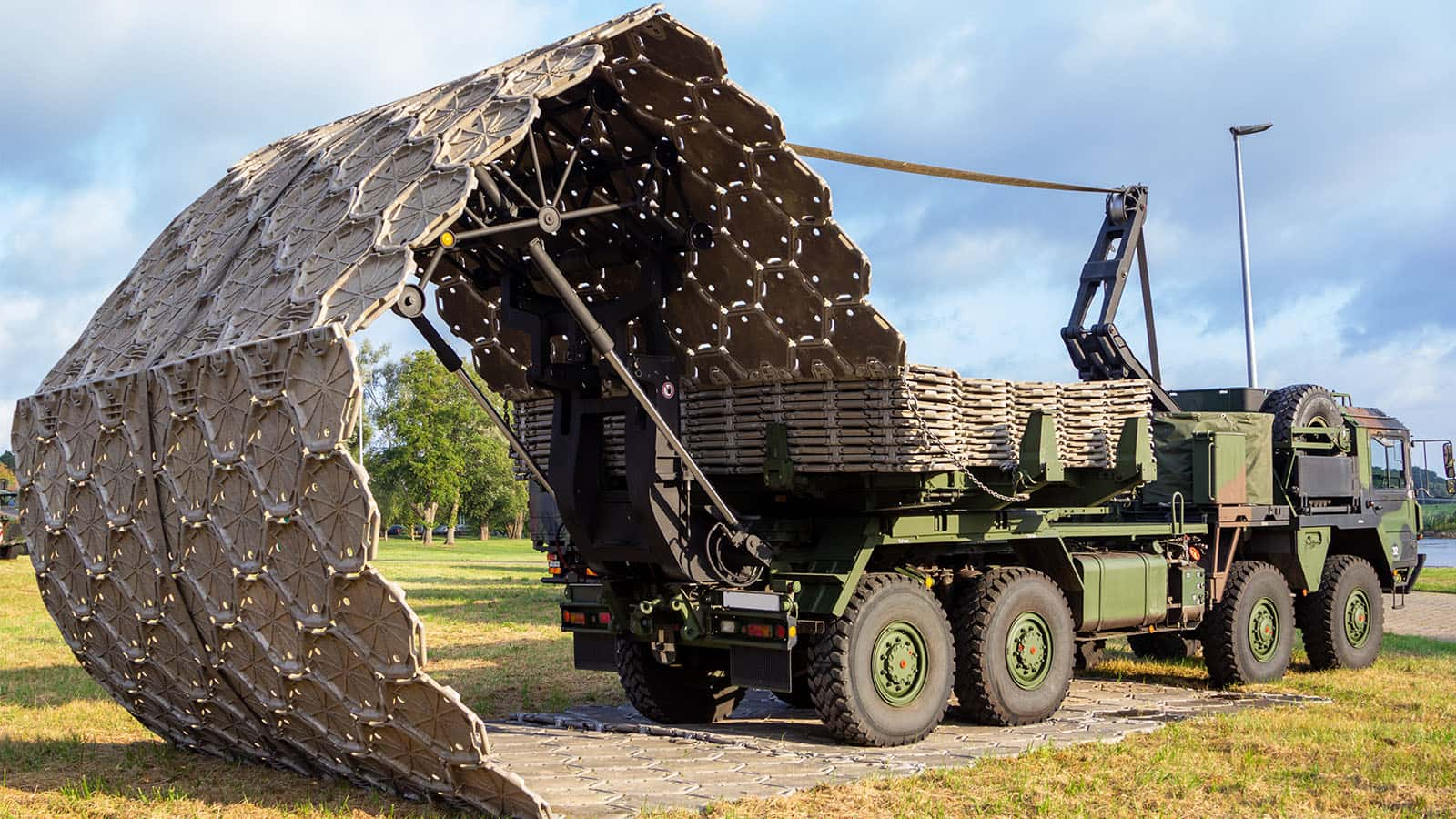
Hydrostatic solutions are used far more frequently than you might expect. In reality, when it comes to war zone reinforcement, road construction, and airplane cargo issues, this is fantastic news to hear. This is an excellent technique to make use of technology because it is both efficient and beneficial. And on top of that, it is a fun way to tackle problems in a straightforward manner.
Aggressive Hydraulics
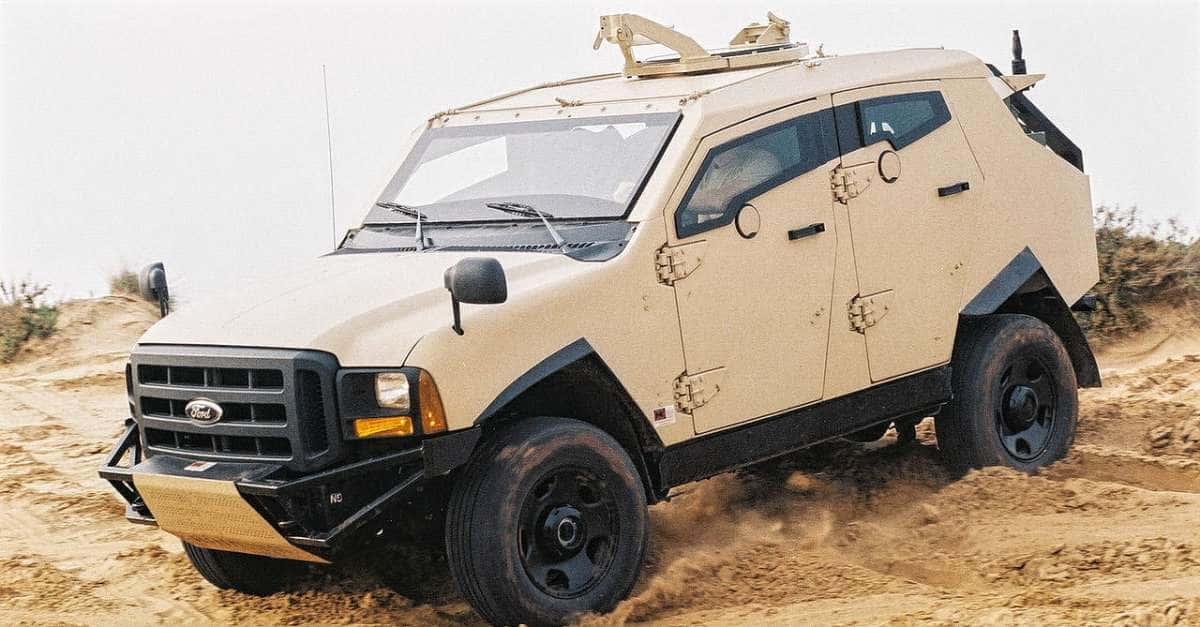
The SandCat
In this photograph, you can see a vehicle that has the visibility and maneuverability of patrol military cars while still being protected by STANAG Level 3 armor and other advanced technologies. This is an all-terrain vehicle that is capable of traversing steep terrain, streams, and trenches with relative ease. It is capable of operating on side slopes as steep as 25 degrees and inclines as steep as 60 degrees. It can also readily navigate through ice, sand, rocks, and muck. The SandCat is an excellent vehicle for both on and off-road use.
The SandCat
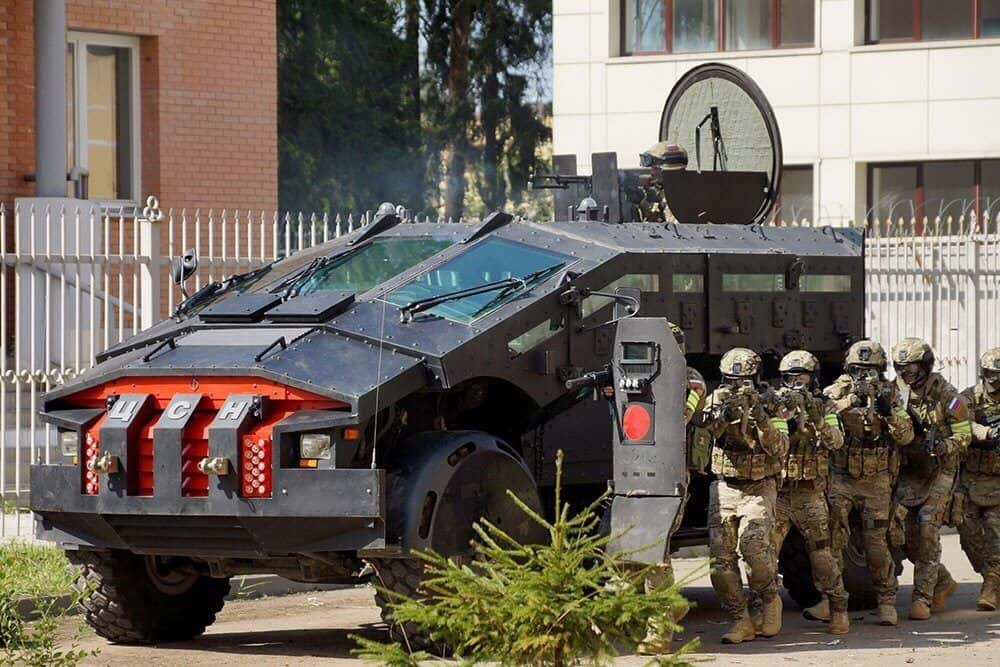
Russian Falkatus Vehicle
An image of the Falkatus, which is one of the most recent Russian armored vehicles, may be seen below. The model was a top-model creation that had only been unveiled a short period of time before. There was a period when the “Punisher” was the name given to the weapon. With its double-axle chassis, it can be compared to the rally race version of the KAMAZ, which is also available.
Russian Falkatus Vehicle
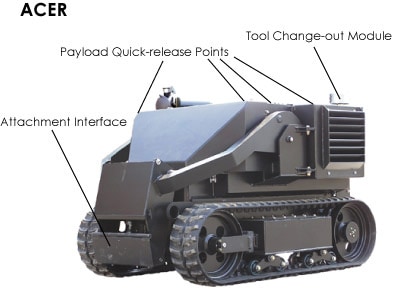
The Armored Combat Engineer Robot
This is one of the largest land drones currently in operation in the world. To put this in perspective, the Armored Combat Engineer Robot weights 2.25 tons! This is also incredibly adaptive, despite the fact that it is slow and hefty to begin with. Despite this, it is capable of performing perilous jobs that people are unable to complete on their own. It is ideal if you are undertaking search and rescue activities in potentially hazardous environments. The devices are also used as launch pads for aerial drones, which can be seen in the video below.
The Armored Combat Engineer Robot
Convair XC-99
This is one of the largest and most historic aircraft in the world. The Convair XC-99 was designed to transport either 400 soldiers in combat gear or 100,000 pounds of cargo. The first airplane took to the sky in 1947, marking the beginning of the modern era. Ten years later, in 1957, it was decommissioned. This piston-engine plane was used by the United States Air Force to transport large freight.

Convair XC-99
Antonov An-124
This aircraft was created by the Antonov Design Bureau in the 1980s and is still in service today. Since then, it has found application in both military and commercial aviation. More than fifty of them were manufactured and subsequently distributed throughout the world. It is a strategic airlift quad-jet that was once the world’s heaviest freight plane until the Antonov AN-225 surpassed it.

Antonov An-124
HK-1
What is the origin of the nickname “Spruce Goose” for the HK-1? As you can see, it was constructed almost entirely of birch. This aircraft was intended to be a transatlantic transport plane during World War II, but it was not finished on time. The United States military only ever flew this aircraft once. The prototype for this model was created in a single piece.

HK-1
Blohm And Voss BV 238
This is a flying boat designed and built by the Germans in 1944 and first flown in 1945. Yes, this is yet another plane from the Second World War that has been restored. With a weight of 120,769 pounds, the Blohm and Voss BV 238 was the biggest airplane ever built at the time. Due to the fact that it required too much money and labor to construct, they only ever produced a single unit.

Blohm And Voss BV 238
Antonov AN-225 Mriya
Take a look at the Antonov AN-225 Mriya, which is used for airlift cargo transport. It was the longest and heaviest plane ever built, and it had six turbofan engines, making it the world’s most powerful. The Buran spaceplane of the Soviet Union was transported using this vehicle. This aircraft could lift a maximum takeoff weight of 640 tons. It boasts the largest wing span of any aircraft currently in service!

Antonov AN-225 Mriya
Ilyushin Il-76
The Ilyushin Il-76 was designed and built during the height of the Cold War era. How interesting to learn that it is still in operation at the moment. A total of more than a thousand of them are still in active service today. This four-engine turbofan airlifter was originally designed for the Soviet Union and operated as a commercial freighter until it was converted for use by the military in the late 1980s.

Ilyushin Il-76
Convair B-36 Peacemaker
Between 1949 and 1959, the Convair B-36 Peacemaker was in service with the United States Air Force. In terms of size, this is one of the largest piston-engined planes ever built. With a 230-foot wing span, it was the combat aircraft with the largest wingspan ever built. It was one-of-a-kind because it had the capability of deploying all of the nuclear warheads in the United States’ arsenal at the time.

Convair B-36 Peacemaker
Boeing C-17 Globemaster III
In terms of size, the C-17 Globemaster III is one of the largest military planes ever built. Its inaugural flight took place in 1991. This item was still in production as of 2015. Even though the type was created by McDonnell Douglas for the United States Air Force, a single unit cost $218 million to build. After then, the plane was used for a variety of airlift operations.

Boeing C-17 Globemaster III
Zeppelin-Staaken R.VI
The Zeppelin-Staaken R.VI was one of the largest wooden airplanes ever built, and it flew for the first time in 1902. Its origins can be traced back to World War I. In addition to being a German four-engine bomber, it was equipped with a closed cockpit, which was unusual at the time. There were just 18 units produced. Six planes crashed, four were shot down, and two experienced technical difficulties.

Zeppelin-Staaken R.VI
Kawanishi H8K
When the Imperial Japanese Navy needed to conduct a maritime patrol, the Kawanishi H8K proved to be extremely useful. It was designed to fly vast distances on its own and to do it autonomously. When the United States entered World War II, it was known as “Emily” by the British. This was only used in combat once, in 1942, but it remained in service until the end of World War II.

Kawanishi H8K
Lockheed Martin C-130J Super Hercules
It is no joke to refer to a plane as “Hercules,” therefore it follows that “Super Hercules” must be much more terrifying. The Lockheed Martin C-130J was initially deployed by the United States Air Force in 1996. Since then, it has been implemented in more than a dozen more countries. The four-engine turboprop transport plane has outlasted most other military planes in terms of longevity.

Lockheed Martin C-130J Super Hercules
Martin JRM Mars
During the Second World War, the Martin JRM Mars became increasingly popular. The four-engine seaplane was the largest aircraft in the Allied forces’ fleet of seaplanes during World War II. Despite the fact that the model was effective, only seven units were created. Once the war was over, four of these planes were converted into firefighting waterbombers, which were used to put out fires.

Martin JRM Mars
Boeing KC-135 Stratotanker
Strategic bombers are notoriously difficult to refuel in normal circumstances. Fortunately, the KC-135 Stratotanker, which saw extensive service during the Vietnam War, has it easier on its hands. It proved to be a valuable weapon for the Americans during Operation Desert Storm in 1991. This aircraft was a pioneer in that it was the United States Air Force’s first jet-powered refueling tanker.

Boeing KC-135 Stratotanker
NASA Super Guppy
Later on, this aircraft was assigned to the role of replacement for the Pregnant Guppy. Aero Spacelines’ first aircraft, the NASA Super Guppy, was designed in collaboration with NASA. It is not difficult to deduce that it was designed for transporting cargo. Both varieties of the Super Guppy were equipped with five aircraft apiece, and they were available in either red or blue. Despite the passage of time, all of them remain in use.

NASA Super Guppy
Caspian Sea Monster
The Soviet Union built the Caspian Sea Monster in the 1960s, and it is still standing today. This plane was subjected to a great deal of testing until it was wrecked in a testing accident in 1980. During its time in service, this aircraft was the largest and heaviest aircraft in the world. It had held on to the title for nearly two decades before losing it. Americans were so concerned about it that missions were dispatched to determine what this beast was capable of!

Caspian Sea Monster
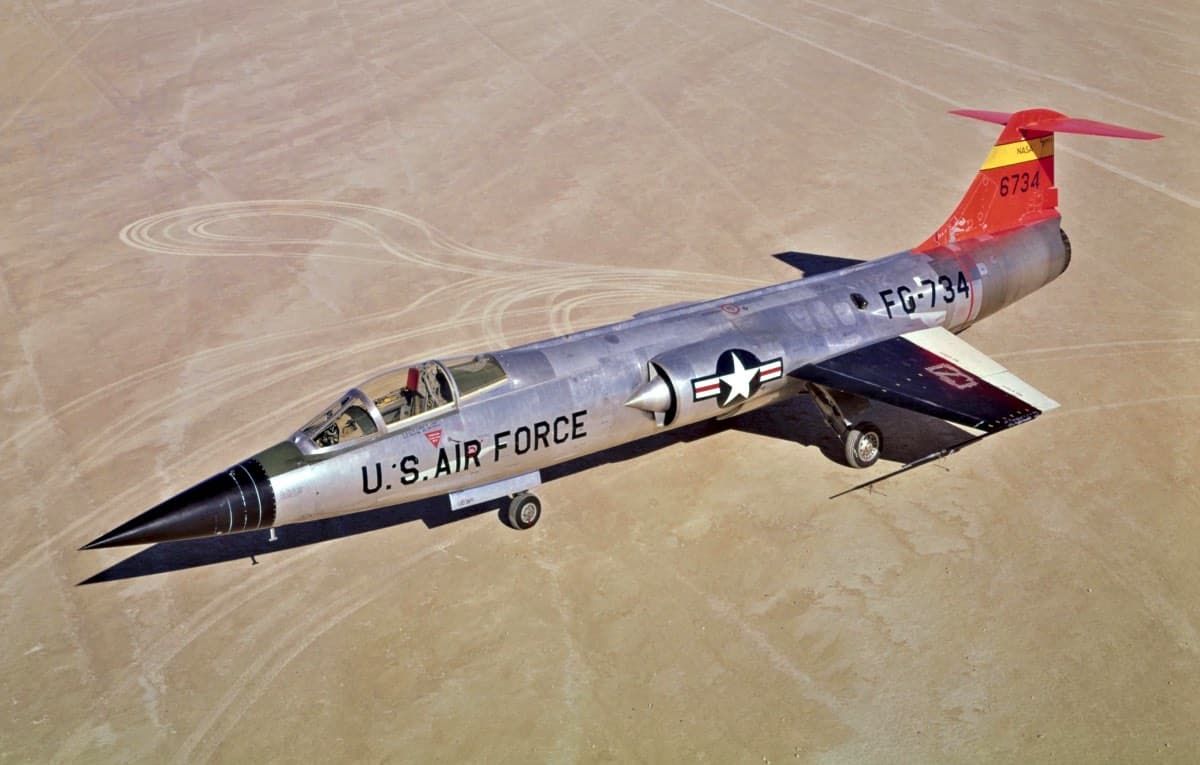
Lockheed F-104 Starfighter
It was first introduced in the late 1950s and was used by numerous militaries all over the world until it was retired in the 1960s, when it was replaced by the F-16 Fighting Falcon. This dangerous plane was created by Kelly Johnson, an internationally recognized aeronautical engineer, and it proved to be extremely lethal, resulting in various controversies during its service. This plane is now available for purchase, with rumors circulating that ten of them are privately held in the United States. An engineless version of this vehicle, which had been refurbished, was sold for £25,000 in the United Kingdom in 2011.
Lockheed F-104 Starfighter
North American P-51 Mustang
The P-51 Mustang is regarded as a great American icon. When the Rolls Royce Merlin engine was installed inside of it, it exceeded all expectations and soared to even greater heights than before achieved. During World War II, it was designed for use by the British as a medium-altitude fighter plane, which it did. Given its long-range capability, this type of aircraft proved to be extremely valuable in reconnaissance operations and in escorting numerous bombers during several battles. The plane has a top speed of 430 mph and offers a smooth and comfortable flight for passengers.
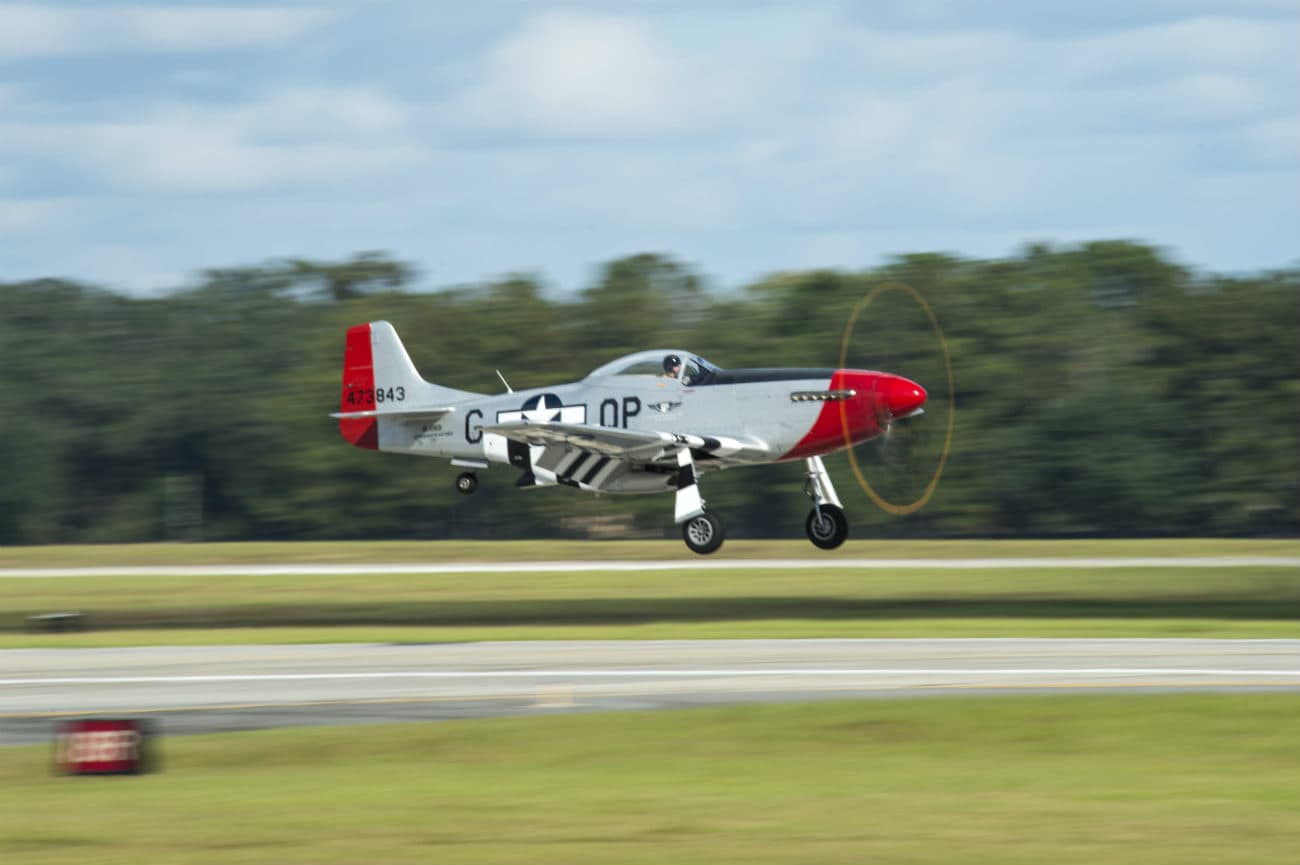
North American P-51 Mustang
Supermarine Spitfire
While the war was going on, the Spitfire was the most widely manufactured British aircraft. In fact, it was the only one that was created not only before, but also during, the battle itself. There have been several distinct versions of the plane built, each with a slightly different wing design. The Supermarine Spitfire 50 is still a respectable aircraft in today’s aviation world! Several historians consider it to be the most significant aircraft of World War II because of its participation in the Battle of Britain.
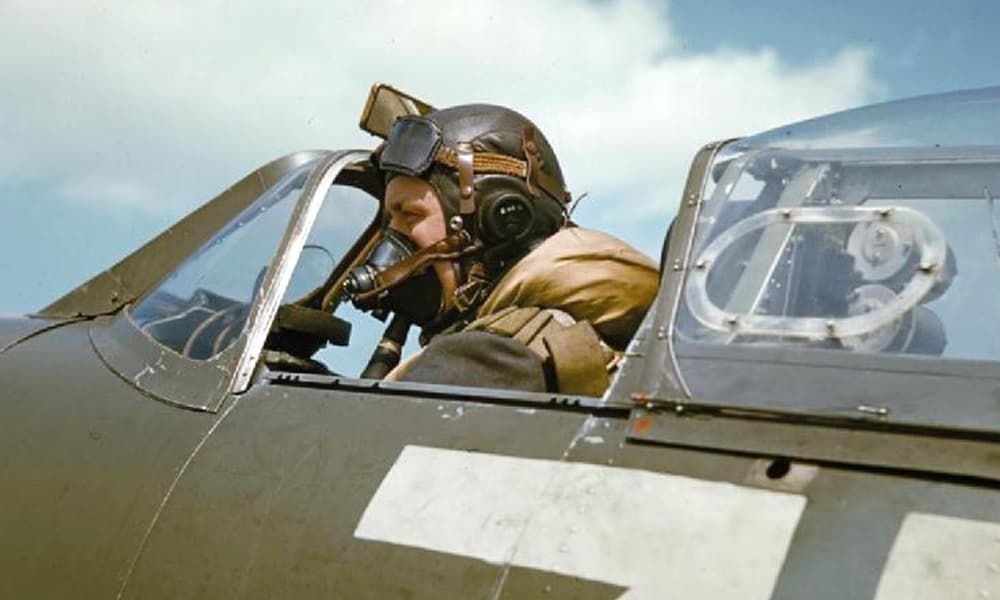
Supermarine Spitfire
F-4 Phantom II
Unlike any other aircraft in the world, the F-4 Phantom II is one of a kind. It first served in the United States Navy in 1960 and, despite its retirement, is still used on occasion. It is classified as a two-seater supersonic bomber and jet interceptor with a vast range and high speed. The Phantom II was capable of reaching speeds in excess of Mach 2.2 and transporting a payload of more than 18,000 pounds. It was an aircraft that the United States’ rivals feared.
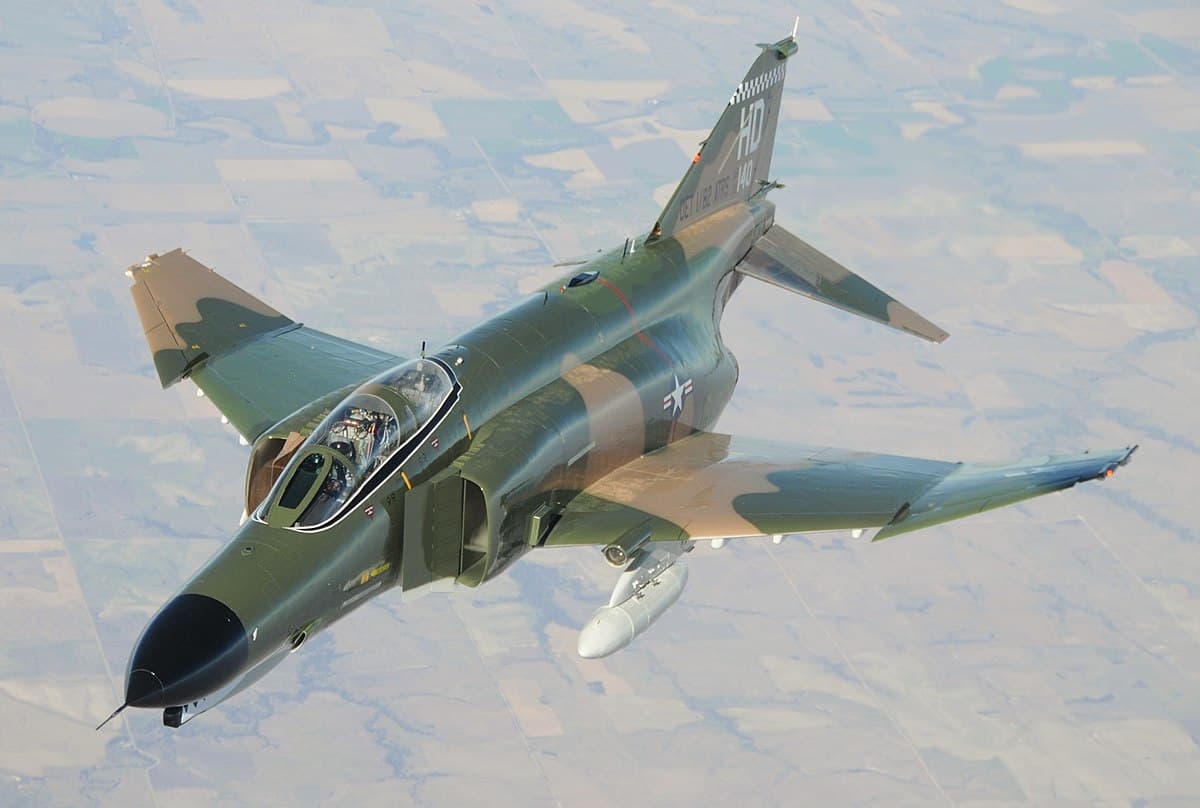
F-4 Phantom II
Curtiss P-40 Warhawk
When it came to aerial combat during World War II, the Curtis P-40 Warhawk was a key player, and it was one of the three most widely deployed American fighters. The Warhawk has undergone multiple alterations during its existence, primarily as a result of various challenges and performance shortcomings. Despite the fact that the Warhawk isn’t considered a “top fighter,” it does appear to be rather impressive in its own right. Its appearance is most likely one of the factors that contribute to its international popularity among aviation fans around the world.
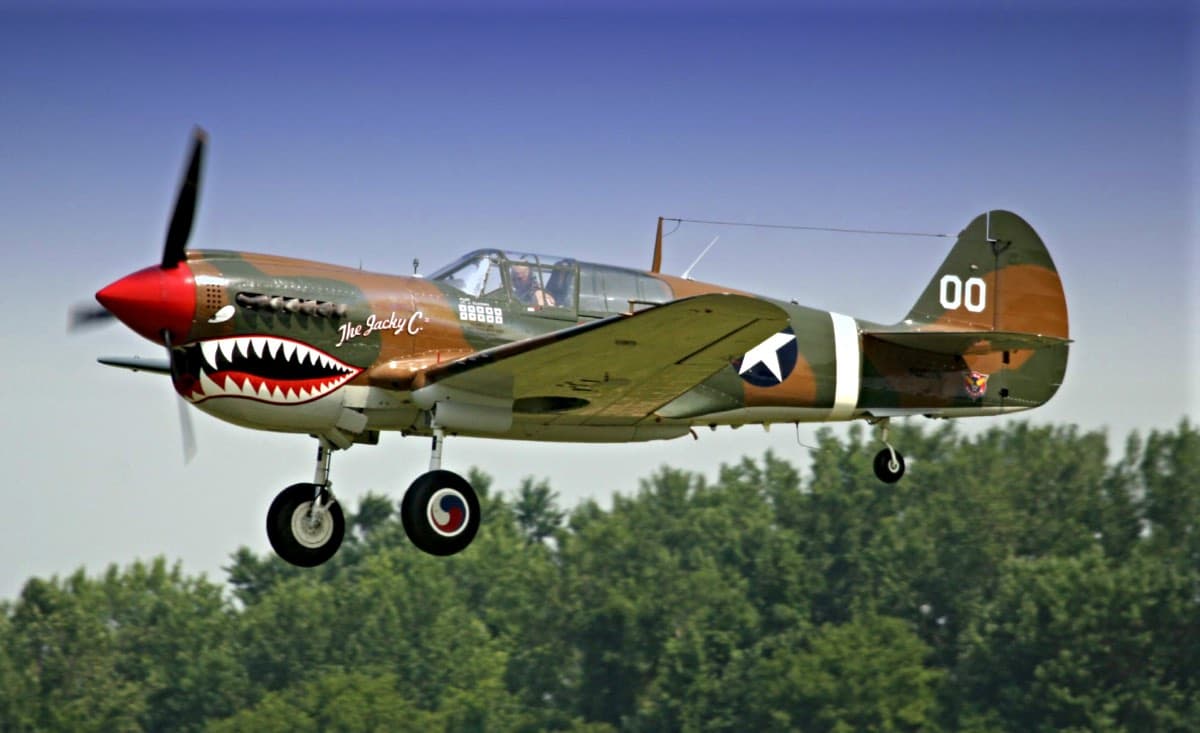
Curtiss P-40 Warhawk
B-29 Superfortress
The B-29 Superfortress isn’t given that moniker by accident; it’s a monstrous piece of aircraft. Several advanced advancements were made to the bomber plane, which was built by Boeing in the early 1940s, and the bomber plane was much improved as a result. Apart from having pressurized crew compartments and remote-controlled weapons, it also had the distinction of being the world’s heaviest production plane at the time of creation!
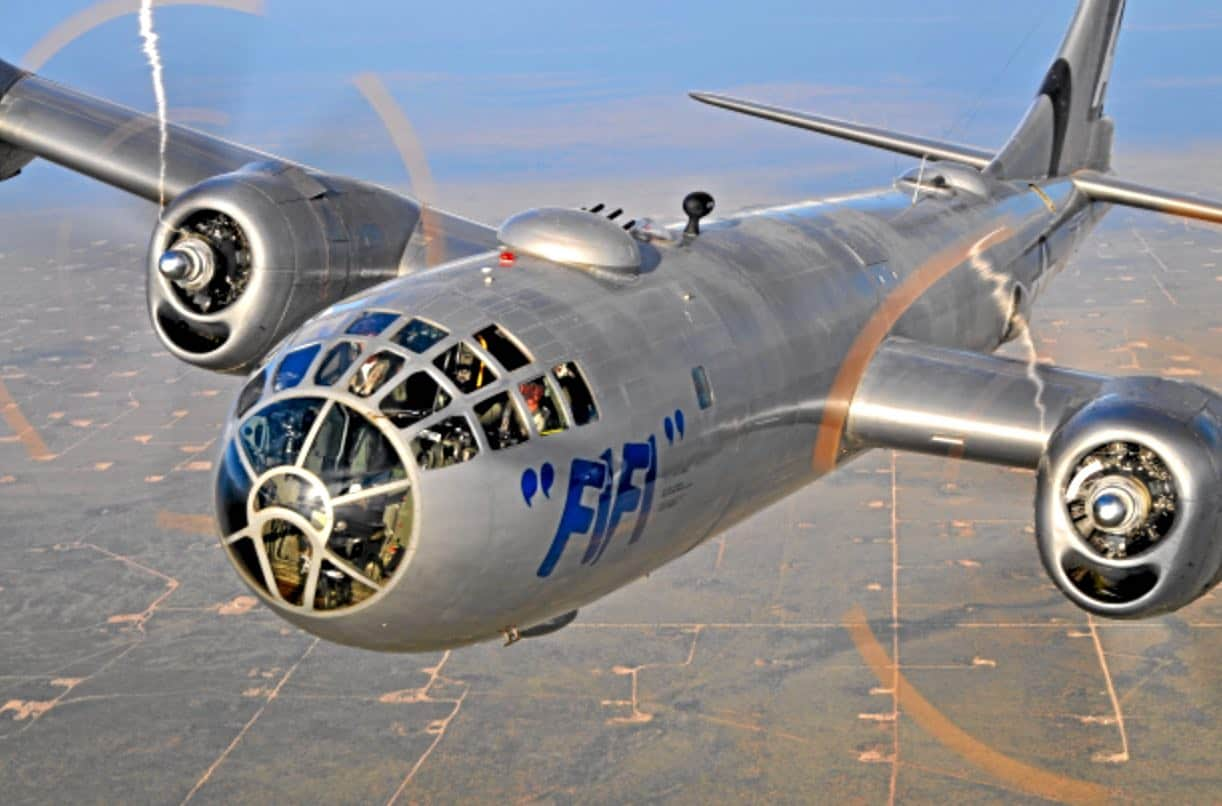
B-29 Superfortress
Northrop F-5
Although the Northrop F-5 is a lightweight supersonic jet fighter, it was first used in 1962 and is famous for its ease of maintenance and low cost of ownership, as well as its effectiveness in the air. Additionally, it is still in use as a training aircraft in the United States. With a top speed of almost 1000 mph, it’s a supersonic jet fighter with a long-range. In turn, it is one of the most swift military aircraft available to civilians, making it one of the most useful.
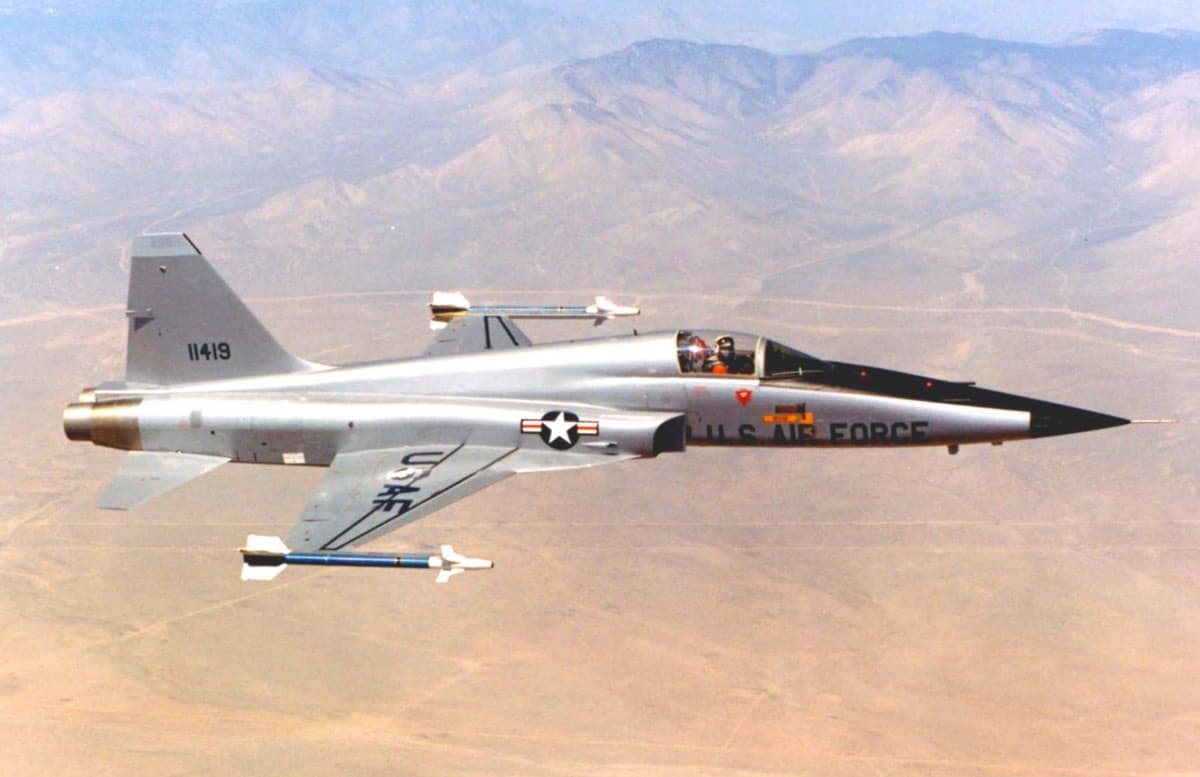
Northrop F-5
Bell UH-1 Huey
The Bell UH-1 Huey helicopter is one of the most extensively used helicopters in the world. It was first used during the Vietnam War and is now in use by more than 40 countries across the world. Throughout the fight, it has been employed for a variety of purposes, including medical evacuations and transports. The Huey has a top speed of 125 miles per hour and can transport one to four passengers in comfort. It is a symbol of the Vietnam War, and older vehicles are still available for purchase for around $500,000 on the secondary market.
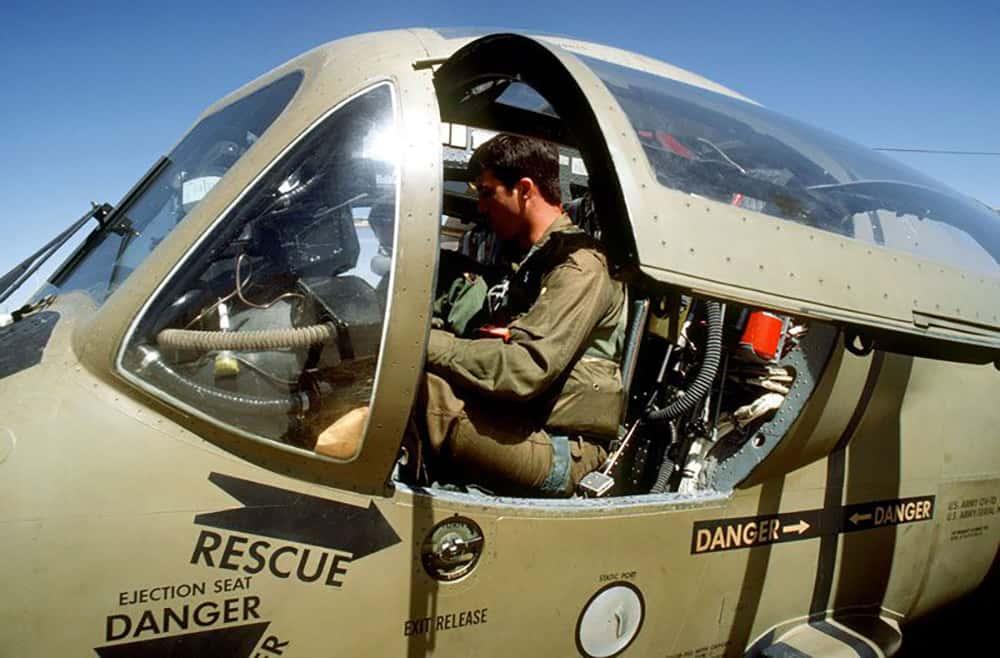
Bell UH-1 Huey
Lockheed P-80 Shooting Star
The introduction of the Lockheed P-80 Shooting Star signaled the beginning of a period of major transformation for the United States Air Force. These new planes differed from their predecessors in that they did not have propellers on their wings. It was only a small number of P-80s built, whereas the T-Bird was more suitable to the military market. A total of 7,000 units were manufactured at various locations throughout the world. Several military organizations continue to employ this type of weapon today.
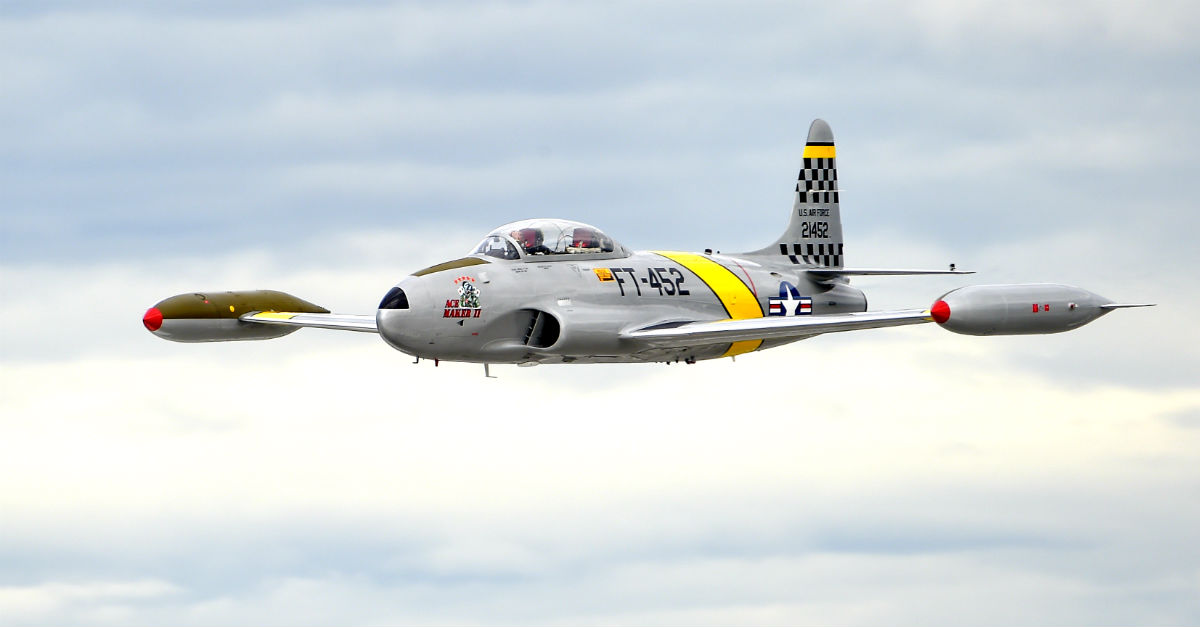
Lockheed P-80 Shooting Star
Douglas A-4 Skyhawk
Designed to replace the A-1 Skyraider, the Douglas A-4 Skyhawk was built to meet the needs of the United States Navy. Ed Heinemann, the chief designer of the Douglas, came up with a small yet effective aircraft that could fly everywhere. The engine is located in the fuselage, the fuel is located in the wings, and the avionics are located in the nose of the aircraft. The navy dubbed this small bomber “Heinemann’s Hot Rod” because of its distinctive appearance. The first time it was used was at the end of the Korean War, when it was called into action.
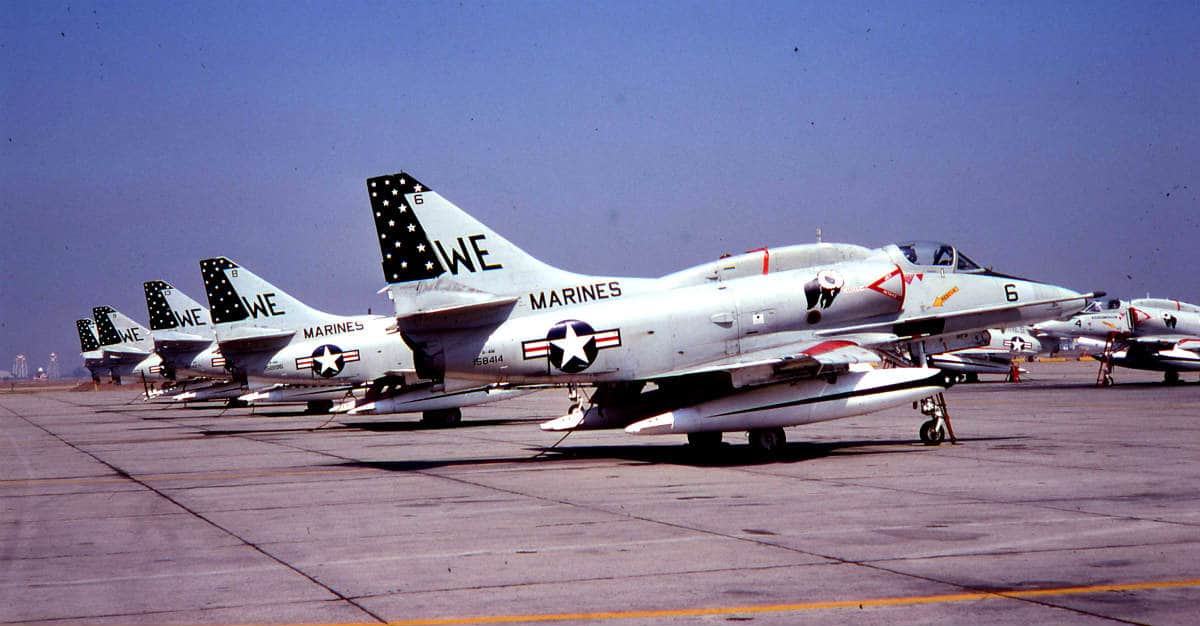
Douglass A-4 Skyhawk
Mikoyan-Gurevich MiG 21
It was originally demonstrated in 1959, and the Mikoyan-Gurevich MiG 21 fighter has since proven to be a reliable fighter in a variety of combat situations. In particular, it was utilized by the Indian, Soviet, and Libyan air forces, and it was the first Soviet aircraft to be capable of effectively executing both combat and interception tasks in the same flight. Some countries continue to use it, and it used to hold a slew of world records. As an example, it used to be the most widely produced supersonic aircraft in the world.
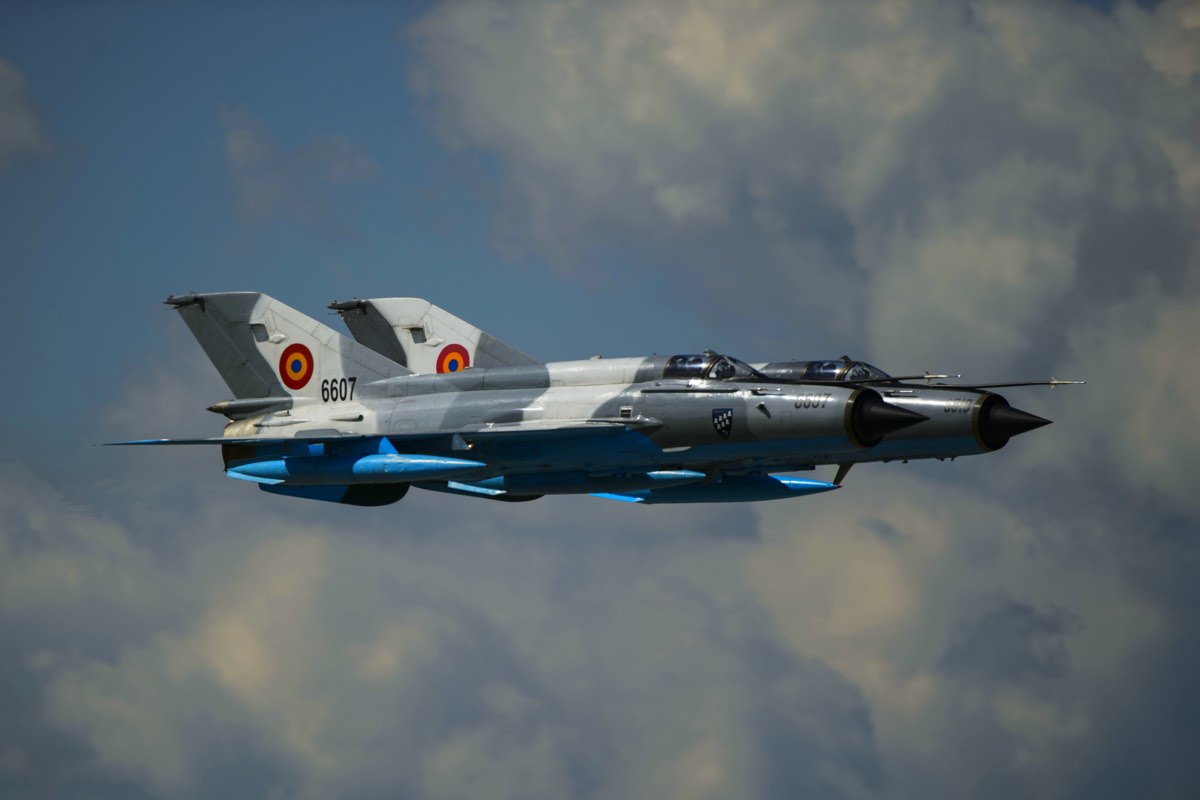
Mikoyan-Gurevich MiG 21
General Dynamics F-16 Fighting Falcon
Take a look at the General Dynamics F-16 Fighting Falcon in the gallery below to see what I mean. For approximately $8 million, they are currently on the market for purchase. Just make sure that if you do so, you take the time to read the tiny print thoroughly before proceeding. If you wanted to get one, you’d have to sign some tough defense contracts, which would be difficult to come by.
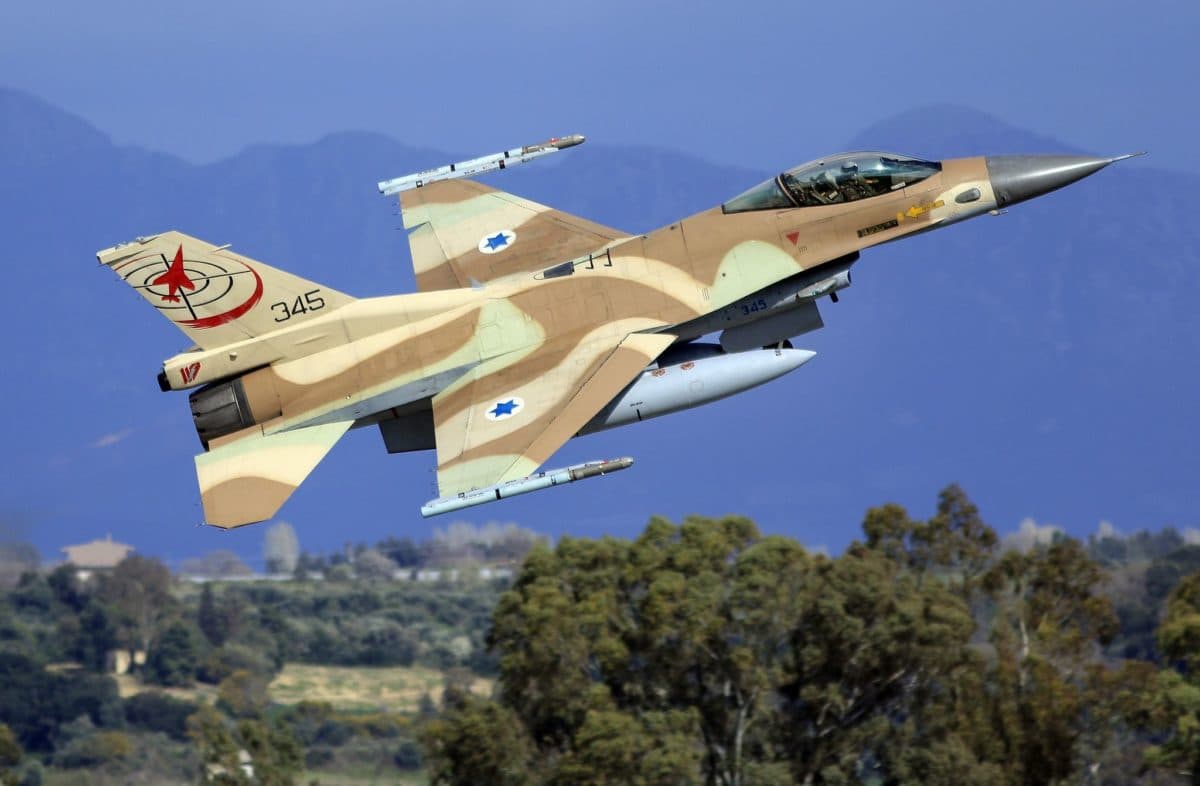
General Dynamics F-16 Fighting Falcon
Hawker Hunter
During the late 1940s and early 1950s, the Royal Air Force of London (RAF) ordered the Hawker Hunter MK-58 as a fighter jet. It was subsequently converted into a fighter-bomber and utilized for intelligence gathering. It was widely exported and has served in a variety of military around the world, with both single and double pilot versions being developed for different purposes. It was retired in 2014 and is now designated as a ‘warbird,’ meaning it is capable of carrying out combat missions.
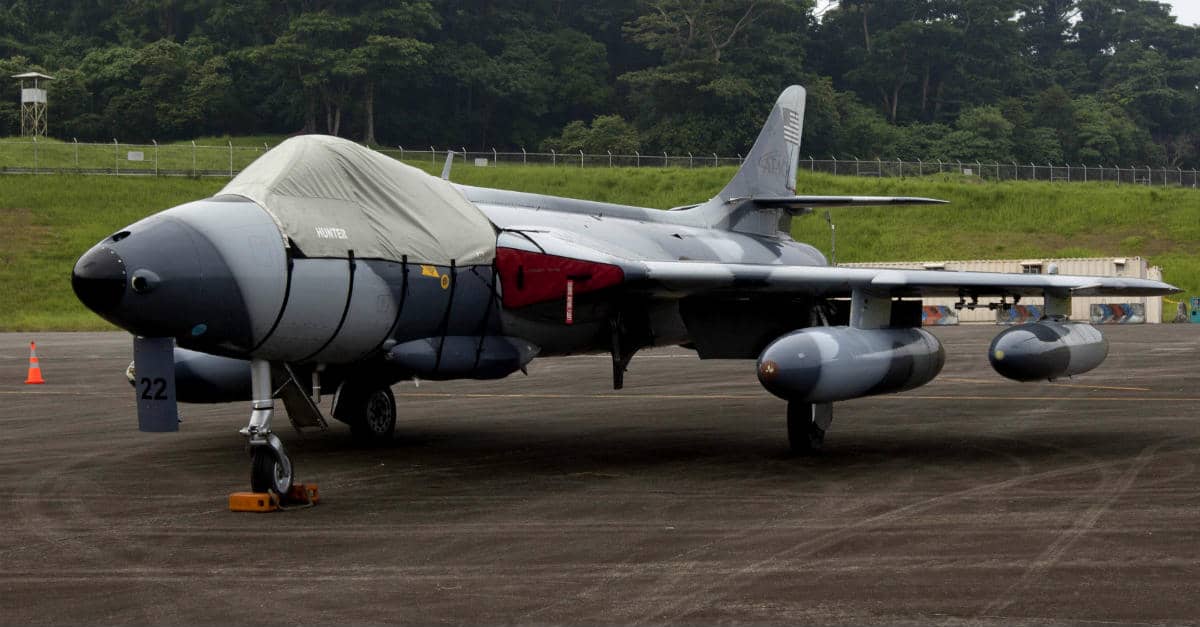
Hawker Hunter
Aeo L-39 Albatros
One of the most iconic warplanes in history, the L-39 Albatross, is almost definitely what comes to mind when thinking of warplanes. Aero Vedochody, a Czechoslovakian company, designed it as a teaching aircraft for pilots. It was the first jet trainer of the second generation, and it featured a highly streamlined design and faultless functioning. With only internal fuel, this plane could fly for up to two and a half hours, which is remarkable for a plane of this size.
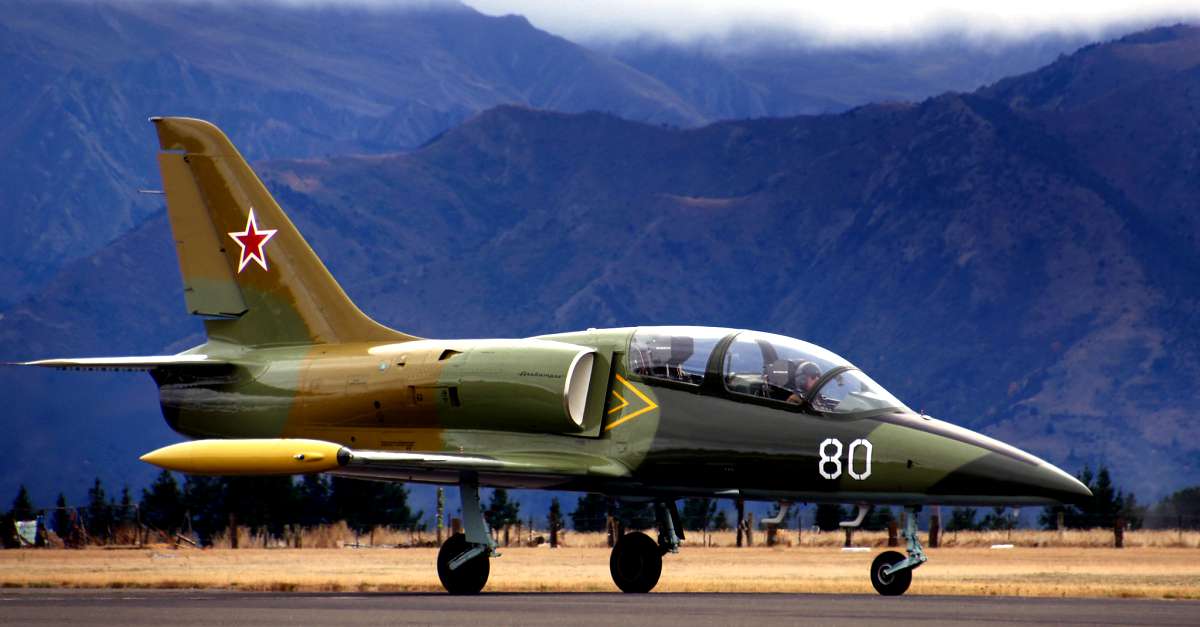
Aeo L-39 Albatross
Grumman OV-1 Mohawk
When the Grumman OV-1 replaced the Cessna L-19 Bird Dog, it was designed to be a versatile all-weather observation and attack aircraft for the United States Air Force. It was introduced as a result of its increased speed and power, and the Grumman Aircraft Corporation even received an award for their efforts! The plane was a resounding success in a wide range of military missions. Small ground weapons could not penetrate the building because of bulletproof glass and an aluminum alloy floor. It was designed to be bulletproof.
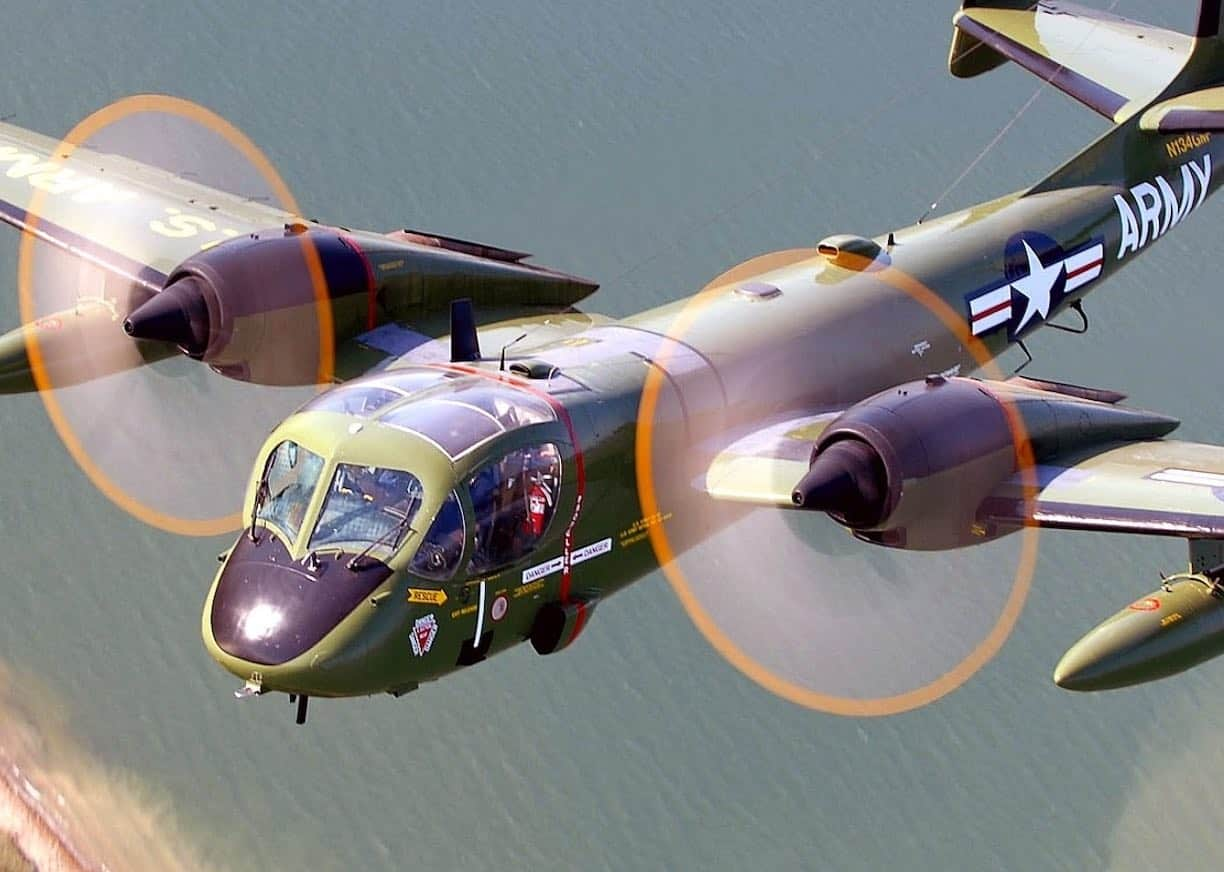
Grumman OV-1 Mohawk