
Are you considering purchasing a powerful aircraft? You’re in luck if that’s the case. Some military equipment is being sold to civilians! Of course, this isn’t going to be cheap. You can expect to pay a lot of money if you want to move any of these houses into your home. We hope you have enough space to put them away as well! You’ve come to the right place if you’re thinking of getting your own private plane. You must be quite affluent if you’re thinking about it! However, taking a peek around to see what’s available isn’t a bad idea. After all, we never know what the future holds! Let’s take a look at what you have to work with.
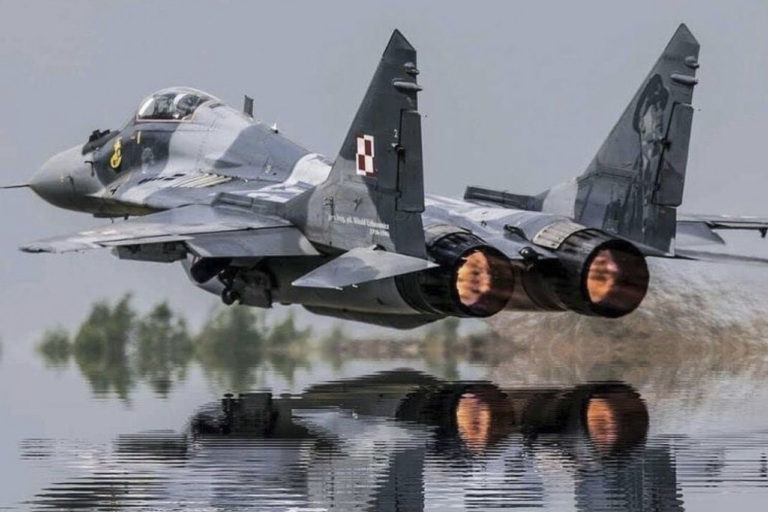
If You Have Enough Money, You Might Want To Buy These Military Aircraft
Lockheed F-104 Starfighter
In the late 1950s, the Lockheed F-104 Starfighter was introduced to the world. It was used by numerous military forces all over the world until the turn of the century. Italy, Turkey, Spain, Germany, and the United States have all used this aircraft at some point in the past. Although this model has been discontinued, it is still available for private purchase. Kelly Johnson, a well-known aeronautical engineer, assisted in the creation of the Starfighter. He also worked on the creation of the SR-71 Blackbird and the U-2 espionage plane. It was fatal and caused a lot of controversy when it was still in service. In any case, the FAA reports that there are ten privately owned units in the United States. Three of them are former Canadian military personnel who are members of the Starfighters Inc. civilian demonstration squad.
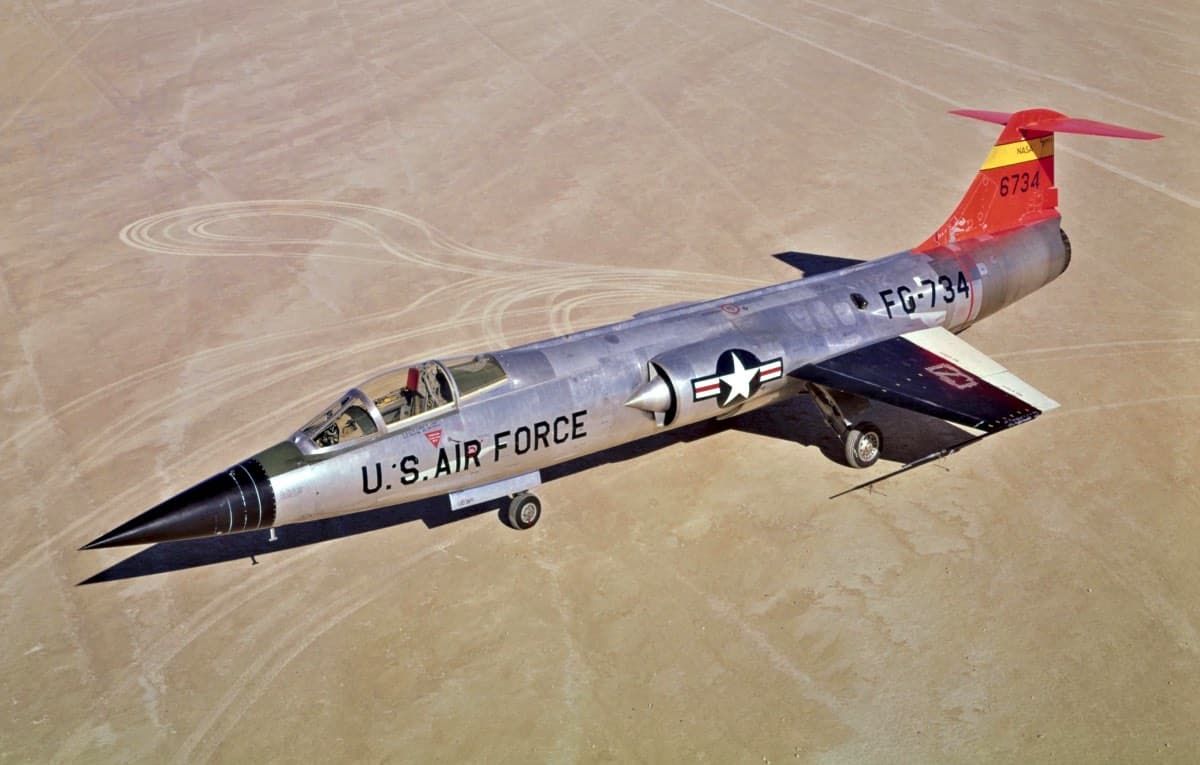
Lockheed F-104 Starfighter
North American P-51 Mustang
The P-51 Mustang is considered a classic in North America. It was first developed for the British as a medium-altitude fighter plane during WWII. On the other hand, it is far beyond all expectations. It was able to reach higher heights and create more power after the Rolls Royce Merlin and then the Packard V-1650-7 engines were fitted. This aircraft played a vital role in reconnaissance missions and escorted a large number of bombers during numerous battles because of its long-range capability. Because of its historically accurate thorough restoration, it has been increasingly popular in recent years. Renovated flats can sell for more than a million dollars on the open market. It has a top speed of 430 mph and is a blast to drive if you’re lucky enough to get a chance to do so.
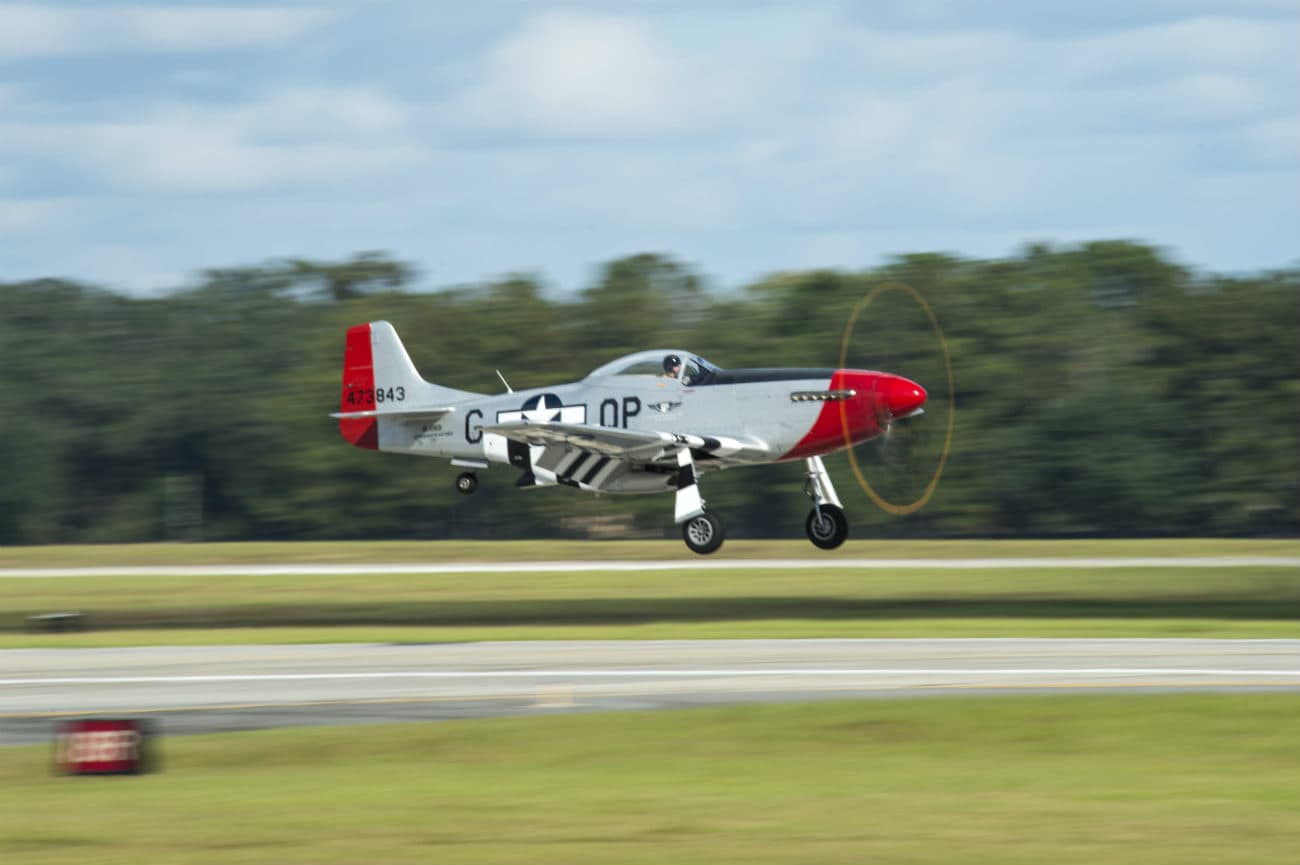
North American P-51 Mustang
Supermarine Spitfire
Did you know that during WWII, the Supermarine Spitfire was the most widely produced British aircraft? It was also the only one that was manufactured in a consistent manner throughout the fight. There were a few distinct variants available, each with a unique wing design. On the other hand, the 50 Supermarine Spitfire is still flying today. Many people consider it to be the most important aircraft of WWII because of its role in the Battle of Britain. The Spitfire outperformed the Hawker Hurricane throughout the conflict. Civilians want to get their hands on this replica because of its historical relevance.
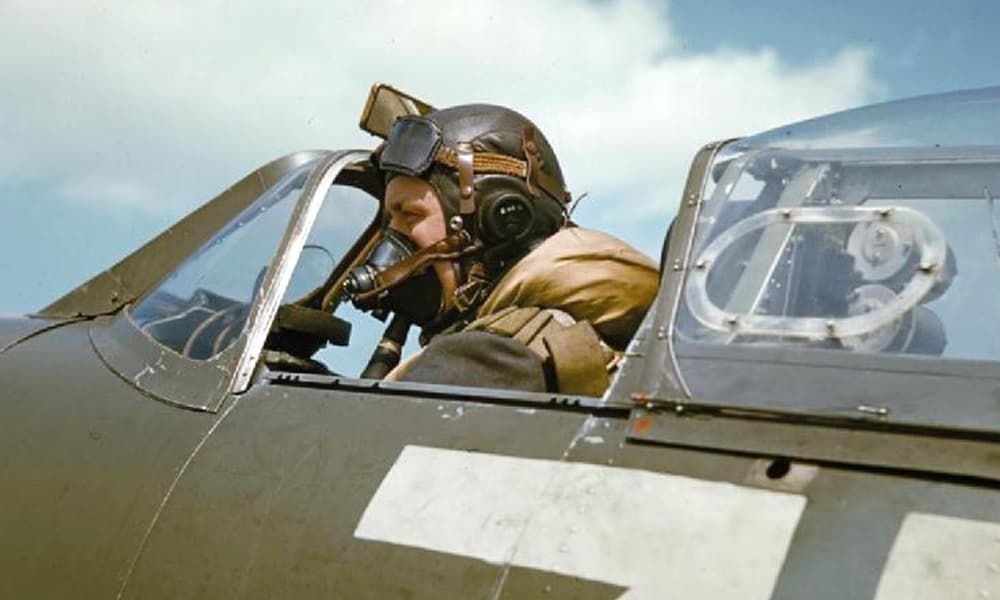
Supermarine Spitfire
F-4 Phantom II
For $3.95 million, an F-4 Phantom II is now on the market. It’s one of the list’s most unusual planes. In 1960, it became a part of the US Navy’s fleet. Even though it is classified as retired, it continues to serve in the Air Force on a limited basis. This is a supersonic two-seat fighter-bomber and jet interceptor with a long-range. In those days, when aircraft technical capabilities seemed to change by the second, it created a big splash. It was a sight to behold for the opponents, with a top speed of Mach 2.2 and a carrying capacity of more than 18,000 pounds. And rightfully so.
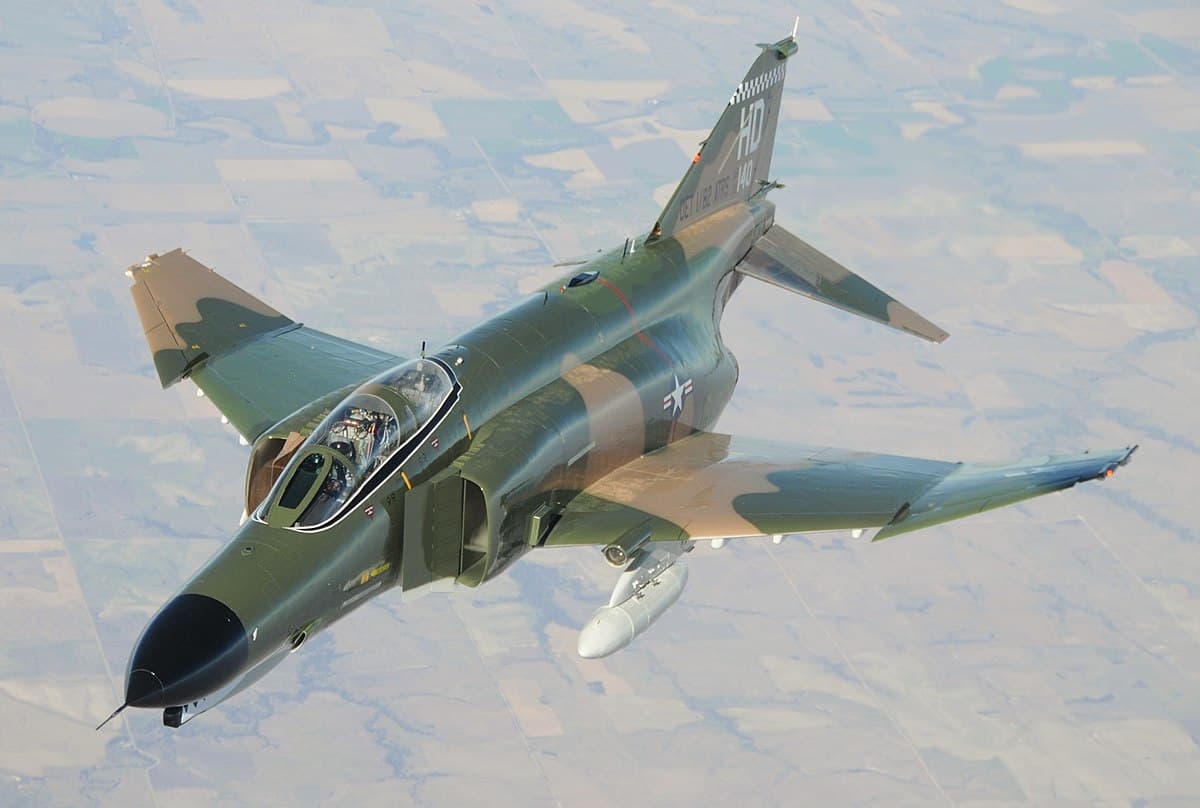
F-4 Phantom II
Curtiss P-40 Warhawk
Some of the names attributed to this plane were Gypsy Rose Lee, Kittyhawk, Tomahawk, and Model 81. Regardless, the Curtis P-40 Warhawk was a key player in the skies throughout WWII. It was one of the three most widely used US fighters during the combat. As a result of performance issues and difficulties, it has undergone various updates throughout the years. Despite this, it is not rated a “top fighter,” but it does have a stunning appearance. It’s one of the reasons it’s so well-known among aviation fans all across the world. A restored aircraft is offered for sale for $1.775 million through Courtesy Aircraft Sales. It’s a lot of money, but considering the model’s rarity, it’s understandable.
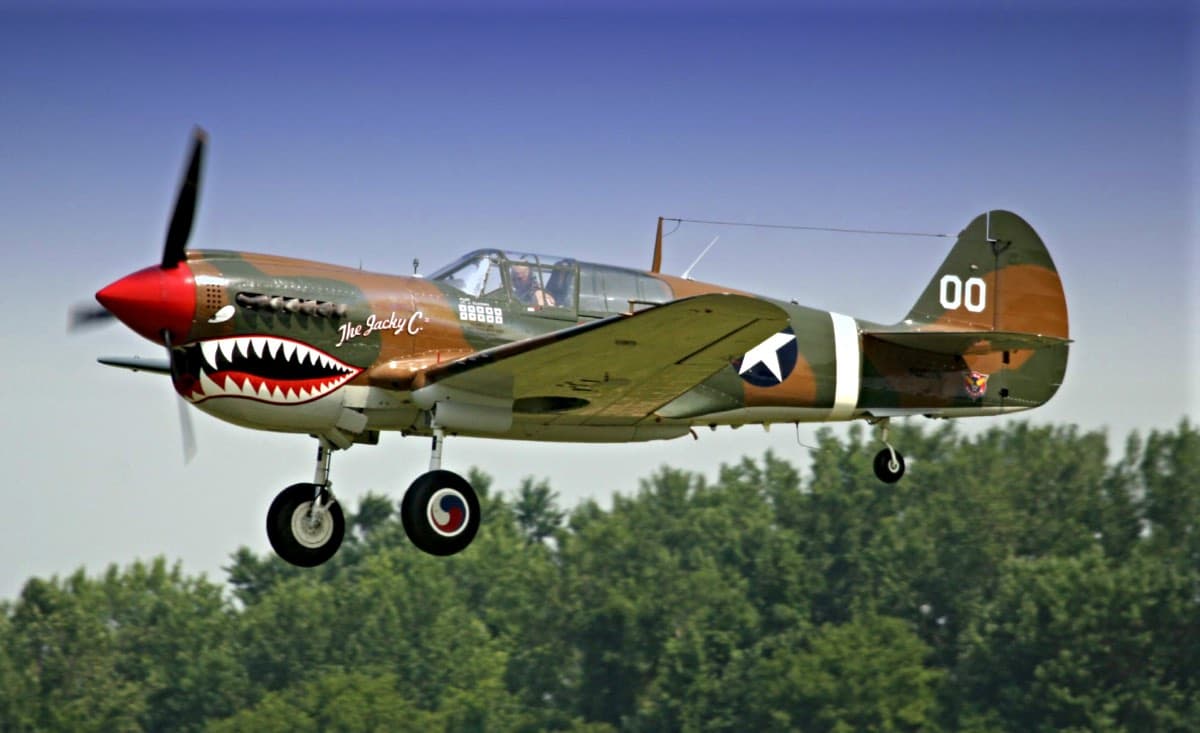
Curtiss P-40 Warhawk
B-29 Superfortress
The B-29 Superfortress is a large plane even by today’s standards. Boeing designed this aircraft in the early 1940s, and it featured sophisticated features that upgraded the bomber plane. Among other things, it had pressurized crew cabins and remote-controlled armament. It was also known as the heaviest production plane in the world! This was yet another important aircraft during WWII. The B-29 was utilized for a variety of missions, including observation and in-flight refueling. We are not surprised that it is popular because it has such a long history. Only one device, called “Fifi,” was still flying as of July 2016. On July 17, 2016, that all changed when “Doc” took to the air for the first time. Despite the fact that the two planes are privately owned, there is support for restoring others so they can fly once more.
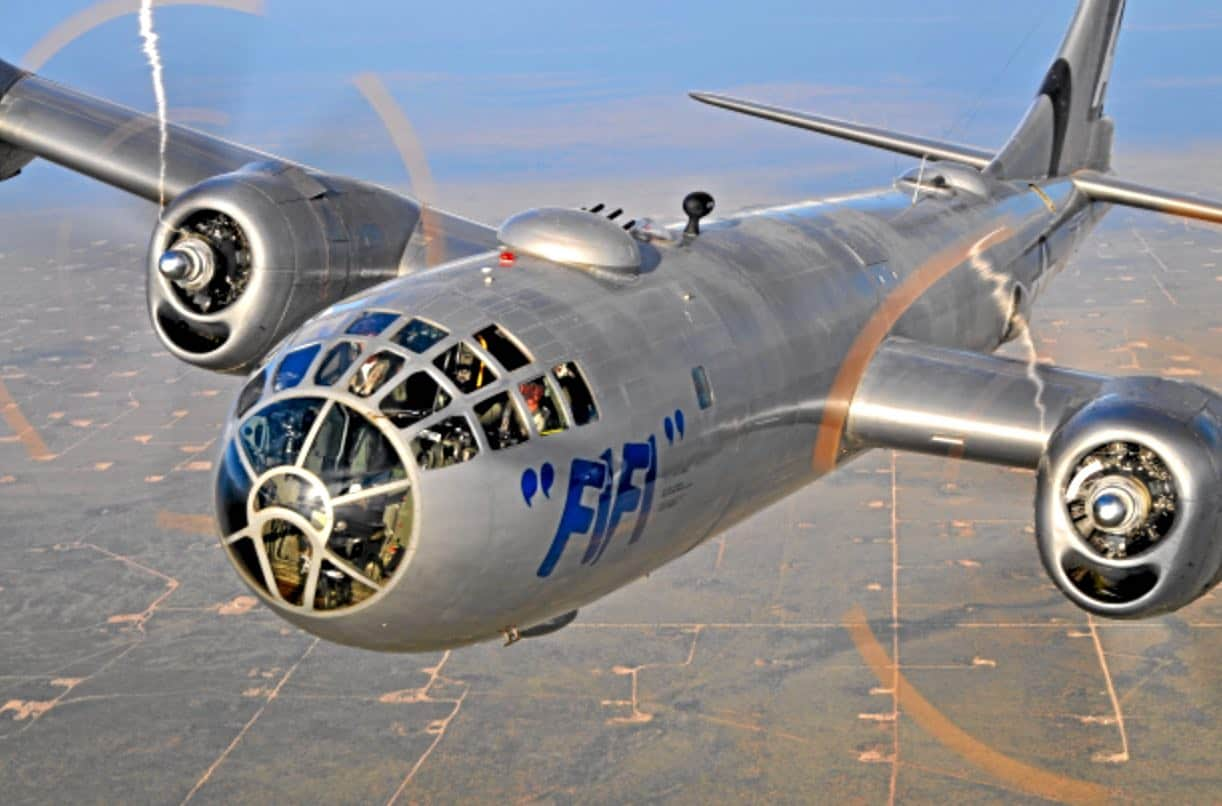
B-29 Superfortress
Northrop F-5
We’ve got a light supersonic jet fighter here with a couple of prototypes. The Northrop F-5 is best known for its simple, low-maintenance, yet superb flying and ground characteristics. It was initially constructed in 1962. It was also widely exported and played an important part in the Allies’ military. It is still used as a training aircraft in the United States! This is a hypersonic fighter jet with a top speed of about 1,000 mph. As a result, it is one of the fastest civilian-military planes available. A Talon T-38 training plane is a good option if you want to purchase and fly one of these babies. It was developed by the same firm that developed the F5.
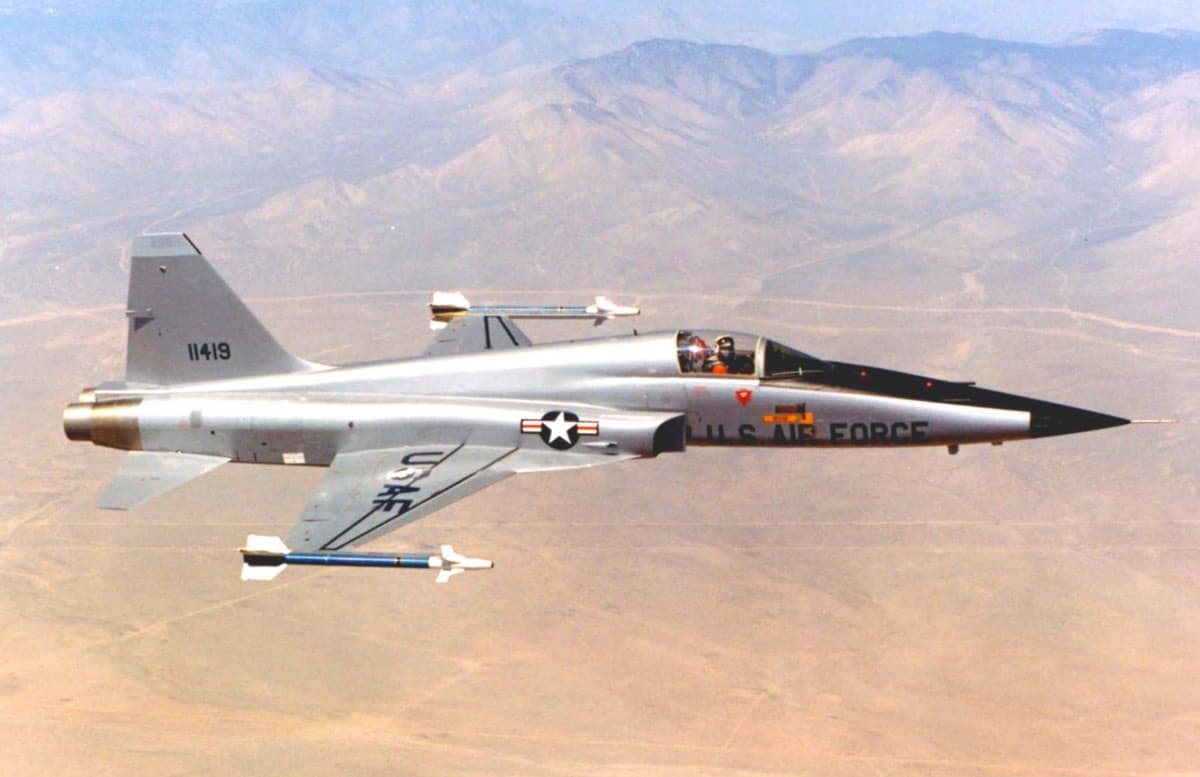
Northrop F-5
Bell UH-1 Huey
The Bell UH-1 Huey is a military helicopter that is widely used around the world. It is now utilized in more than 40 nations. We’re not sure about you, but we don’t think it lessens the thrill! It was first utilized during the Vietnam War. Back ago, it was used in a number of operations. Some models were used as MedEvac trucks, transporting both personnel and students. It can travel at a top speed of 125 mph and carry a crew of one to four people. This plane is a Vietnam War memento that sells for roughly $500,000. That’s a lot less money than the current ones, which cost $25 million for each plane. We’re not sure about you, but we believe this is a great deal.
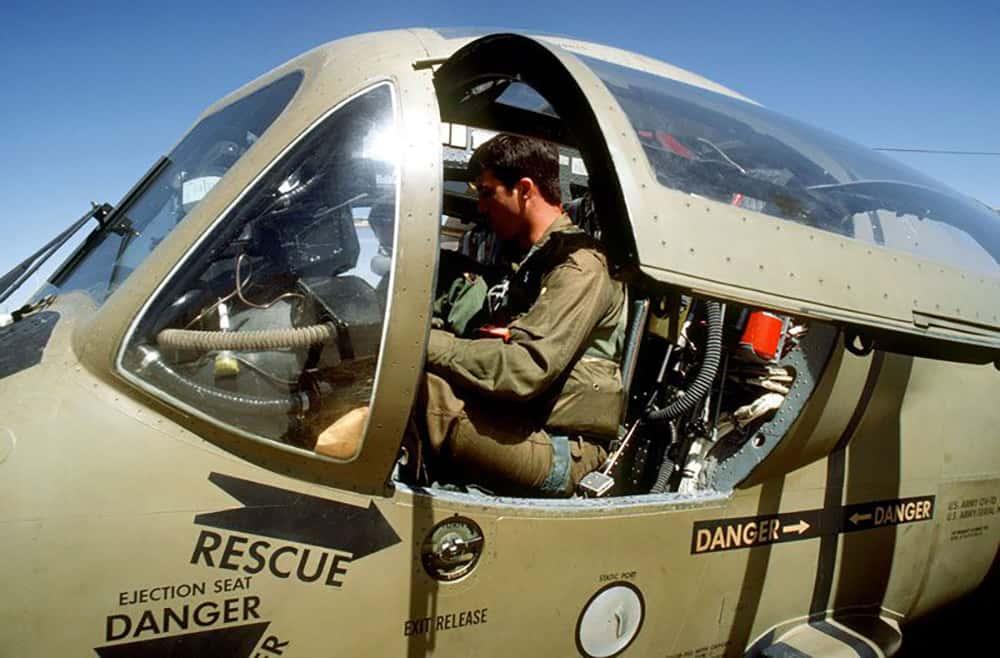
Bell UH-1 Huey
Lockheed T-33 T-Bird
The Lockheed P-80 Shooting Star brought a plethora of advances to the United States Air Forces. The new planes didn’t have propellers, and they handled things differently than previous planes. The propeller-driven trainers failed miserably in their preparation for the P-8-s. Finally, the P-80’s fuselage was stretched and a second tandem seat was installed. The Allison J33-A-35 turbojet for the T-33 Shooting Star was developed in this manner. It was the United States Air Forces’ first jet fighter training aircraft! Only roughly 1,700 P-80s were produced, but the T-Bird, which sold 7,000 units worldwide, was more suited to the military market. It is still utilized by the military, despite the fact that only approximately fifty of them are believed to have made it to civilian operators.
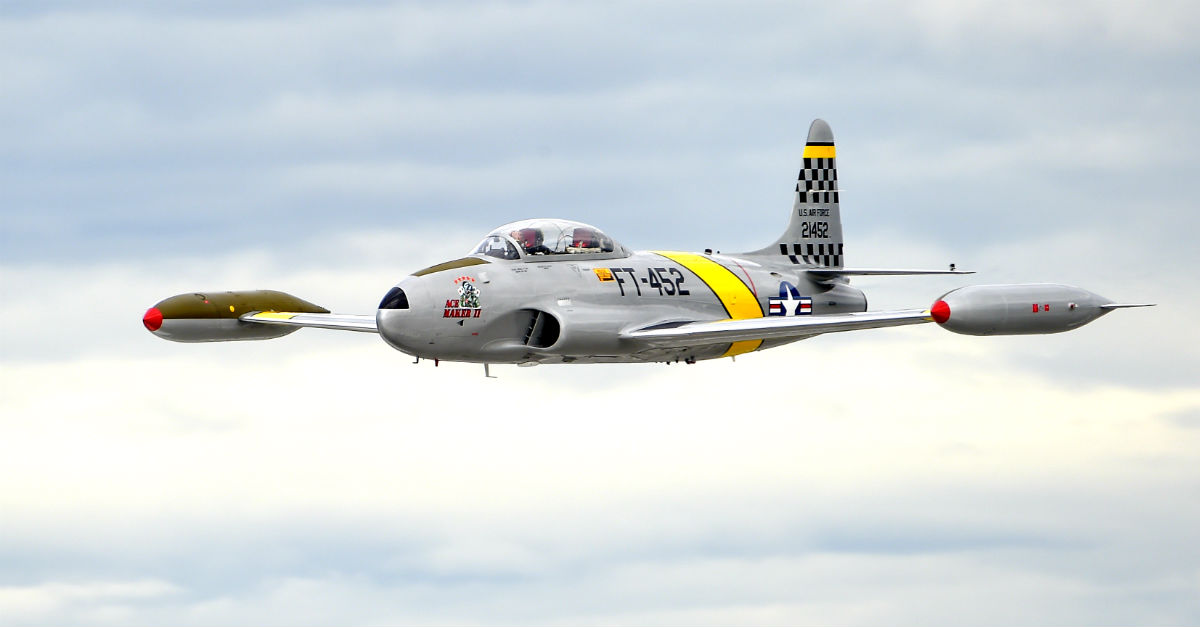
Lockheed T-33 T-Bird
Douglass A-4 Skyhawk
In case you didn’t know, the Douglas A-4 Skyhawk was planned to replace the A-1 Skyraider in the US Navy. Ed Heinemann, Douglas Aircraft’s chief design engineer, created it. He created a little plane that was both effective and simple to fly. The fuselage houses the engine, the wings house the fuel, and the avionics house the nose. The Navy dubbed this small bomber “Heinemann’s Hot Road” and began using it after the Korean War. The Marine Corps followed suit and adopted it as well. The carrier wings had two or more A-4 Skyhawk squadrons when the Vietnam War broke out. The A-4 was also the first plane to use an air-to-air refueling technology known as “buddy.” It is no longer in use in other countries, but it is still available for purchase.
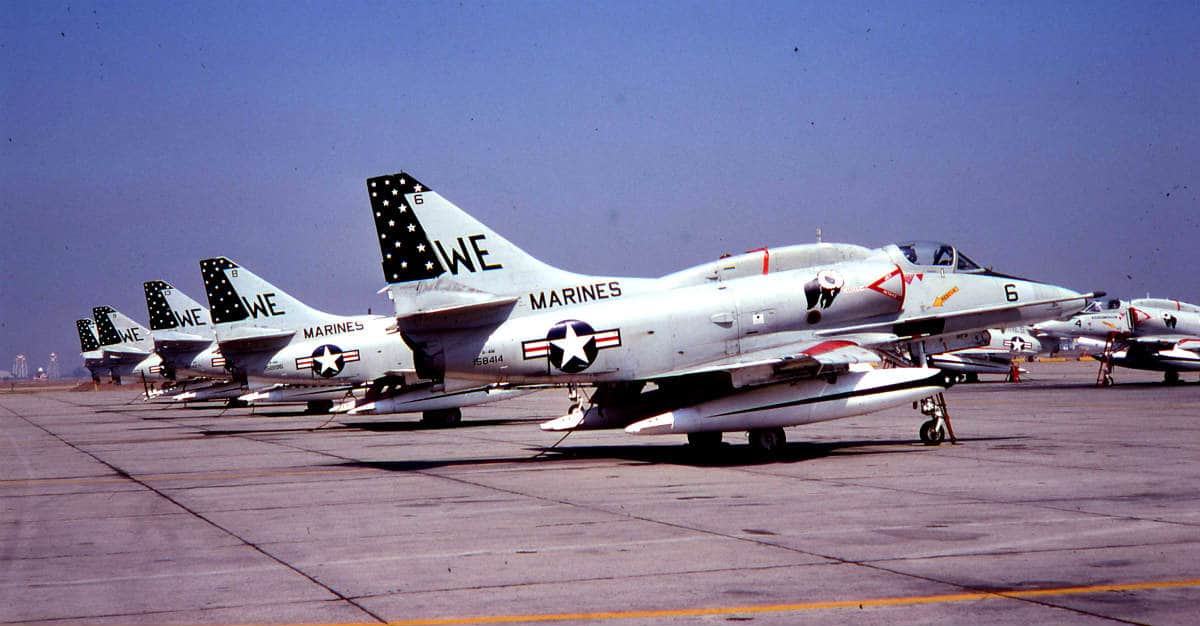
Douglass A-4 Skyhawk
Mikoyan-Gurevich MiG 21
After its launch in 1959, the Mikoyan-Gurevich MiG 21 became a regular plane in various military air forces. This system was primarily used by the Indian, Libyan, and Soviet air forces. This aircraft was the first in the Soviet Union to be capable of both combat and interception operations. It actually held a number of global records, including the most supersonic aircraft ever built. This military aircraft can be acquired for civilian use, even if it is still in use in other countries. The Soviet Union and its allies are thought to have produced roughly 10,000 units over the last four decades. There are 44 MiG 21s for sale in the United States, according to the FAA. Three of them are being sold by Premier Space Systems in Portland for roughly $150,000 each.
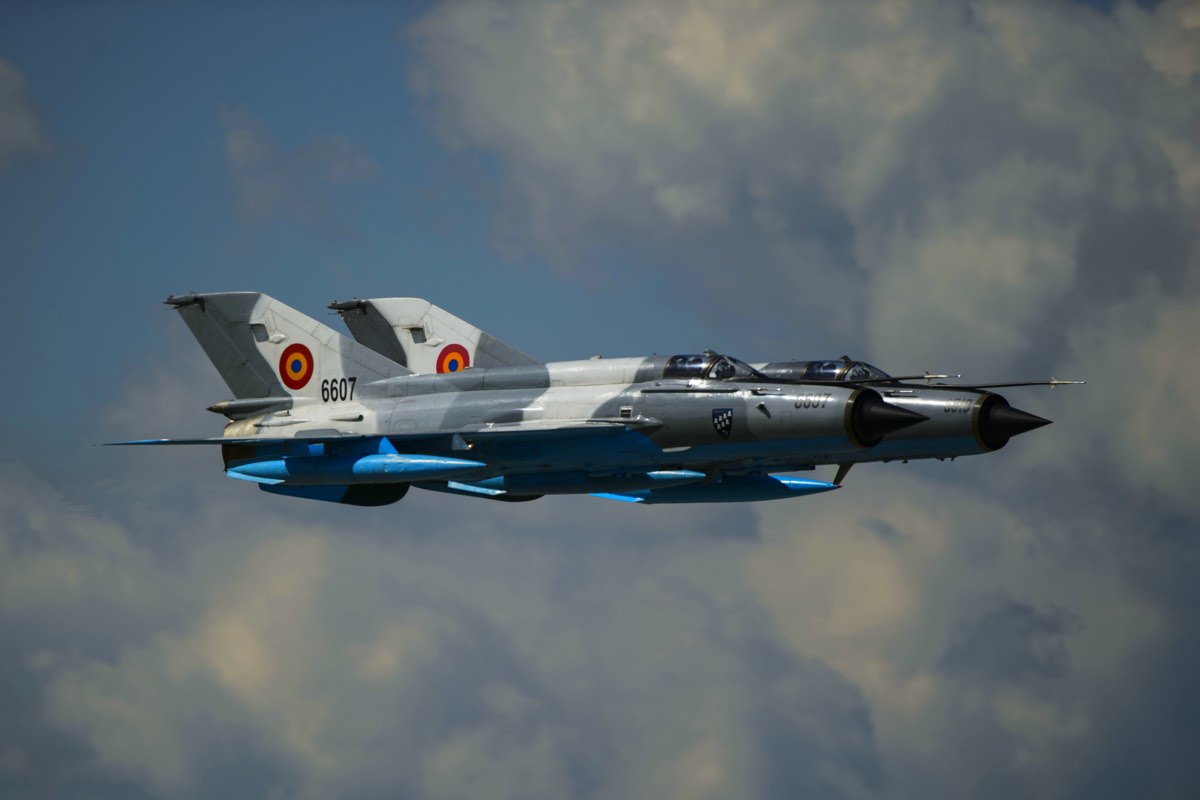
Mikoyan-Gurevich MiG 21
General Dynamics F-16 Fighting Falcon
You didn’t get it wrong. At a Florida auction, a General Dynamics F-16 Fighting Falcon can be purchased for more than $8 million. Make sure to read the fine print because you’ll be bound by some quite strict defense contracts. Furthermore, the cost of bringing this home is $8.5 million.
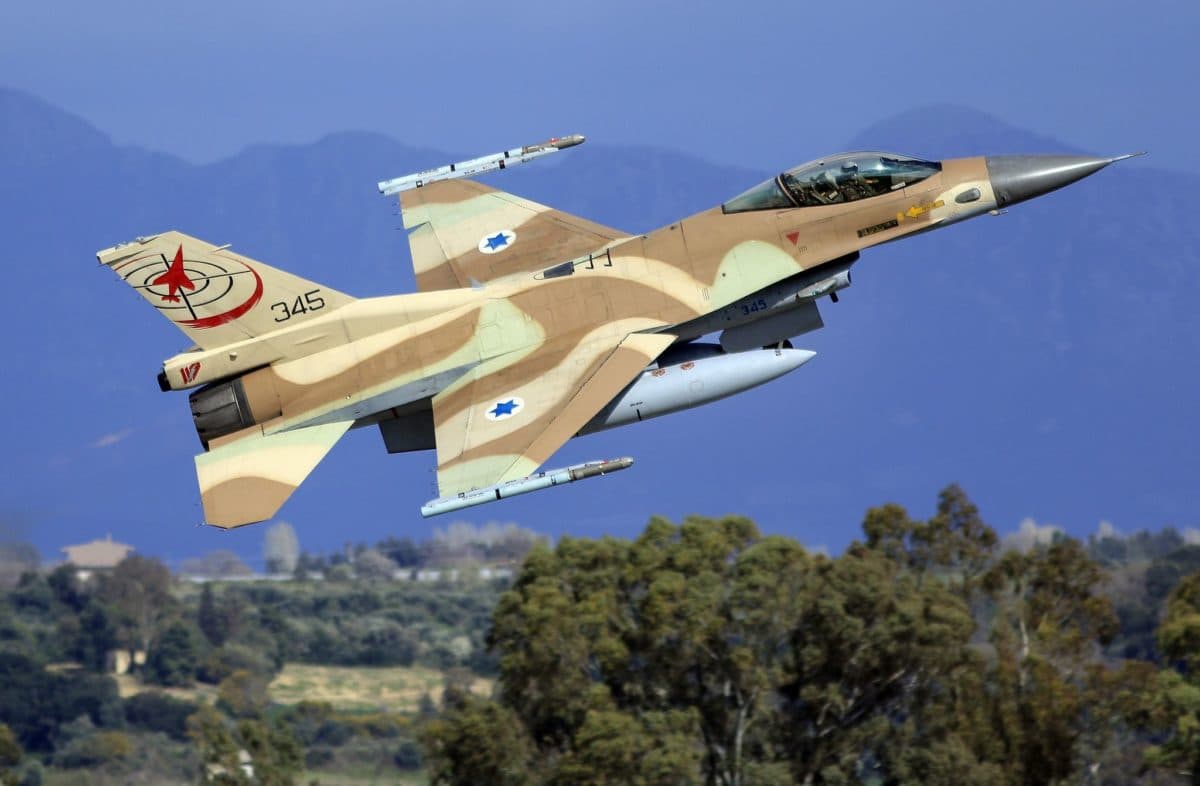
General Dynamics F-16 Fighting Falcon
Hawker Hunter
The Royal Air Force of the United Kingdom commissioned the MK-58 Hawker Hunter as a fighter jet in the late 1940s and early 1950s. It was later used as a fighter-bomber and for intelligence gathering. There were single and double pilot versions made. This was widely exported, and militaries all across the world have utilized it. With a top speed of just under 700 mph and a reputation as one of the greatest early fighters, it was officially decommissioned in 2014 and is now designated as a “warbird.” Military aviation fans will undoubtedly desire a copy for their own use. They aren’t all that uncommon, so if you have enough cash, you should be able to pull it off. Although some are still used by the military for threat simulation and target training, many are in the hands of groups that perform aerial displays.
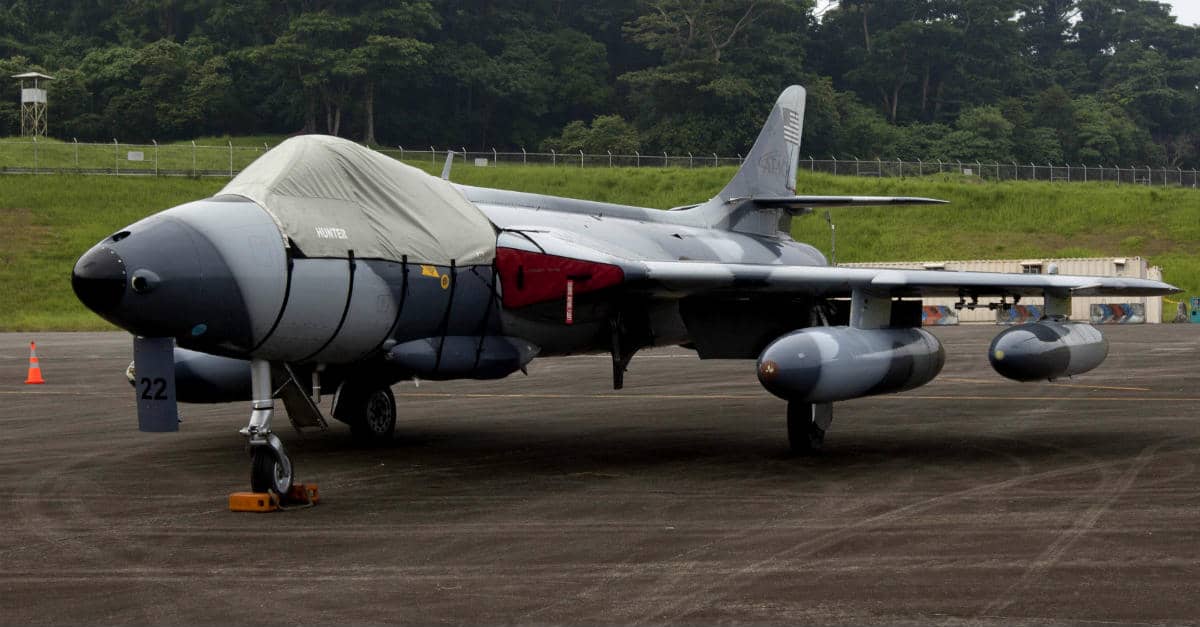
Hawker Hunter
Aeo L-39 Albatross
The L-39 Albatross, designed as a training aircraft in Czechoslovakia by Aero Vedochody, is the first thing that comes to mind for some people when they hear the word “warbird.” This was the first jet trainer of the Second Generation. It’s simple to see why civilian and military aviation lovers alike enjoy this. It only makes sense to buy it if you have a lot of money due to its gorgeous design and smooth functioning. It has a 40-foot wingspan and a 31-foot wingspan and is powered by an Ivchenko-Progress AI-25TL high-bypass turbofan engine that produces 3800 pounds of thrust and has a range of over 650 miles. On internal fuel, this aircraft can fly for two and a half hours, which is incredible. You can acquire one if you have $150,000 to spare.
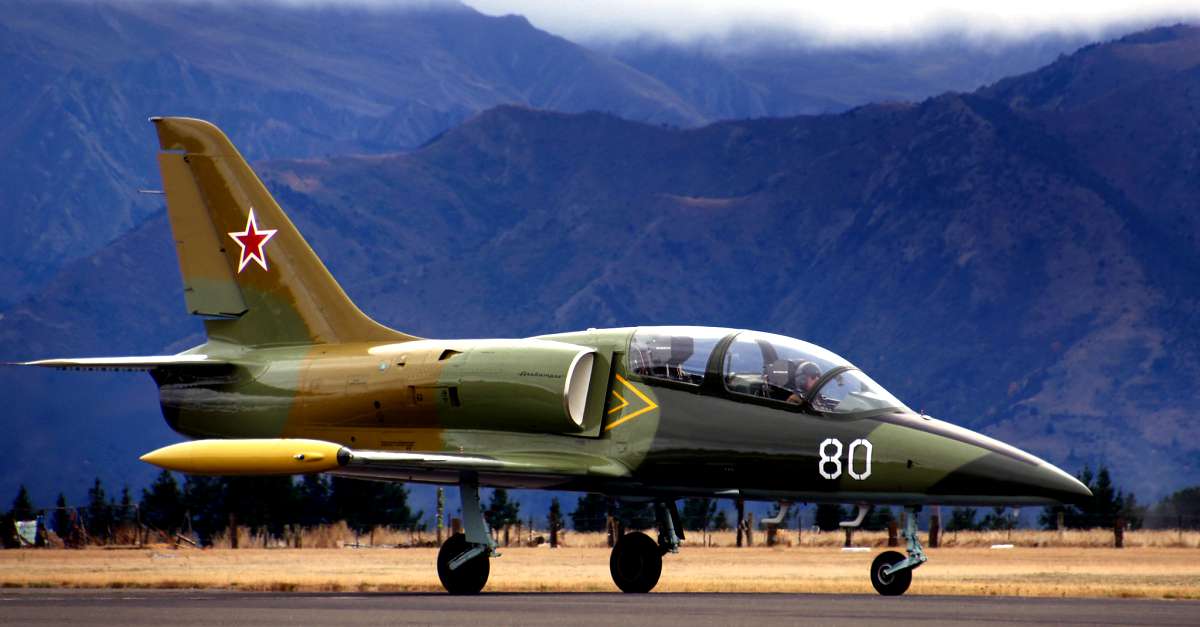
Aeo L-39 Albatross
Grumman OV-1 Mohawk
In the 1950s, the Grumman OV-1 was developed to replace the Cessna L-19 Bird Dog. It was used by the US Army as an all-weather observation and attack jet that could outrun and outpower the Bird Dog. The OV-1 Mohawk concept earned an award for Grumman Aircraft Corporation! After all, it turned out to be unlike anything else ever made. The Mohawk was the United States Army’s first turboprop aircraft. It was a success in a variety of military tasks. Bullet-proof glass and an aluminum-alloy floor kept it safe from small ground weapons, while its mounted engines and large finned tails gave it incredible maneuverability. At least one variant has a built-in camera and a better side-looking radar. It was able to scan the ground and offer tracking as a result of this, which was groundbreaking at the time.
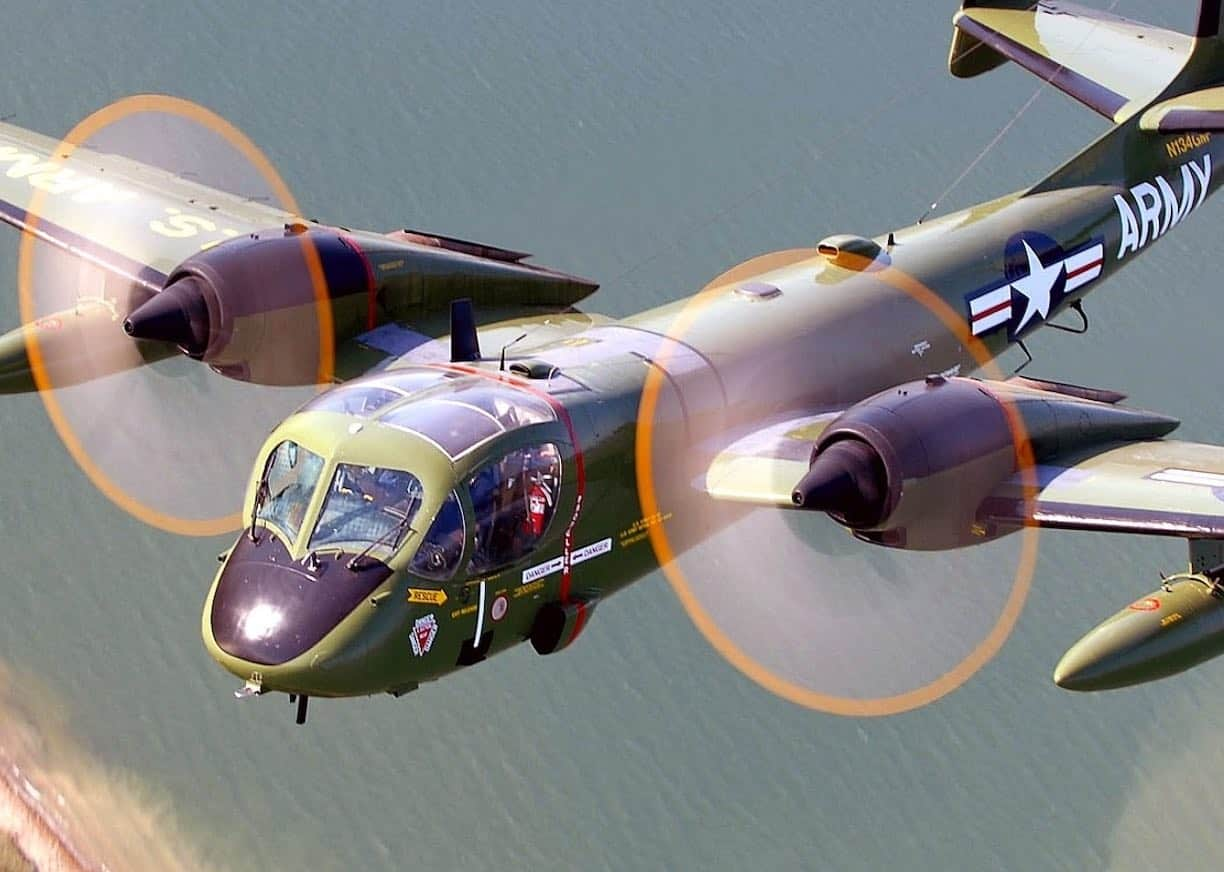
Grumman OV-1 Mohawk
Hawker Siddeley Harrier GR.3
In the 1960s, Hawker Siddeley designed the Hawker Siddeley Harrier for the Royal Air Force. It was based on the vertical/short take-off and landing concept, which had already been tried on several occasions. This was, however, the first one to succeed. The Royal Air Force (RAF) ordered the GR.1 and GR.3 versions. The US Marine Corps received a slightly modified model known as the AV-8A in the 1970s. With a wingspan of 25 feet and a length of 46 feet, the GR.3 was a single-seat, single-engine jet. A Rolls-Royce Pegasus 103 turbofan propelled it. There were four vertical flight puffer jets on the tail, nose, and wingtips. Because of its V/STOL capability, it didn’t require big runways or ground infrastructure, as did all other aircraft at the time. It was extremely important during the Falklands War.
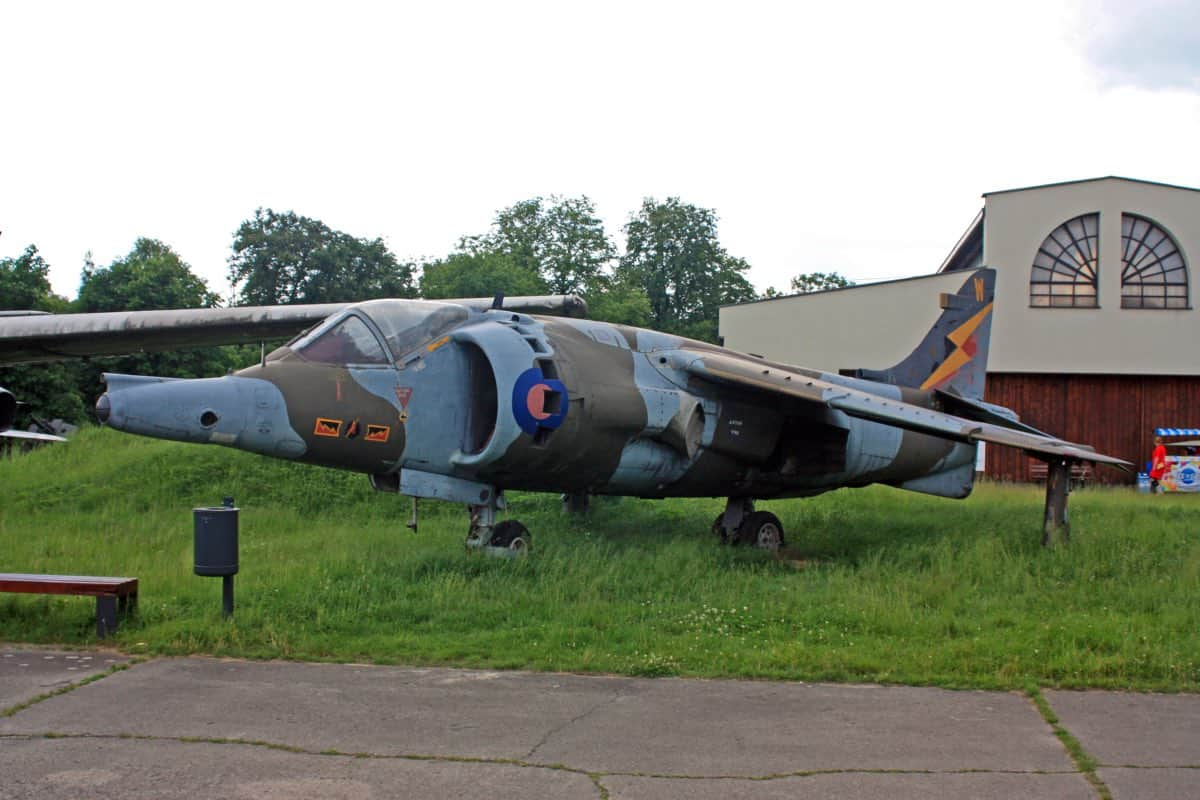
Hawker Sidldeley Harrier GR.3
Boeing F/A-18 Hornet
The Royal Australian Air Force sold multiple squadrons of outmoded Boeing F/A-18 Hornets to Don Kirlin, an Illinois real estate agent, and pilot. This type was used for contracted enemy air support in the United States. Each unit is expected to be worth $5 million.
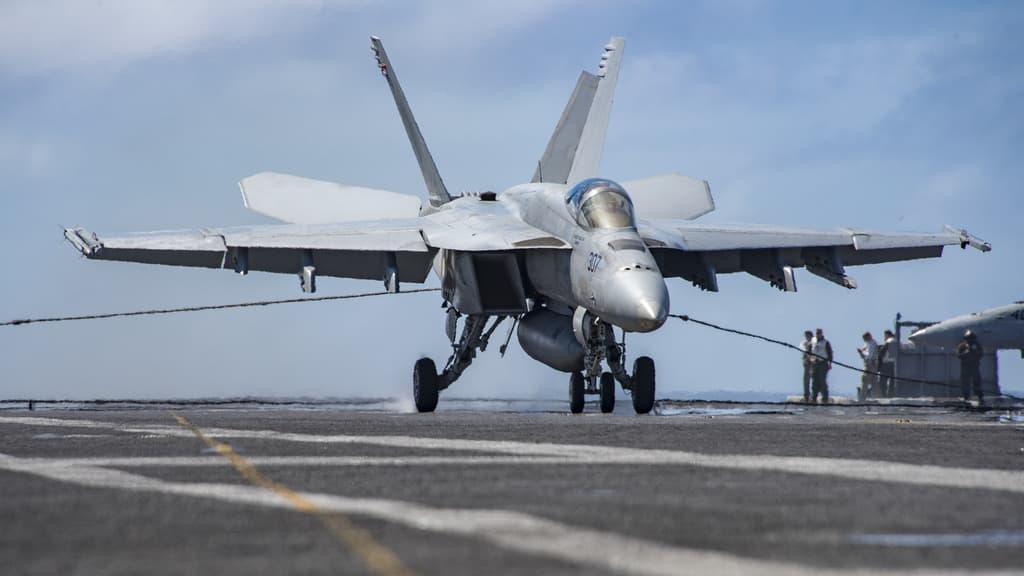
Boeing F/A-18 Hornet
Sukhoi Su-27
In the last decade or so, the Sukhoi Su-27 became available to the general public. The Soviets designed the military aircraft to compete with the Fourth Generation’s F-14s and F-15s. Because of its tremendous statistics, it’s an exciting plane to fly. This craft boasts supermaneuverability, two engines, and a top speed of Mach 1.8. You’re in for a crazy ride once you get your hands on this bad guy! It dwarfs the F-15 with a length of more than 10 feet and a width of more than 5 feet. It had ten weapon hardpoints and shielded radar technology, but those features were removed before it was made public. The stripped variant is the quickest and lightest alternative because the fuel must be carried within the plane. You can acquire one for $5 million if you really want one.
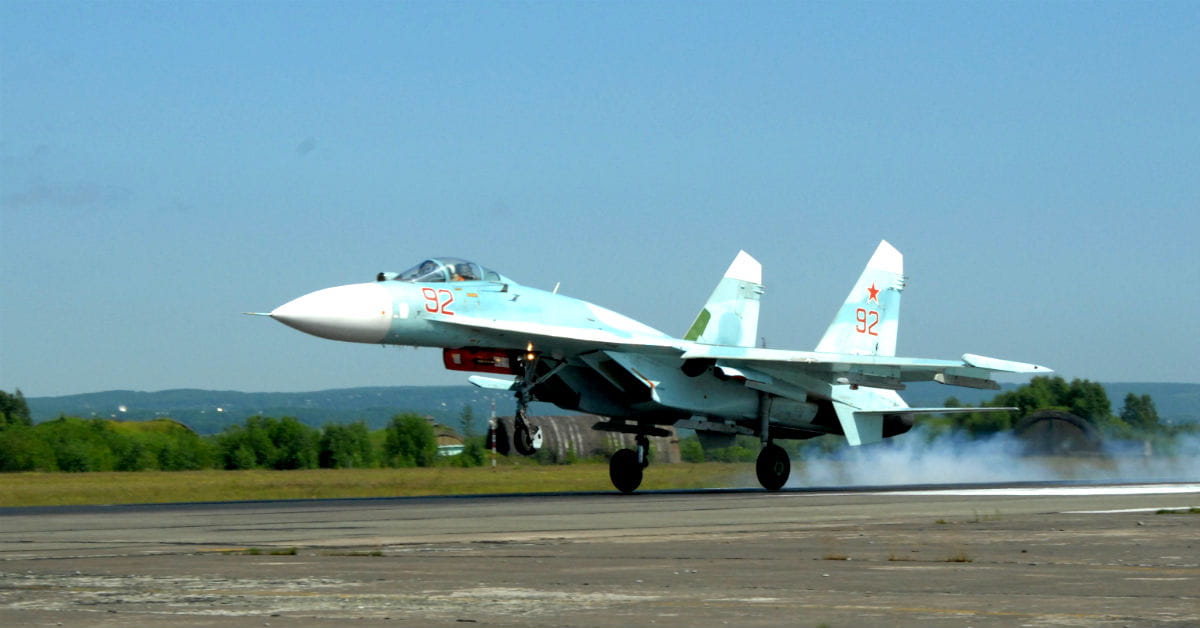
Sukhoi Su-27
Migoyan-Gurevich MiG-29
The Soviet Union developed the Mikoyan-Gurevich MiG-29 to compete with the American F-16. It’s a big fighter plane with a 57-foot length and a 37-foot wingspan that was built in the 1970s. This aircraft has a peak speed of Mach 2.25 and is powered by two turbofan engines. It was a versatile plane, despite being developed for air-to-air combat. Precision targeting and air-to-surface communication were also aided by it. Following the dissolution of the Soviet Union, former Soviet Union members had an overabundance of it. They went on to sell these devices in over 30 countries, with India being the major exporter. The United States also bought a small fleet of these planes to investigate their capabilities further.
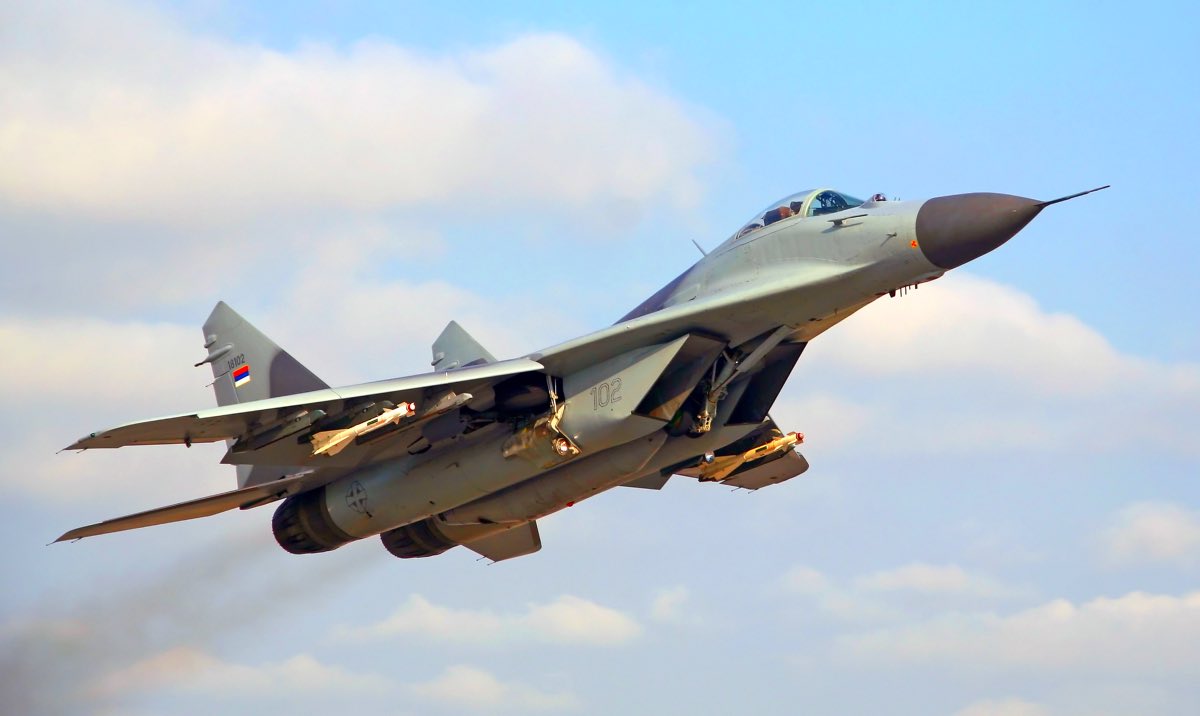
Migoyan-Gurevich MiG-29
Grumman F9F Panther
The company Grumman was the first to design a jet fighter! The F9F Panther was a single-engine, straight-winged day fighter with a proven track record. It’s also capable of transporting a significant quantity of air-to-ground missiles. This was one of the first successful carrier-based jet fighters in the US Navy’s history. The aircraft saw a lot of action during the Korean War, performing roughly half of the Navy and Marine Corps’ attack sorties. The Panther can brag about a long number of firsts. For one thing, it was the first air-to-air kill for the US Navy in Korea. This was also the Blue Angels’ first military aircraft. The F9Fs were generally removed from front-line service towards the middle of the 1950s, but some were kept in the United States for training during the next few years.
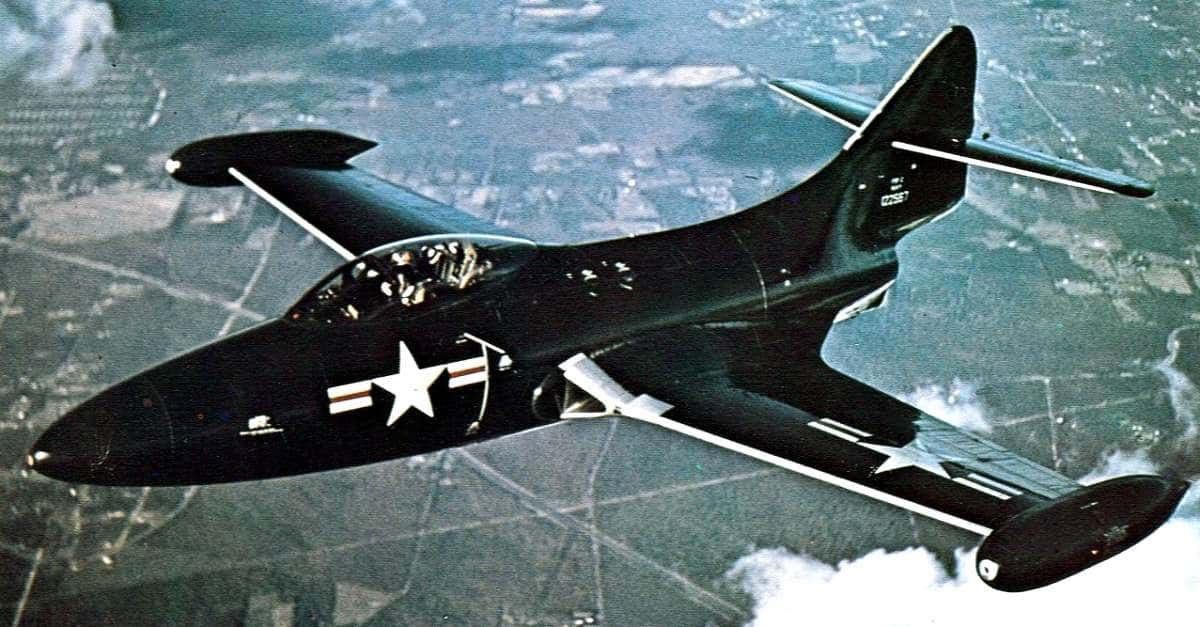
Grumman F9F Panther
Douglass DC-3
The DC-3 can be considered one of the first planes to change the game in retrospect. This is a cargo or transport plane that went above and beyond its responsibilities. It has a cargo capacity of 6,000 pounds and can transport 21 to 32 passengers. It also has a 1,500-mile range, which was previously thought impossible. Despite the fact that production ceased in 1942, hundreds of them are still in use. Douglas produced high-quality machinery, as evidenced by its lengthy lifespan. The DC-3 was subsequently shrunk and turned into a special transport plane for military use. The C-41 variant was commonly used by the Secretary of War. A unit sold for about $250,000 at a recent auction.
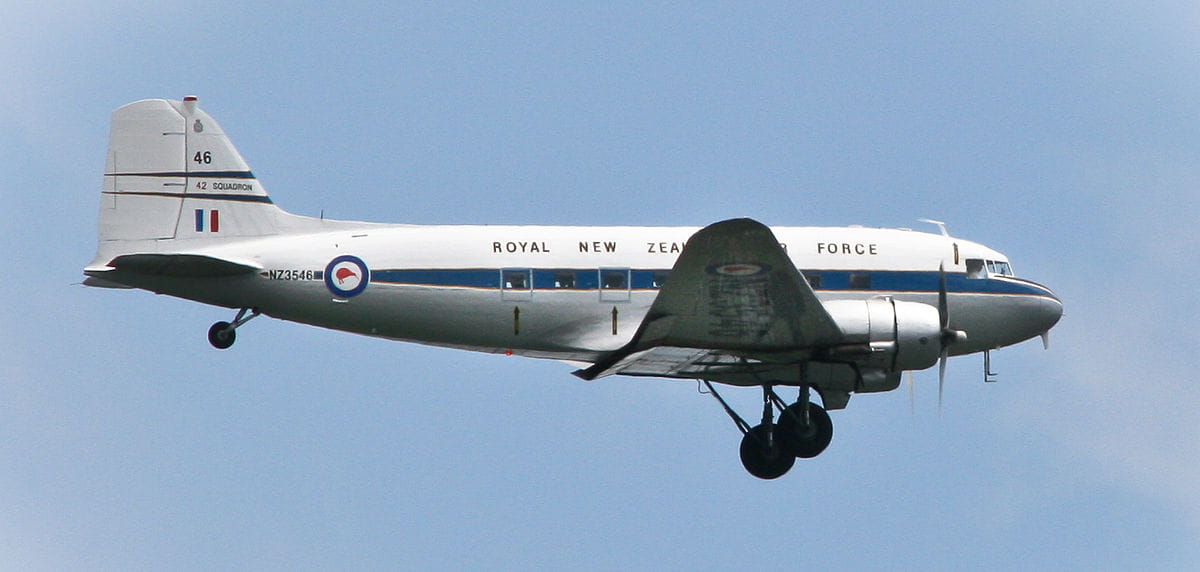
Douglass DC-3
Folland Gnat
In the 1950s, the British developed yet another small yet powerful fighter plane. The Folland Gnat, often known as the “Pocket Fighter,” performed admirably and earned a place in the air forces of various countries. It can roll at more than 360 degrees per second and has a top speed of 10,000 feet per minute. This was an incredibly agile and maneuverable plane back then. The British used it for advanced training after placing an order for six test planes. The Gnat was also used as a fighter in India, Finland, and Yugoslavia. It was a crucial component in the conflict between India and Pakistan. It broke the record for being the first plane in Finland to break the sound barrier. Although they’ve been retired, this warbird is still available for purchase if you have $200,000 to spare.
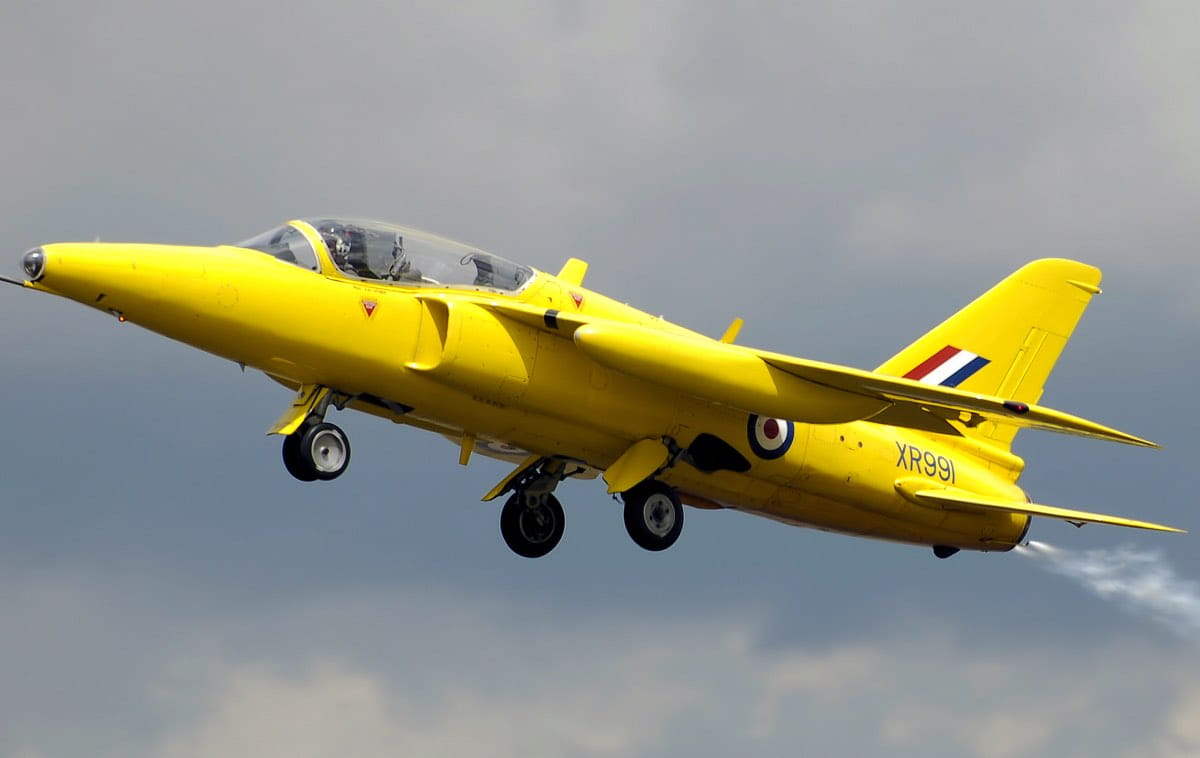
Folland Gnat
Saab 35 Draken
This is a fantastic jet fighter that can keep up with airborne bombs while also fighting off foes when necessary. The 35 Draken was developed by Saab, a Swedish vehicle manufacturer. The jet’s unique design allowed it to fly at both low and high speeds. The Swedish Defense Material Administration developed it for short takeoffs and landings, which explains its distinctive double delta shape. Saab did an excellent job on that front. Western Europe’s first supersonic fighter was the 35 Draken. Despite Sweden’s decision to withdraw it after nearly four decades of service, the Austrian Air Force still uses it. It was used as a testing aircraft by NASA and several other government agencies in the United States. You can buy this as a private owner. Miller beer commercials have also included the plane!
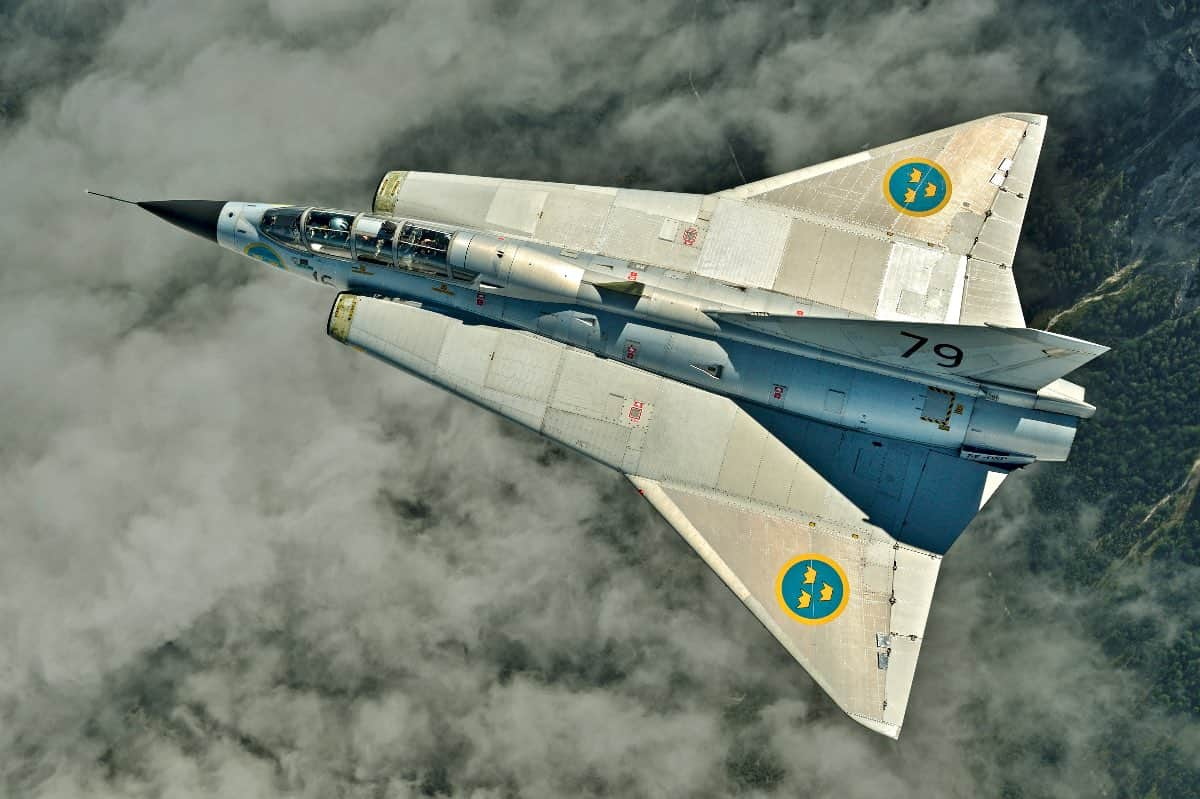
Saab 35 Draken
Panavia Tornado
This fighter jet was developed in collaboration with the United Kingdom, Italy, and West Germany in the 1970s. The Panavia Tornado was built to execute a wide range of combat missions and has since become a standard in numerous European militaries. It is still a part of some of them in this day and age. The three main variations were air defense, interdictor/strike, and electronic warfare/reconnaissance. While flying high in the sky, it may achieve Mach 2.2 speeds. At sea level, though, the maximum speed is 900 miles per hour. It is known for its maneuverability due to its variable-sweep wings. Pilots enjoy how peaceful and spacious the cockpit is. Because of these traits, it is the ideal military plane.
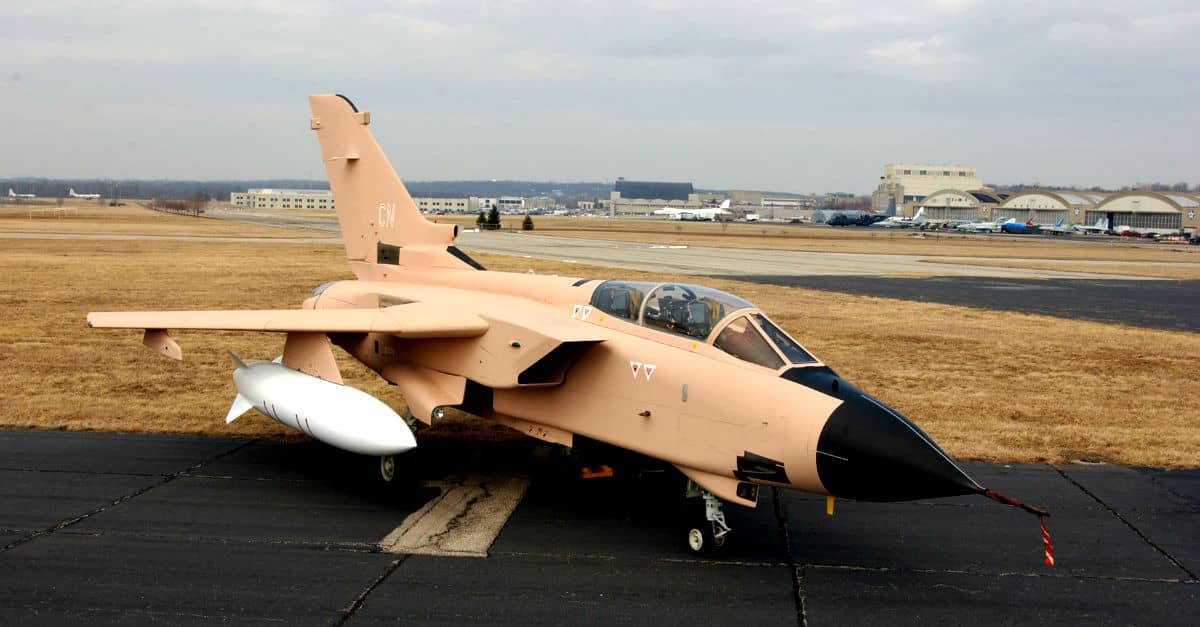
Panavia Tornado
Dassault Alpha Jet
Did you know that Germany and France collaborated in the development of the Dassault/Dornier Alpha? Each of them had their own reasons for doing so. France planned to use it as a training aircraft, while Germany planned to use it for light assault sorties. The French version was known as Alpha Jet E, whereas the German version was known as Alpha Jet A; the French were ecstatic with its performance, while some commanders thought its handling was almost too forgiving. Transitioning to other planes became more difficult as a result. In the 1990s, however, German Alpha Jets began to be phased out. A considerable number of the planes were sold to private owners and other military groups. The Flying Bulls purchased four of these and use them in aerial displays.
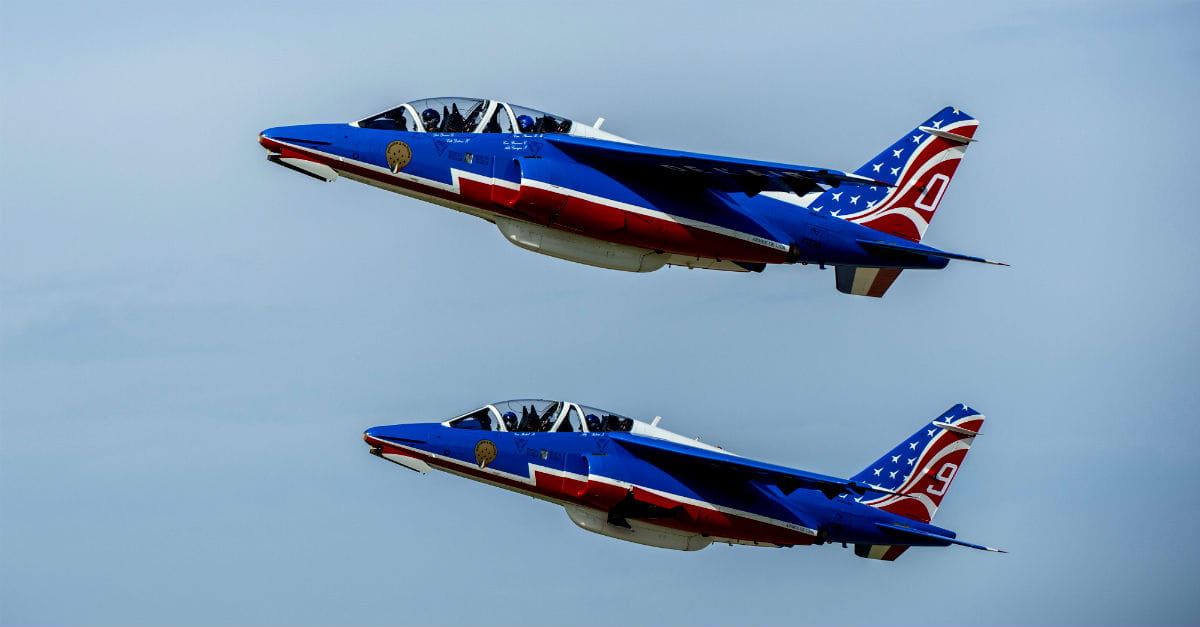
Dassault Alpha Jet
Vought F4U Corsair
It depends on the unit, but the Corsair was designed by Chance, Goodyear, and Vought. In 1942, the first was drafted into the US Navy. They are recognized for changing the game in the Pacific region during WWII. The type was well-known in air-to-air combat against Japanese Zero planes. More than 12,000 fighter planes were constructed in the United States. There are just about 50 units left in the country, according to estimates. The F4U Corsair, on the other hand, was only constructed on rare occasions by Goodyear. An FG-1D Corsair with a price tag of $4.1 million was recently placed for sale.
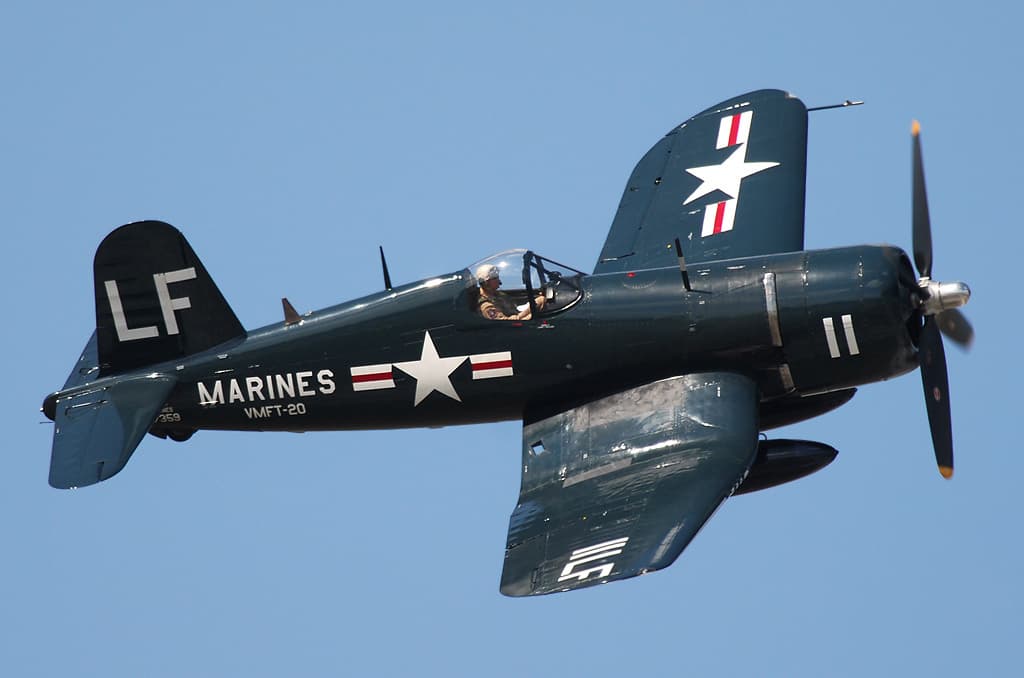
Vought F4U Corsair
Hawker Sea Fury
The Hawker Sea Fury was the Navy’s last propeller fighter plane. Despite the fact that it was intended for the Second World War, it saw extensive use in the Korean War. The plane arrived late to the party, but it proved crucial during the Bay of Pigs invasion in 1961. From 1947 to 1968, it was operated by the Burmese Air Force. Other countries had previously used it. The countries on the list include Australia, Canada, Pakistan, and the United Kingdom. A fully restored example of the model known as the “fastest Sea Fury ever” was recently listed for $750,000.
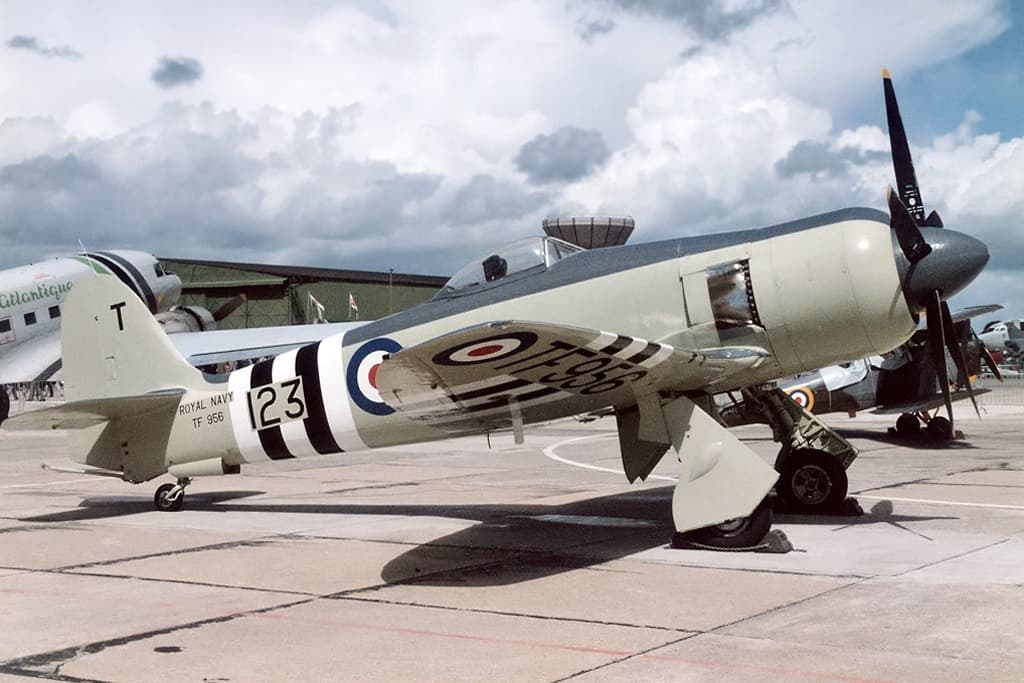
Hawker Sea Fury
Hispano M4L Buchon
Are you familiar with the Hispano M4L Buchon? If you’re not familiar with Messerschmitt’s iconic Bf-109 fighter G-variant, let us explain. Many consider this to be the ultimate postwar evolution version of the Bf-109 family. It was primarily used as a fighter aircraft by the Spanish Air Force. It was used in scenes from the Hollywood film The Battle of Britain after it was no longer in service. In 1952, the Buchon took to the air for the first time. Spain had to deal with a few non-operational units as a result of a mishandled arrangement with Germany. In any event, the country’s best effort is to make the best of a poor circumstance. Until 1965, it was assigned to the Spanish Air Force. We’ve seen a Buchon on the market, but we have no idea how much it’s worth right now.
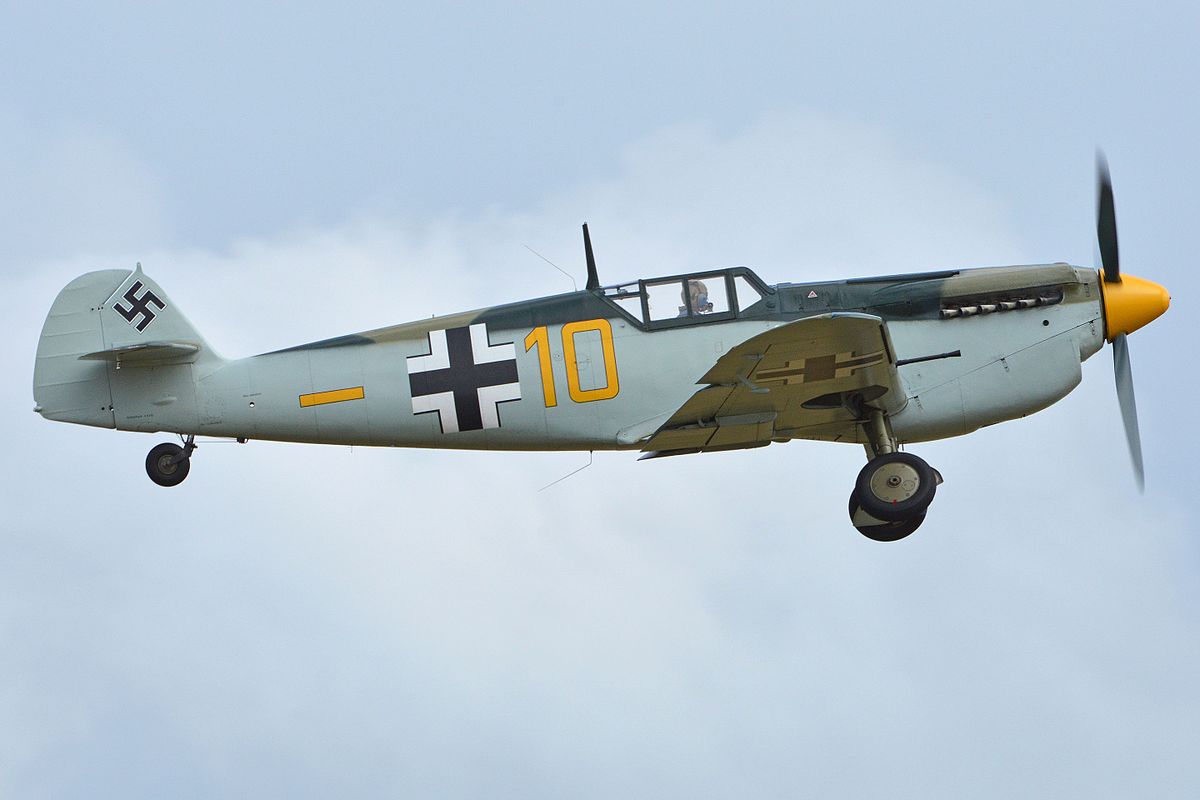
Hispano M4L Buchon
Messerschmidt ME-262
In 1941, the Luftwaffe used the Me-262 Schwalbe and the Sturmvogel. The fighter variant came first, followed by the fighter-bomber variant. It was deactivated when the war ended in 1945. This plane was one of the first in the conflict to be equipped with jet engines, making it a formidable opponent. Following the war, Americans used captured units as test subjects. The Me-262 furnished the F-86 Sabre with a lot of technology. There aren’t many of these remaining, and the ones that are still available have a mix of original and reconditioned features. One of them recently sold for $600,000.
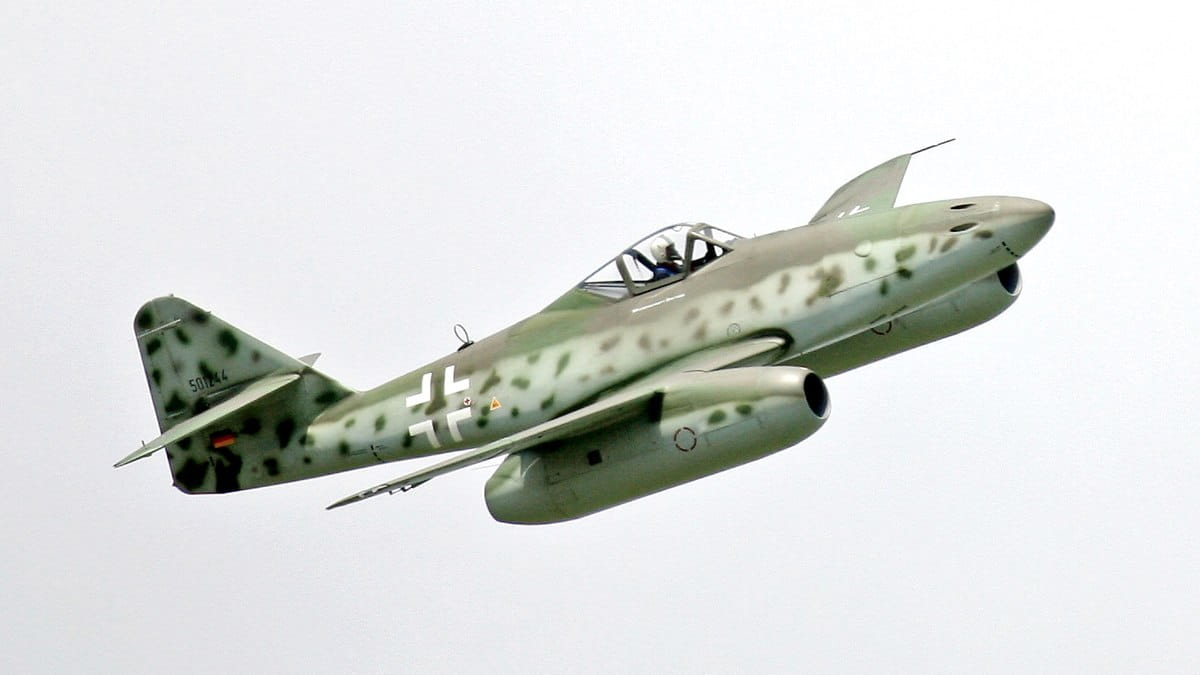
Messerschmidt ME-262
P-38 Lightning
If you’re a fan of aviation, you’ve probably heard of the F-35 Lightning II, but we doubt you’ve heard of the P-38 Lightning I. The P-38 was designed as a piston-engine fighter during WWII, but it turned out to be much more. It might be used for interception, ground attack, dive-bombing, photo-reconnaissance, night warfare, level bombing, radar pathfinding, and long-range escort. This aircraft was employed by a number of countries around the world, including the United Kingdom, the United States, China, Australia, France, Portugal, and Italy. You can also buy one as a civilian. We sincerely hope, though, that you have $650,000 on hand for this.
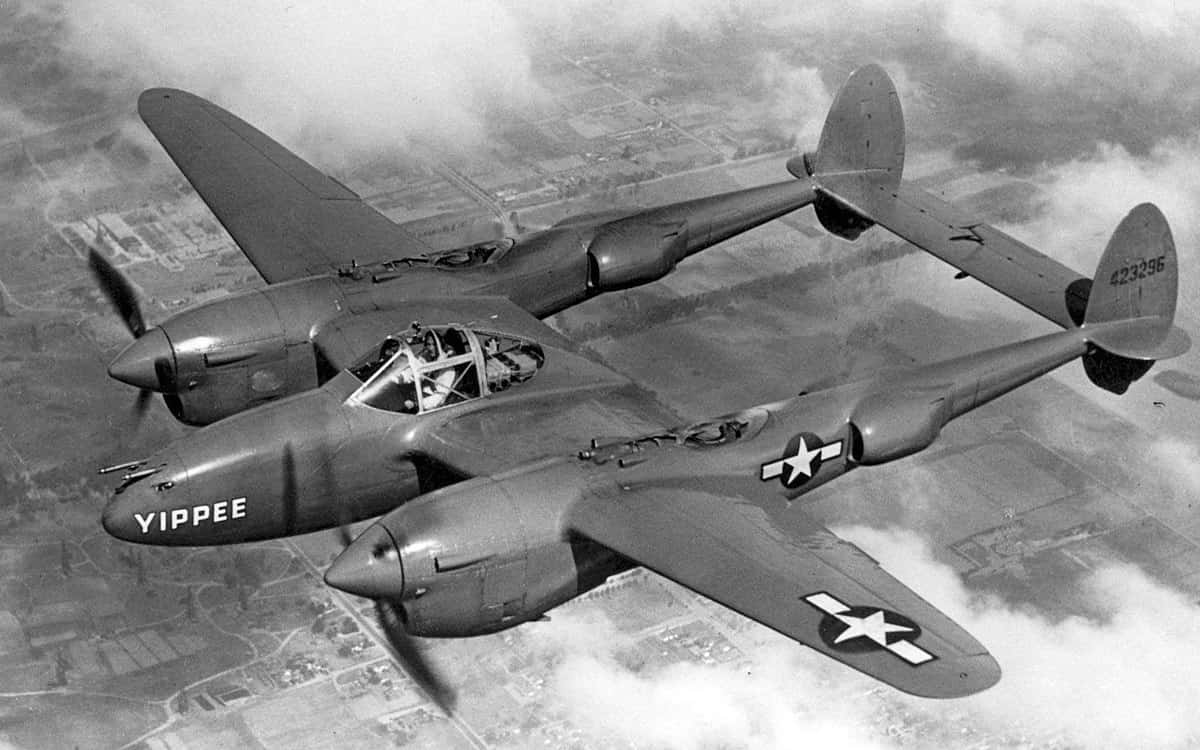
P-38 Lightning
North American T-6 Texan
Many Allied pilots were familiar with this two-seat advanced trainer during WWII. The SNJ was given to the North American Aviation T-6 Texan by the Navy, and the Harvard was given to it by the Royal Air Force of the United Kingdom. It aided the training of tens of thousands of pilots across 34 countries. This occurred over a period of 25 years. During that time, they produced 15,495 units. It gained multiple accolades during WWII and the Korean War. Despite this, it is best known for its function as a trainer. You can buy one if you have $200,000 in your bank account.
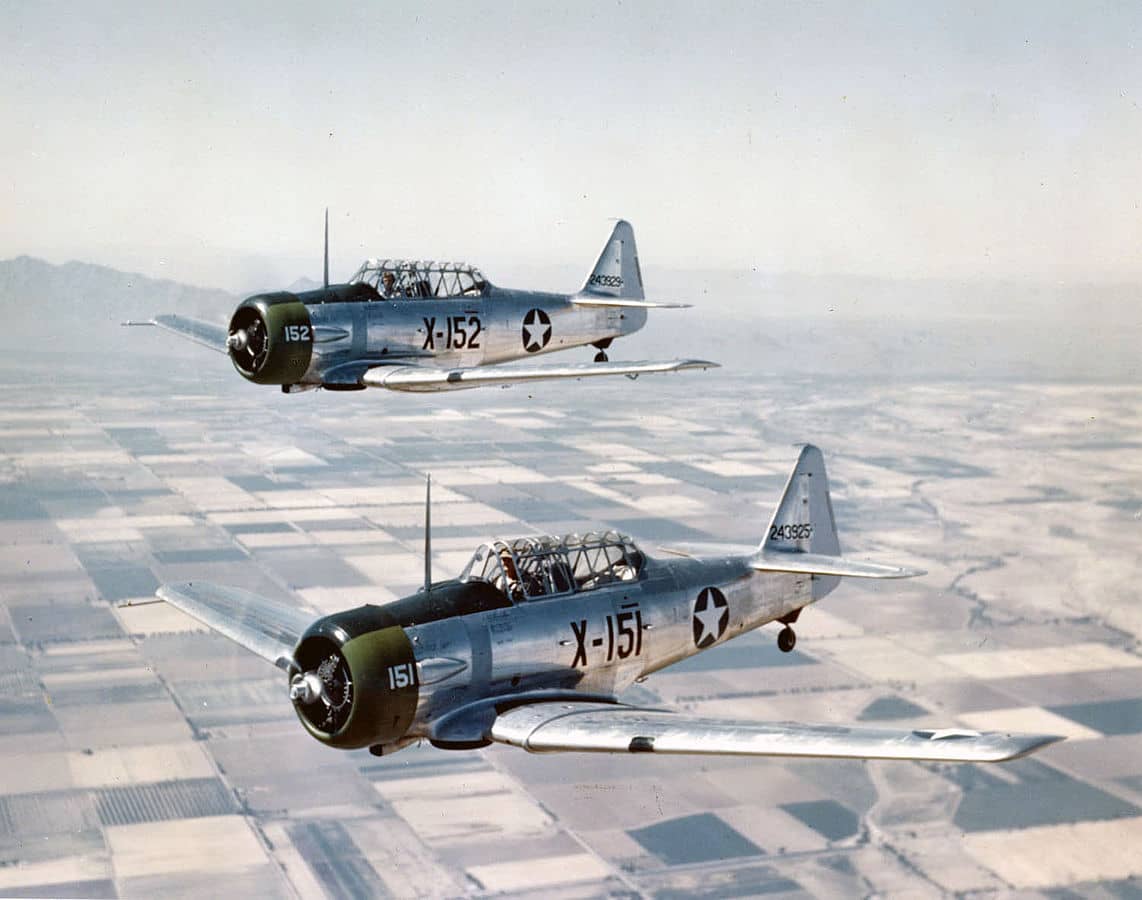
North American T-6 Texan
Curtiss C-46 Commando
The Curtiss C-46 Commando is still in operation in far-flung regions of the globe, which is a fun fact. It was used as a military cargo plane in the mid-1940s and experienced a lot of battle. It also had one of the first pressurized cabins on a military aircraft. At the same time, the Boeing Stratoliner and the DC-4 were in service. Although several paratroopers were lost, this was also a paratroop drop plane. As a result, they were relieved of their responsibilities. Many troops couldn’t handle the C-46 because of its shaky military past. In any case, it’s a historically noteworthy plane with a price tag of $250,000.
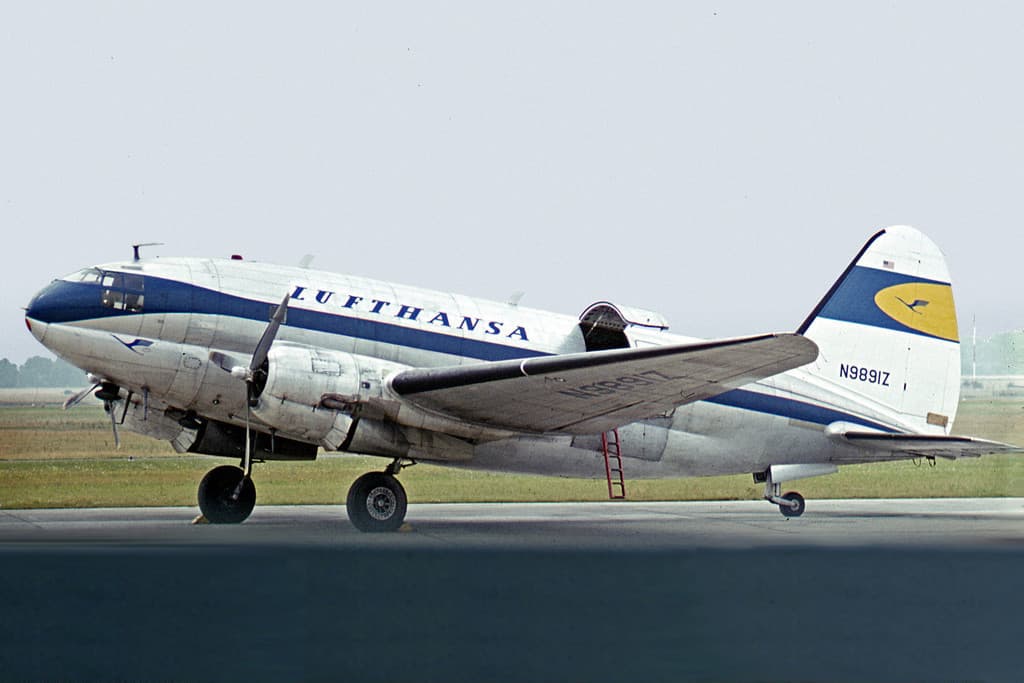
Curtiss C-46 Commando
Grumman G-21 Goose
Another plane that can boast a large list of firsts. Grumman created the first twin-engine plane, the first commercial airliner, and the first single-wing plane, the G-21 Goose. What an excellent achievement! It has a wide range of uses due to its ability to function on both land and water. The aircraft’s longevity displays the designers’ and engineers’ abilities. Wealthy New Yorkers who had to commute from Long Island to Manhattan referred to it as an “air yacht.” Later, it was used as a passenger airliner, a utility plane, and a military transport plane.
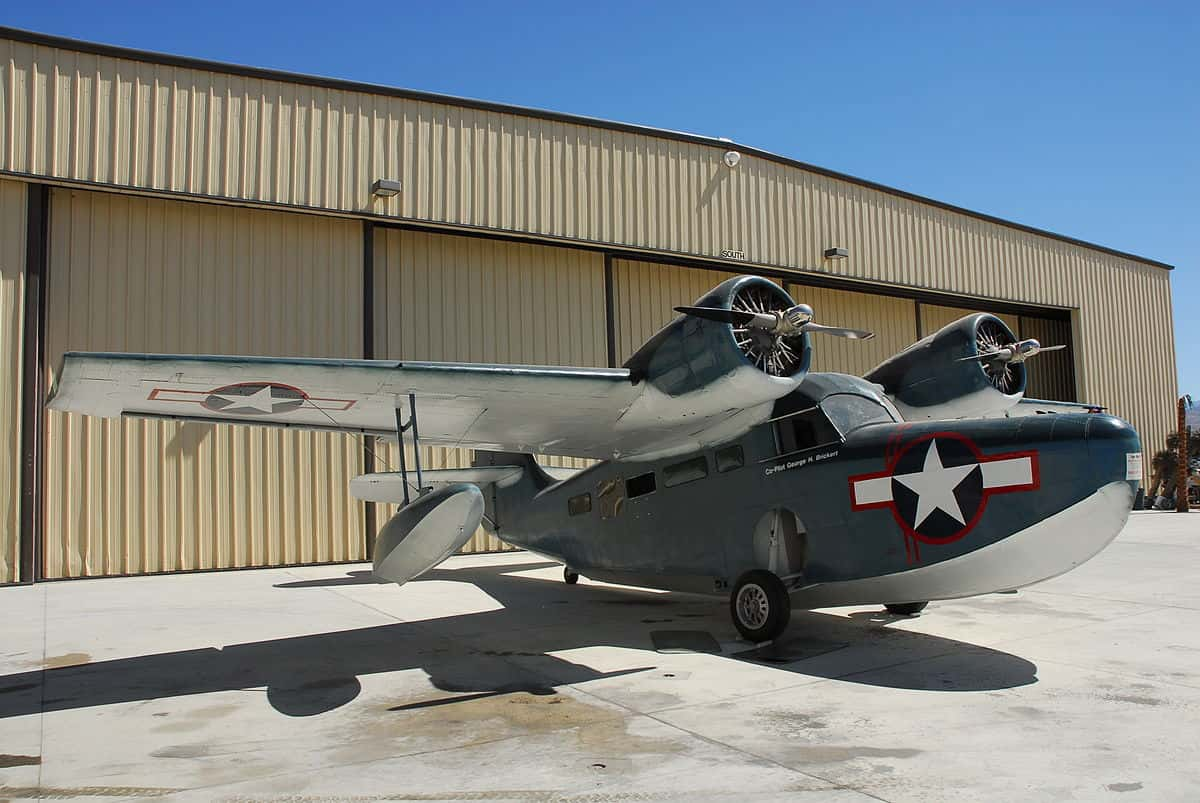
Grumman G-21 Goose
North American B-25 Mitchell
Isn’t it ironic that Brigadier General William “Billy” Mitchell is honored with the Boeing B-25 Mitchell? It was a twin-engine bomber that could operate at both low and high altitudes. This jet was a fighter, a photo-reconnaissance plane, and a submarine patrol plane all at the same time. North American Aviation produced roughly 10,000 units between 1939 and 1945. The first flying unit took to the sky in August 1940. The US Army Air Corps introduced the first five planes in February 1941. This prompted a frenzied scramble to construct as many as possible! North American Aviation built a total of 9,816 B-25 bombers at two locations in Kansas and California. One of them sold for $1.4 million recently.
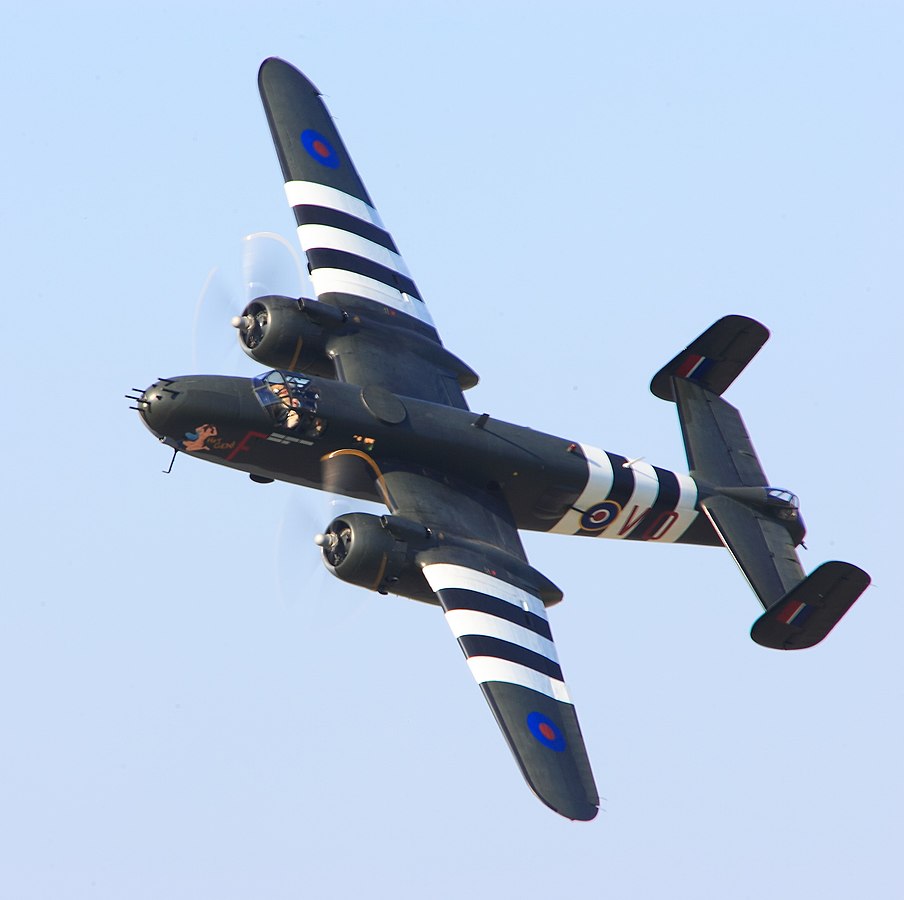
North American B-25 Mitchell
Canadair CF-5 Freedom Fighter
The Canadair CF-5 Freedom Fighter was a game-changer in terms of air warfare technology. This was popular in the 1960s since long-range detection was difficult due to the ultra-low radar cross-section. This was the closest thing they had to a stealth fighter back in the day. It was a small “pocket fighter” constructed from the ground up as a dogfighter. Please keep in mind that it was also extremely cheap to produce, which was excellent considering that it was intended to outnumber NATO countries. The plane possessed high-tech electronics and performed like a more expensive plane like the F-4 Phantom, yet it cost the same as a Russian MiG-21. A unit was recently purchased by a private buyer. The asking price, however, has not been disclosed.
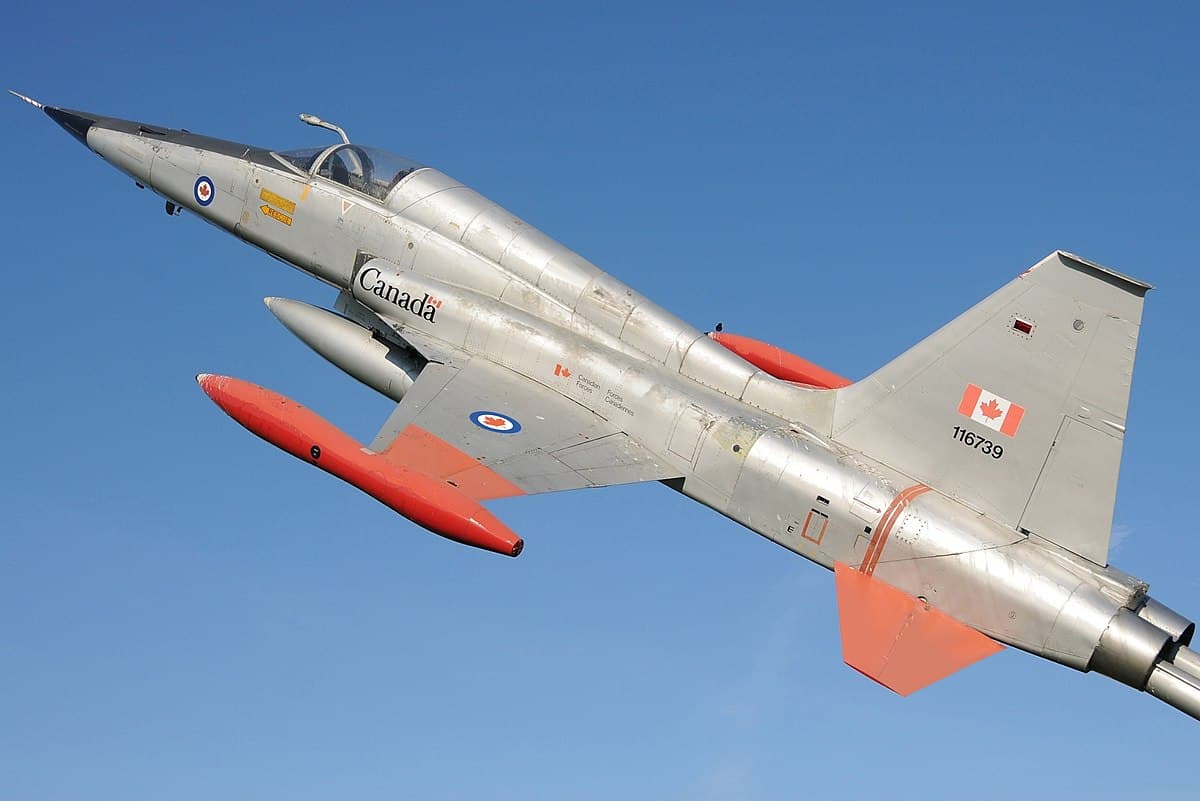
Canadair CF-5 Freedom Fighter
Mitsubishi A6M “Zero” Resin
The Mitsubishi A6M Reisen, also known as the Zero fighter, was the undisputed paradigmatic Japanese jet during World War II. It was designed by Mitsubishi. Nakajima, on the other hand, was a co-producer of the aircraft. The firms produced over 10,000 units between 1939 and 1945. The Japanese Navy has asked for designs for a new carrier fighter to replace the Mitsubishi A5M. This fighter was well-known for its air kills. We regret to inform you that the current asking price for a unit is unknown to us.
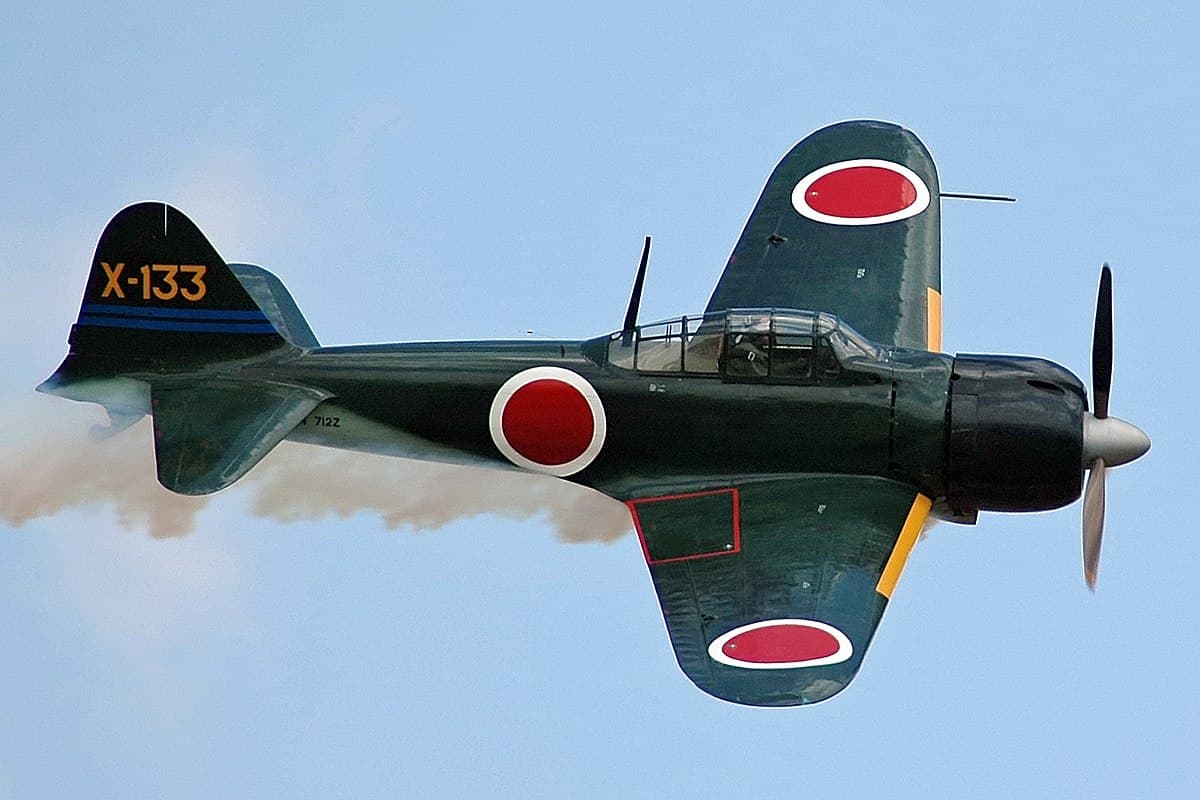
Mitsubishi A6M “Zero” Resin
Short Tucano Trainer
A two-seat turboprop basic trainer plane is on hand. On Northern Island, the Short Brothers created the Short Tucano Trainer. The Royal Air Force has been its primary operator, but it has also exported the jet to Kuwait and Kenya on occasion. In 1986, the prototype took to the air for the first time. Two years later, the Royal Air Force received its first aircraft. This plane is primarily used at RAF Linton-on-Ouse for basic training of RN and RAF student pilots. Students will have accumulated around 130 hours of flight time with the Hawk T2 aircraft trainer before moving on. You can take one home for more than $1.3 million.
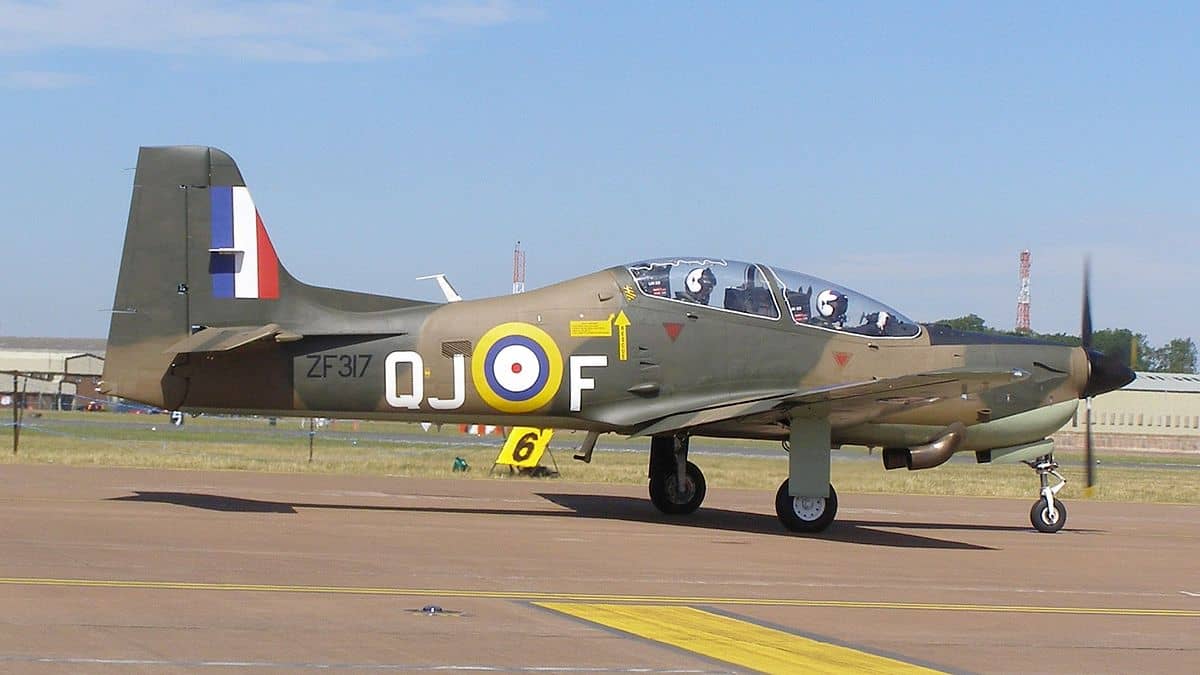
Short Tucano Trainer
Lockheed Martin F-22 Raptor
The Lockheed Martin F-22 Raptor is a single-seat, twin-engine stealth tactical fighter aircraft that can withstand all weather conditions. Although it was designed as an air superiority fighter, it also has ground-based electronic warfare and signals intelligence capabilities. Because it would no longer be important in post-Cold War irregular warfare battles, the development of this particular aircraft was suspended in 2009 due to concerns about the need for so many. With a price tag of up to $350 million, this aircraft is extremely valuable. It’s for a reason that they’re solely used in the United States. …

Lockheed Martin F 22 Raptor
McDonnell Douglas F-15 Eagle
McDonnell Douglas designed the F-15 Eagle, a twin-engine tactical fighter plane that is now owned by Boeing. After being conceived in 1969, it flew for the first time in 1972. In actual aerial combat, the aircraft has won 100 times with no losses. It has mostly been used in combat by the Israeli Air Force, but it has also been exported to Japan and Saudi Arabia. The plane is still being worked on today, though in different configurations. The plane has also seen action in the US, including during the Gulf War. The F-15 was responsible for 36 of the 39 air-to-air wins over Iraqi troops during the conflict, which is a considerable number. The F-15EX, a later derivative of the plane, costs around $87,7 million per plane.

McDonnell Douglas F 15 Eagle
Grumman F-14 Tomcat
The Tomcat was a one-of-a-kind military aircraft. This aircraft was a carrier-capable supersonic twin-engine two-seater fighter jet with twin-tail wing capability. It was designed specifically for the United States. On December 21, 1970, it went to the skies for the first time, and it was formally deployed in 1974. The F-14 Tomcat was the fighter jet of the United States. The Navy’s primary maritime air superiority fighter jet until the early 2000s. Later models were better suited to ground-attack missions after the introduction of the Low Altitude Navigation and Targeting Infrared for Night (LANTIRN) system. It was deactivated in 2006 because of the introduction and popularity of the Boeing F/A-18E/F Super Hornet. They are still in use by the Iranian military because several were sent to Iran during the Pahlavi period in 1976. This plane isn’t cheap; it may set you back $38 million.

Grumman F 14 Tomcat
Boeing F/A-18E/F Super Hornet
Based on the McDonnell Douglas F/A018 Hornet, the F/A-18E/F Super Hornet is a twin-engine, carrier-capable multirole fighter aircraft. It is the Grumman F-14’s replacement. Thanks to its internal 20mm M61 rotating cannon, it can carry both air-to-air and air-to-surface weapons. The aircraft can be modified into an aerial tanker by adding five external fuel tanks. In 1995, the super hornet flew for the first time, and it is still in use today. As of April 2020, 608+ Super Hornets had been built. It was given to Kuwait and Australia, and their forces are still using it. This plane might cost as much as $66.9 million dollars.

Boeing FA 18EF Super Hornet
Convair F-106 Delta Dart
The Convair F-106 Delta Dart was the premier all-weather interceptor aircraft for the United States. The Air Force was a part of the United States military from 1956 to 1988 when it was disbanded. The jet was known for its incredible speed, and Major Joseph W. Rogers set a world record of 1,525.96 mph while flying it in 1950. Both the United States and the United Kingdom made use of it. It was utilized by the Air Force and the Air National Guard during its active service. Despite being phased out progressively since the early 1980s, they were converted into drones for training in the late 1980s. This aircraft has a wingspan of 38 feet, 3.5 inches, and a cruise speed of 650 miles per hour. It will cost you $3.31 million.

Convair F 106 Delta Dart
Lockheed F-94 Starfire
A first-generation jet-powered all-weather interceptor for the United States. The Lockheed T-33 Shooting Star trainer was used to produce the twin-seat aircraft in the 1940s. It replaced the North American F-82 Twin Mustang as an all-weather interceptor. It was the first operating airplane for the United States. During the Korean War, it was the first jet-powered all-weather fighter to enter combat, as well as the first to be equipped with an afterburner. It was only in service for a few years before being replaced by the Northrop F-89 Scorpion and North American F-86D Sabre in the 1950s. In 1959, the Air National Guard flew the last active-service aircraft. With costs ranging from $123,000 to $196,000, these planes are actually rather affordable.

Lockheed F 94 Starfire
North American F-100 Super Sabre
It was a supersonic jet fighter aircraft that served in the US Air Force from 1954 to 1971, then the Air National Guard until 1979, when it was deactivated. This plane was one of a kind since it was the first in the US Air Forces to be capable of supersonic flight while in level flight. The F-86 Sabre was scheduled to receive a performance boost. The aircraft was converted into a fighter-bomber for several missions over North Vietnam before being overtaken by the ultra-fast F-105 Thunderchief. These planes have been discovered on the market for $664, 000 to $664,000.

North American F 100 Super Sabre
McDonnell F-101 Voodoo
A supersonic jet that saw service in both the US and the UK. Based on the same airframe, the Voodoo was designed as a nuclear-armed fighter bomber and a photo-reconnaissance aircraft. It was designed as a nuclear-armed fighter bomber and a photo-reconnaissance aircraft instead of a long-range bomber escort. The F-101A version of the plane achieved a number of speed records for jet-powered planes, including the fastest airspeed. It was withdrawn by the United States Air Forces in 1972 and the Canadian Air Forces in 1984. The Voodoo might cost up to $1.819 million.

McDonnell F 101 Voodoo
Convair F-102 Delta Dagger
It was constructed in the 1950s as part of the US Air Force’s air defense system’s backbone. It was originally used during the Cold War in 1956 to intercept Soviet strategic bomber fleets. The F-102 was a fighter plane built in the United States. The Air Force’s first operational supersonic interceptor and delta-wing fighter. It was retired in 1979 after several years of service in the National Guard. Many of the planes were converted into target drones later on, and some were even transferred to Turkey and Greece. The purchase of this plane might cost up to $1,184,000.

Convair F 102 Delta Dagger
North American F-86 Sabre
The Sabrejet (nickname) was a transonic fighter aircraft used by the United States during the Korean War. It was the first swept-wing fighter capable of matching the swept-wing Soviet MiG-15 in high-speed dogfights in the sky. The F-86 is well regarded when compared to fighters from previous eras. Although it was created in the late 1940s, it had become obsolete by the end of the 1950s. It proved versatile and adaptable, and many air forces continued to utilize it as a front-line fighter, notably the Japanese, Francoist Spanish Air Force, and Republic of Korea Air Force. After evolving from the North American FJ-1 Fury, it had two variants: the Canadair Sabre and the North American Fj-2/-3 Fury. With pricing starting at $178,000, this plane is one of the more affordable alternatives on the list.

North American F 86 Sabre
Canadair Sabre
The Canadair Sabre is a jet fighter aircraft designed by Canadair and licensed by North American Aviation. It was first flown in 1950 and is a derivative of the F-86 Sabre. It was primarily used by the Royal Canadian Air Force, but the United States Air Force also used it. The Air Forces of the United States, the United Kingdom’s Royal Air Force, and Germany’s Luftwaffe. The RCAF replaced it with the Canadair CF-104 in 1962. It was last used in Pakistani front-line operations in 1980 when Pakistani forces deactivated it. There aren’t many of these on the market, but a variant, the F-86 Sabre, could cost up to $178,000.

Canadair Sabre
Republic F-105 Thunderchief
In 1955, the Thunderchief flew for the first time, and in 1958, it made its formal appearance. The aircraft was largely used by the United States Air Forces until it was decommissioned in 1984. During the early years of the Vietnam War, the Thunderchief was a Mach 2 supersonic fighter-bomber that was used for many strike bombing missions. It was the sole American aircraft pulled from combat due to high loss rates. Despite its origins as a single-seat nuclear-attack aircraft, it was converted into a two-seat Wild Weasel version for specialized Suppression of Enemy Air Defenses (SEAD) against surface-to-air missile sites. It was the world’s largest single-seat, single-engine combat aircraft when it entered service, weighing in at 50000 pounds. Its personnel lovingly referred to it as ‘Thud.’

Republic F 105 Thunderchief